Commercial Vertical Platform Lift
A complete guide to commercial vertical platform lifts in the UK — covering types, costs, Equality Act compliance, BS EN 81-41 certification, and how to find a vetted specialist for your building.
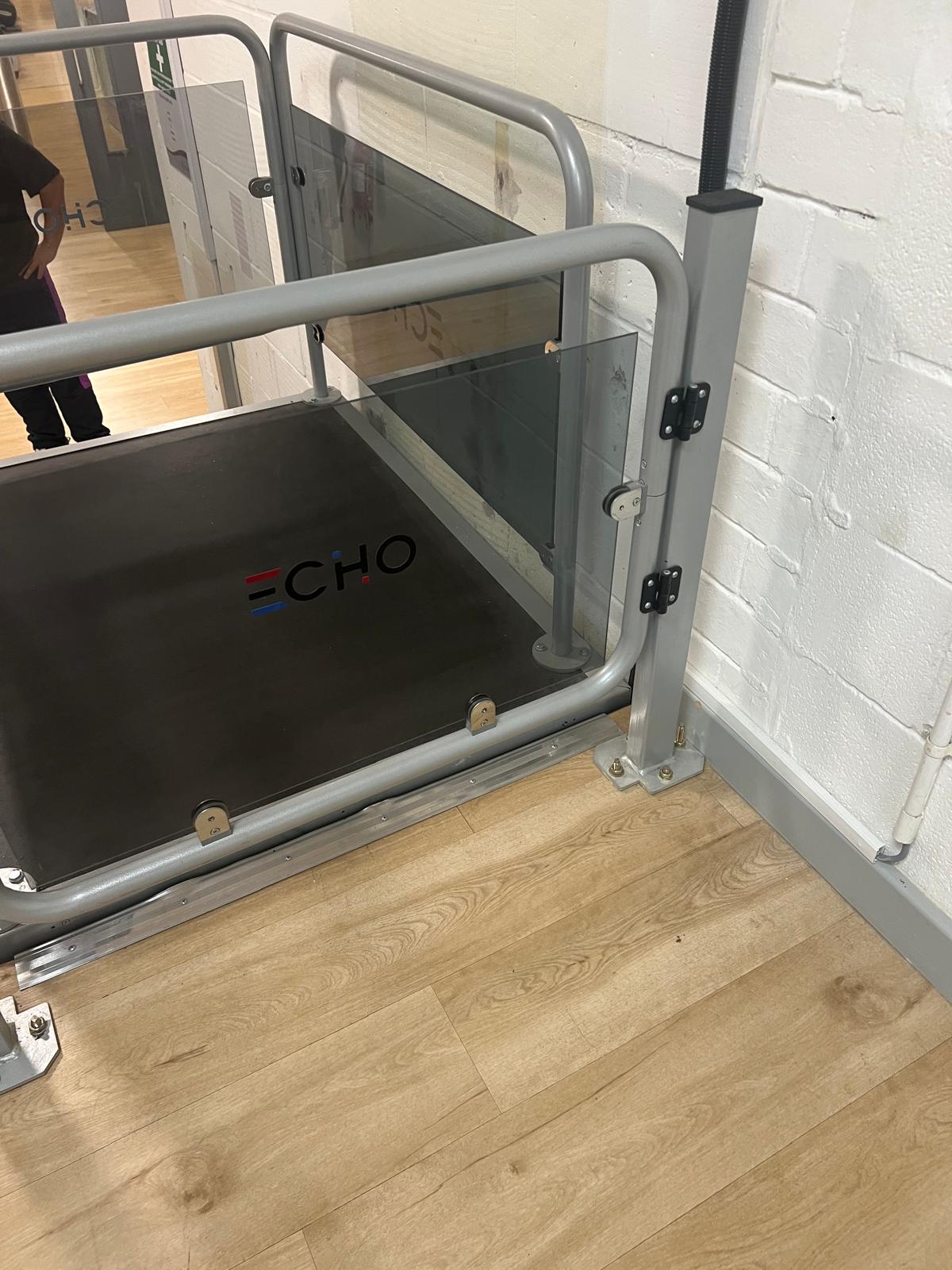
What Is a Commercial Vertical Platform Lift?
A commercial vertical platform lift is a powered lifting platform designed to carry people — including wheelchair users and people with limited mobility — vertically between two levels of a commercial or public building. Unlike a full passenger lift, a commercial vertical platform lift operates at lower speeds, requires no machine room or pit in most cases, and can be installed with significantly less structural work — making it a practical solution for existing buildings where retrofitting a traditional lift would be prohibitively expensive or structurally impractical.
Commercial vertical platform lifts are used across a wide range of building types including:
Offices and business premises
Retail shops, showrooms, and shopping centres
Restaurants, cafes, and hospitality venues
Schools, colleges, and universities
Libraries and public buildings
Places of worship
Healthcare facilities and GP surgeries
Sports and leisure centres
Historic and listed buildings where traditional lift installation is restricted by planning constraints
Types of Commercial Vertical Platform Lift
Low-Rise Commercial Vertical Platform Lift
A low-rise commercial vertical platform lift — often called a commercial step lift — is designed to overcome one to three steps or a modest level change at a building entrance, threshold, or internal level change. It rises vertically from 300mm to 2,000mm alongside the existing steps, leaving them intact and accessible.
Commercial step lifts are the most commonly installed type of commercial vertical platform lift in the UK — widely used at building entrances to provide accessible step-free entry and meet the reasonable adjustment duty under the Equality Act 2010.
Key features:
Platform sizes from 900mm x 1,400mm to comply with Approved Document M
Clear door opening width of at least 800mm
Controls positioned at heights accessible from a seated wheelchair position
Anti-slip chequer plate or textured platform surface
Wall-mounted and stanchion-mounted configurations available
Suitable for indoor and outdoor installation
Certified to BS EN 81-41 for public use
Starting from approximately £8,000 to £12,000 installed
Full-Rise Commercial Vertical Platform Lift
A full-rise commercial vertical platform lift provides access between full floors of a building, travelling through an opening in the floor structure. This type is used where a building has multiple floors requiring accessible access but where installing a conventional passenger lift is not practical.
Full-rise commercial vertical platform lifts are available in enclosed and semi-enclosed configurations. Enclosed models provide a fully enclosed cabin with automatic doors. Semi-enclosed models have open or partially open sides with safety barriers.
Key features:
Minimum platform size of 900mm x 1,400mm under Approved Document M
Clear door opening width of minimum 800mm
Maximum rated speed of 0.15 metres per second under BS EN 81-41
Maximum travel distance of 3,000mm — sufficient for most two-floor commercial buildings
No machine room required for most modern designs
Range of finishes suitable for commercial interiors
Certified to BS EN 81-41
Starting from approximately £15,000 to £25,000 installed
Standards and Compliance
BS EN 81-41
BS EN 81-41 is the British and European standard governing commercial vertical platform lifts. Key requirements include:
Minimum platform size of 900mm x 1,400mm for wheelchair access
Maximum rated speed of 0.15 metres per second
Maximum travel distance of 3,000mm
Minimum clear door opening width of 800mm
Controls between 800mm and 1,200mm from the platform floor
Safety devices including pressure-sensitive edges and battery backup
UKCA or CE marking and Declaration of Conformity
Always confirm BS EN 81-41 certification before specifying a commercial vertical platform lift. Using a non-compliant product in a commercial setting creates both safety and legal risks.
Approved Document M
Part M of the Building Regulations and Approved Document M set out the technical requirements for accessible design in commercial buildings. For commercial vertical platform lifts, Approved Document M references BS EN 81-41 and sets minimum platform dimensions, door widths, and control heights. Building Regulations approval is required for installations involving structural alterations.
The Equality Act 2010
The Equality Act 2010 places a legal duty on service providers and building owners to make reasonable adjustments to ensure disabled people are not disadvantaged. The duty is anticipatory — you are expected to act proactively.
Key points for building owners:
The duty applies to all service providers regardless of size
A commercial vertical platform lift is widely accepted as a practical and proportionate reasonable adjustment for stepped access
Listed buildings are not exempt from the Equality Act duty
The cost of not providing access can significantly exceed the cost of installation
LOLER
Commercial vertical platform lifts are subject to LOLER 1998 (Lifting Operations and Lifting Equipment Regulations) and require:
A thorough examination by a competent person at least every six months
Written reports of each examination retained on site
Proper installation and ongoing maintenance
Failure to comply with LOLER is a criminal offence.
Commercial Vertical Platform Lift Costs in the UK
Indicative starting prices for commercial vertical platform lift installations in the UK in 2026:
Low-rise commercial step lift, indoor — from £8,000 to £12,000 installed
Low-rise commercial step lift, outdoor — from £10,000 to £15,000 installed
Full-rise semi-enclosed lift, two floors — from £15,000 to £22,000 installed
Full-rise fully enclosed cabin lift, two floors — from £20,000 to £35,000 installed
Bespoke or prestige commercial installation — £35,000 or above
Additional costs that may apply:
Structural works for full-rise floor openings
Building Regulations fees
Electrical supply works — some commercial lifts require a three-phase supply
Groundwork for outdoor installations
Decoration and making good following installation
Standard rate VAT at 20% applies to all commercial vertical platform lift installations.
Planning Permission
In most cases planning permission is not required for a commercial vertical platform lift installed inside an existing building. However:
External commercial installations may require planning permission depending on visual impact
Listed buildings require listed building consent before any structural or external alteration
Conservation areas may require planning permission for external alterations visible from the public highway
A reputable installer will advise on the planning position for your specific building before any works begin.
Choosing a Commercial Vertical Platform Lift Installer
When evaluating commercial vertical platform lift installation companies, look for:
A physical site survey before any quotation is confirmed
A fully itemised written quotation covering all works including structural, electrical, and Building Regulations costs
Confirmation that the product is certified to BS EN 81-41 — ask for the Declaration of Conformity
Experience with commercial installations specifically
Evidence of previous commercial installations — case studies or references
A minimum 24-month warranty on parts and labour
LOLER examination arrangements post-installation
An ongoing maintenance contract
Getting at least two or three quotes is strongly recommended.
Commercial Vertical Platform Lift Maintenance
All commercial vertical platform lifts require regular maintenance to remain safe and legally compliant:
Six-monthly LOLER thorough examination — legal requirement
Annual or bi-annual full service by a qualified lift engineer
Monthly user checks recorded in a lift logbook
Common maintenance items include:
Drive motor lubrication and wear assessment
Safety edge and obstruction sensor testing
Landing door mechanism alignment
Control system functional test
Battery backup test
Anti-slip platform surface condition check
A maintenance contract is strongly recommended for all commercial installations.
Get Free Independent Advice
Platform Lift UK is a free, independent matching service connecting businesses and building owners across England, Wales, Scotland, and Northern Ireland with vetted commercial vertical platform lift installation companies. We cover all commercial platform lift types for offices, retail premises, hospitality venues, places of worship, schools, and all other commercial and public building types.
Tell us about your building, the access problem, and your compliance requirements — we match you with the right vetted specialists for your location, free of charge and with no obligation.
