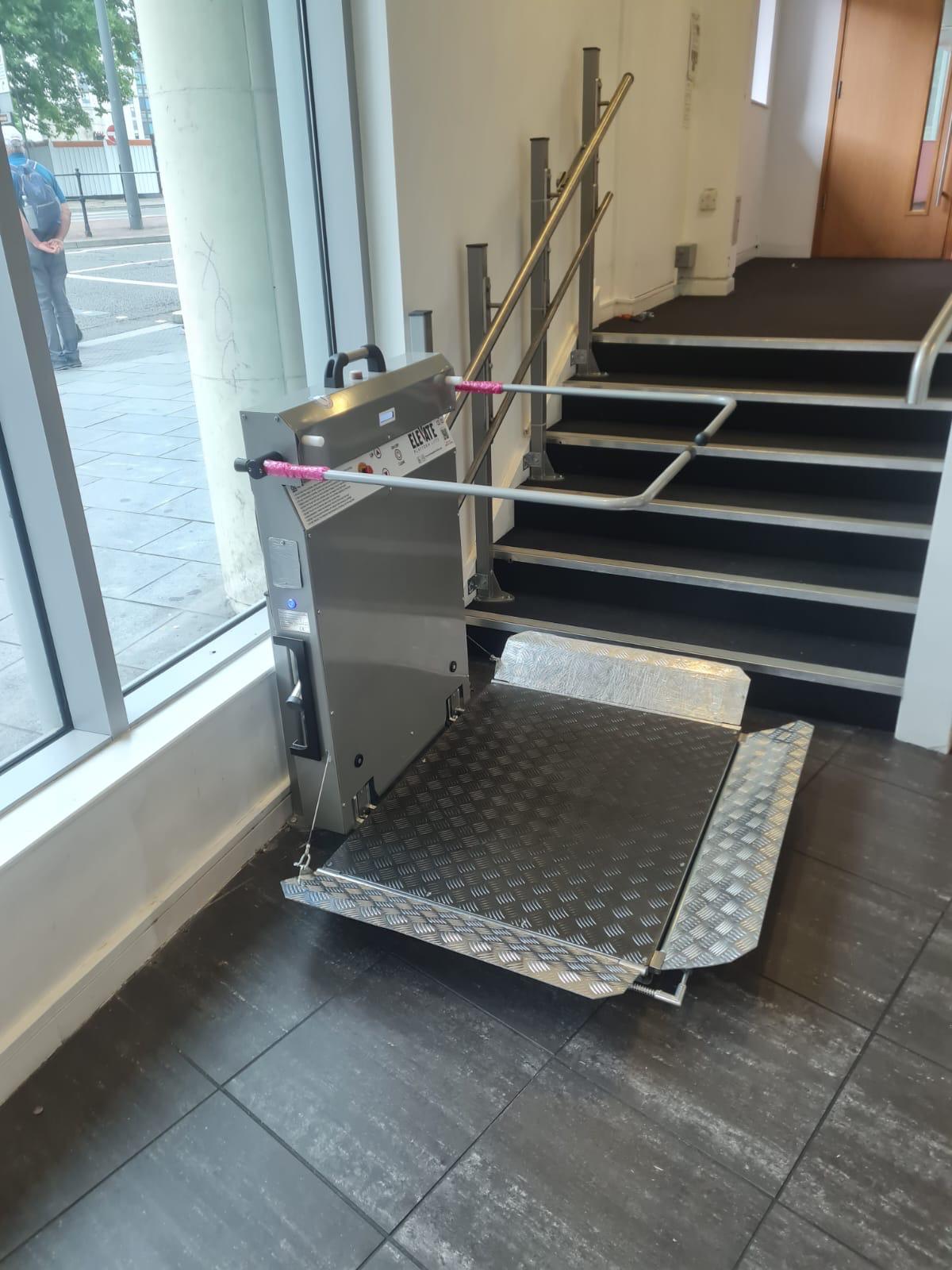
What Does Incline Platform Lift Servicing Include?
A standard annual service typically covers:
Rail and track inspection for wear, alignment, and secure fixing
Drive motor and gearbox inspection
Rack and pinion or cable drive system check
Footplate and entry ramp operation check
Safety barrier and gate interlock test
Overspeed governor and braking system test
Control panel, wiring, and call station inspection
Battery backup test (where fitted)
Lubrication of all moving rail and drive components
Full function test across the full length of travel
Service report and certificate issued
Incline platform lifts used in commercial, educational, hospitality, or public access settings are subject to the Lifting Operations and Lifting Equipment Regulations 1998 (LOLER).
Under LOLER, incline platform lifts that carry people must be thoroughly examined by a competent person at least every six months. This is a legal requirement for commercial operators and cannot be substituted by a routine service visit.
Key LOLER requirements for incline platform lifts:
Thorough examination every 6 months (passenger use)
Examination must be carried out by a competent person independent of the maintenance provider
A written examination report must be produced and retained
Any defects found must be reported to the relevant enforcing authority if they present an imminent danger
Domestic incline platform lifts are not subject to LOLER, but annual servicing is strongly recommended by all manufacturers.
| Use Type | Recommended Frequency |
|---|---|
| Domestic / residential | Annually |
| Light commercial | Every 6–12 months |
| Schools, public buildings | Every 6 months (LOLER) |
| High-use commercial | Every 6 months (LOLER) |
| Post-repair or incident | Immediately |
Our network of service engineers maintains all major UK incline platform lift brands including:
Handicare
Stannah
Wessex Lift Co
Gartec
Nationwide Lifts
Terry Lifts
Platinum Stairlifts
Easiaccess
All major European and domestic manufacturers
If your brand is not listed, contact us — our engineers cover all models across the UK.
Straight vs Curved Rail Servicing
Unusual noise or vibration during travel
Jerky or uneven movement along the rail
Platform not aligning correctly at landings
Footplate or entry ramp not deploying smoothly
Safety barriers not engaging or releasing correctly
Lift stopping mid-travel unexpectedly
Call stations or remote controls unresponsive
Visible wear on the rail, rack, or drive components
If you notice any of these signs, arrange a service or inspection call before continuing to use the lift.
Servicing costs vary depending on rail configuration, lift age, brand, and location. As a general guide:
Basic annual service (straight rail): £200–£400
Basic annual service (curved rail): £250–£500
LOLER thorough examination: £200–£450
Combined service and LOLER: £350–£700
Call-out repair (labour only): £100–£250 per visit
Parts charged separately depending on requirement
VAT at the standard rate applies to all servicing and repair work.
Platform Lift UK helps you compare service costs from vetted engineers in your area — free of charge.
For commercial operators and high-use installations, an annual service contract provides greater certainty and cost control. A typical contract includes:
Scheduled service visits (annual or bi-annual)
Priority emergency call-out response
Discounted parts and labour rates
Automatic LOLER examination scheduling
Maintenance log kept on your behalf
Single point of contact for all faults and repairs
Service contracts are particularly important for schools, care homes, and public venues where lift availability directly affects accessibility obligations.
Platform Lift UK matches you with vetted service engineers across England, Wales, Scotland, and Northern Ireland — free of charge, no obligation.
Get Free Servicing Advice
Is LOLER required for a domestic incline platform lift?
No. LOLER applies to lifting equipment used in the workplace or for commercial purposes. A privately owned incline platform lift in a domestic residence is not subject to LOLER, but annual servicing is strongly recommended by manufacturers and advisable for insurance purposes.
How is an incline platform lift service different from a stairlift service?
An incline platform lift is a more complex piece of equipment than a standard stairlift. It carries a platform rather than a seat, has additional safety barriers and footplate mechanisms, and is subject to different regulations in commercial use. It must be serviced by an engineer with specific platform lift experience rather than a standard stairlift engineer.
Can the same engineer service both my stairlift and incline platform lift?
Only if the engineer holds relevant experience and qualifications for both. Incline platform lifts have different mechanical, electrical, and safety systems to standard stairlifts. Always confirm the engineer's experience with your specific equipment before booking.
What is the difference between a service and a LOLER thorough examination?
A service is a routine maintenance visit to inspect, lubricate, adjust, and test the lift. A LOLER thorough examination is a formal statutory inspection carried out by a competent independent person, resulting in a written examination report. Both are required for commercial operators — they are not interchangeable.
How long does an incline platform lift service take?
A standard annual service typically takes one to three hours depending on the rail configuration, lift age, and any issues identified during the inspection.
What happens if a fault is found during a LOLER examination?
If a defect presents an imminent danger, the examining engineer is legally required to notify the relevant enforcing authority immediately. Less serious defects must be reported in writing and rectified within a specified timeframe. The lift should not be used until the defect is resolved.
