StepLifts®
Get a Brochure
Homelift FAQ's
What is a homelift?
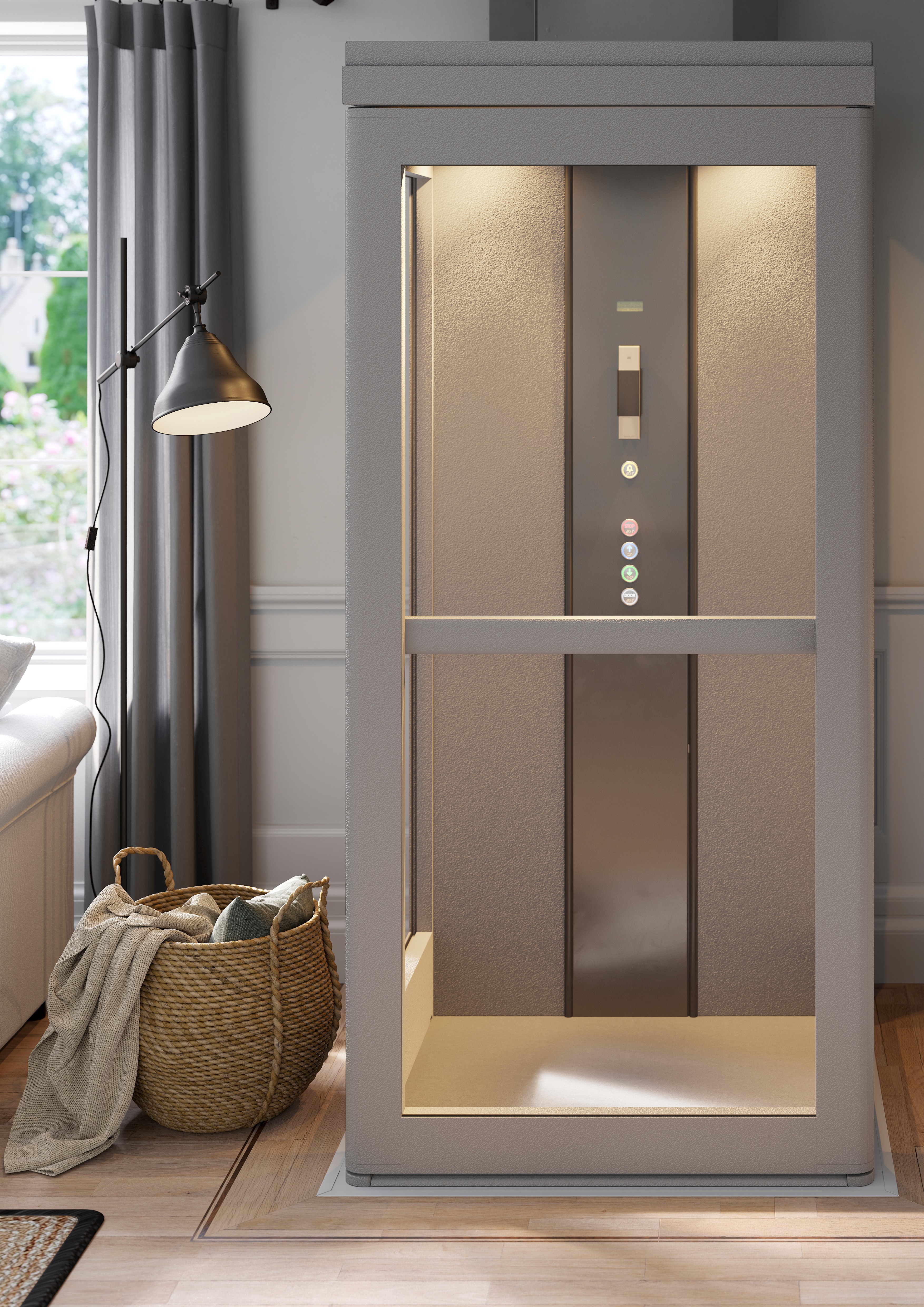
A homelift — also called a through-floor lift, residential lift, or domestic lift — is a powered cabin lift installed inside a private home that carries passengers vertically between floors through an opening in the ceiling and floor above. Unlike a stairlift which travels along the staircase, a homelift travels straight up and down in a self-contained shaft or tower, providing a fully enclosed and comfortable lift experience within the home.
What is the difference between a homelift and a stairlift?
A stairlift seats the user on a small chair attached to a rail fixed to the staircase and requires the user to transfer from their wheelchair if they use one. A homelift travels vertically between floors in a fully enclosed cabin, accommodates wheelchair users without any transfer, and does not use the staircase at all. A homelift is the more comprehensive and comfortable solution for full floor-to-floor access.
What is the difference between a homelift and a platform lift?
A platform lift is a broad term covering any lifting device that carries a person on a platform between levels. A homelift is a specific type — fully enclosed, with automatic or manual doors, and designed specifically for domestic residential use. Platform lifts also include open step lifts for one to three steps and inclined platform stairlifts that travel along a staircase.
What is a through-floor lift?
What is a through-floor lift?
A through-floor lift is another name for a homelift. It refers to the way the lift works — travelling vertically through an opening created in the floor and ceiling between two levels of the property. The terms homelift, through-floor lift, residential lift, and domestic lift all describe the same product.
What types of homelift are available in the UK?
Homelifts in the UK are available in several configurations including hydraulic, traction, screw drive, and pneumatic (vacuum) drive systems. They range from compact models for ambulant users to larger cabins accommodating powered wheelchairs, with finishes from standard powder-coated steel to fully glazed cabins with custom interiors.
How is a homelift powered?
Most homelifts in the UK run on a standard 240V single-phase domestic electricity supply — the same supply used for most household appliances. A dedicated spur from your consumer unit (fuse box) is all that is required in most cases. No specialist electrical installation or three-phase supply is needed for the majority of residential homelift models. The lift connects to a dedicated spur at the point of installation, which your installation company will arrange as part of the installation works.
Most residential homelifts are designed to carry one or two people at a time. The number of occupants is governed by the load capacity of the lift and the internal cabin dimensions rather than a fixed person count. A standard homelift cabin of approximately 900mm x 1,000mm comfortably accommodates one person standing or one wheelchair user. A larger cabin of 1,100mm x 1,400mm can typically accommodate one wheelchair user plus one companion. Always check the rated load capacity and cabin dimensions of the specific model when specifying for multi-user or wheelchair use.
Most standard residential homelifts are designed to serve two floors — ground floor and first floor — which covers the most common domestic requirement. Some homelift models can be specified to serve three floors, and a small number of residential models can travel further. The maximum travel distance for a residential platform lift under BS EN 81-41 is 3,000mm, which is sufficient for most standard two-floor UK properties. For properties with unusually high floor-to-ceiling heights or three-floor requirements, confirm the travel capacity with your installer during the site survey. For greater travel distances a different product specification may be required.
The maximum weight capacity of a homelift varies by model. Most standard residential homelifts have a rated load capacity of between 225kg and 400kg. This is the combined weight of all occupants, wheelchairs, mobility aids, and any items being carried. As a practical guide, a standard residential homelift carrying one wheelchair user and their chair — typically 100kg to 180kg combined — is well within the capacity of most models. Always confirm the rated load capacity with your installer and cross-check it against the combined weight of the heaviest anticipated load, not just the primary user.
Homelift costs start from approximately £17,500 installed for a standard entry-level model in a straightforward two-floor property. Mid-range homelifts with enhanced finishes and larger cabin sizes typically cost between £22,000 and £30,000 installed. At the premium end, fully specified homelifts with bespoke interiors and glass panels can cost £35,000 or more. Final costs depend on the model, cabin size, drive system, finish, and structural requirements of the specific property.
The building or structural costs associated with a homelift installation relate primarily to the floor opening — the structural work required to create the aperture through which the lift travels. For a standard timber joist floor, this involves cutting and removing a section of floorboards and joists, fitting trimmer joists to reinforce the opening, and finishing the edges of the opening on both floors. This work is typically carried out by a joiner or structural carpenter and costs approximately £500 to £1,500 for a straightforward opening in a standard timber floor. For concrete floors or more complex structural situations the cost is higher — your installer will confirm the structural scope and cost during the site survey. Decoration and making good around the opening after installation is an additional cost, typically £200 to £800 depending on the extent of finishing work required.
Homelifts are very economical to run. A typical residential homelift uses approximately 0.1 to 0.3 kWh per journey. At current UK electricity rates this equates to a few pence per trip. Even with regular daily use by multiple household members, electricity running costs are negligible. The main ongoing cost is periodic servicing — typically £150 to £300 per annual service visit.
Most homelifts require an annual service by a qualified lift engineer costing between £150 and £300 depending on the model and provider. Some manufacturers include the first service within the warranty period. A maintenance contract covering scheduled visits and emergency callouts typically costs £200 to £400 per year.
Can I get a grant for a homelift?
Yes. The Disabled Facilities Grant (DFG) is available through local councils to fund homelift installations for eligible disabled applicants. In England the maximum grant is £30,000 and in Wales it is £36,000. The grant is means tested based on household income and savings. To apply, contact your local council's adult social care or housing team. An occupational therapist assessment is required before the grant is approved. Do not begin any installation work before receiving formal written grant approval.
Can I finance a homelift?
Yes. Several finance options are available for homelift purchases. Some homelift installation companies offer finance directly — including interest-free credit for a fixed period or low-rate monthly payment plans arranged through a third-party finance provider. This is often the most convenient option as it is arranged as part of the installation contract. Alternatively, an unsecured personal loan from a bank or building society is a straightforward way to fund a homelift purchase. If you are eligible for the Disabled Facilities Grant, the DFG can be combined with personal savings or finance to cover any balance above the grant amount. Always compare the total amount repayable and the APR across any finance options before committing.
Can I get VAT relief on a homelift?
Yes — in many cases. A homelift supplied and installed for a disabled person for domestic or personal use may qualify for zero-rated VAT under HMRC Notice 701/7, saving 20% on the total cost. To qualify, the customer must be chronically sick or disabled as defined by HMRC, and the lift must be for domestic or personal use. Your installer will confirm eligibility and apply the correct VAT rate to the invoice automatically.
In most cases planning permission is not required for a homelift installed inside a residential property, as it falls under permitted development rights. Exceptions apply where the property is listed — listed building consent is required before any structural alteration. If you live in a conservation area, it is worth checking with your local planning authority. A reputable installer will advise on the planning position for your specific property.
Yes. Through-floor homelift installations require Building Regulations approval in England and Wales because they involve a structural alteration — creating an opening through the floor between levels. The installation must be notified to your local authority or an approved inspector before work begins. A completion certificate is issued on satisfactory inspection. Your installation company should manage the Building Regulations process on your behalf. Keep the completion certificate as it is required for future property sales.
No. Most modern homelifts designed for domestic use require no pit and no machine room. The self-contained drive mechanism is housed within the lift tower itself, and the lift sits directly on the existing floor surface without requiring any below-floor excavation.
How does a homelift work?
A homelift uses one of several drive systems — hydraulic (fluid-driven ram), traction (motor and counterweight), or screw drive (motorised nut on a threaded shaft). All use simple push-button controls and incorporate safety devices including door interlocks, pressure-sensitive edges, emergency stop controls, battery backup, and alarm systems.
The physical installation typically takes two to three days including structural preparation, assembly, electrical connection, and commissioning. Lead time from order to installation is typically four to twelve weeks. DFG-funded installations may take longer due to the grant approval process.
What happens in a power cut?
All reputable residential homelifts include a battery backup system specifically designed to operate in the event of a mains power failure. When the power cuts out, the battery backup activates automatically and allows the lift to complete its current journey and return to the lower floor level so the user can exit safely. The lift then remains parked at the lower floor until mains power is restored. The battery backup does not power the lift for continuous normal use — it is a safety feature designed to ensure the occupant is never stranded between floors. Battery backup systems are standard on all modern residential homelifts sold in the UK.
How long does a homelift last?
A well-maintained homelift should last 20 to 25 years or more with appropriate annual servicing. The drive system, door mechanisms, and electronic control components are the parts most likely to require attention over this period. Regular annual servicing significantly extends operational life and reduces the risk of unexpected failures.
A homelift site survey typically takes between 30 minutes and one hour depending on the complexity of the property and the number of options being discussed. The surveyor will assess the proposed lift location, measure the available space on both floors, check the floor structure, identify the electrical supply position, and discuss finish and specification options.
Yes — provided the cabin size is specified correctly. A standard manual wheelchair requires a minimum clear cabin width of approximately 700mm to 750mm. A powered wheelchair requires a minimum of 800mm to 900mm or wider. Always confirm the exact dimensions of the wheelchair or mobility device before specifying a cabin size. Not all standard homelift cabin sizes accommodate a powered wheelchair — a larger cabin may be required.
Is a homelift safe?
Yes. Key safety features include door interlocks that prevent movement unless all doors are fully closed, pressure-sensitive edges that stop the lift immediately if an obstruction is detected, emergency stop controls accessible from within the cabin, battery backup allowing the lift to return to the lower floor in a power failure, and alarm systems for emergency communication. All UK residential homelifts should comply with the Supply of Machinery (Safety) Regulations 2008 and carry a CE or UKCA mark.
Is a homelift noisy?
Modern homelifts are designed to operate quietly within a domestic environment. Hydraulic homelifts are generally the quietest. Traction and screw drive models produce slightly more noise during travel but are still significantly quieter than older designs. Most homeowners report their homelift as unobtrusive in everyday use.
Is a homelift VAT free?
A homelift may qualify for zero-rated VAT under HMRC Notice 701/7 if supplied and installed for a disabled person for domestic use. This removes the standard 20% VAT charge. Your installer will confirm eligibility and complete the required customer declaration.
Modern homelifts offer a wide range of optional extras and bespoke features that allow the lift to be tailored to the design and requirements of the property. Common options include:
- Cabin size upgrades — larger cabins to accommodate powered wheelchairs or two occupants
- Glass panels — full-height or partial glass cabin walls for a more open, contemporary aesthetic
- Bespoke interior finishes — custom colour powder coating, brushed stainless steel, timber veneer, or upholstered wall panels
- Flooring options — carpet, vinyl, or custom floor finishes within the cabin
- Soft lighting — interior LED lighting options including colour-changing or mood lighting
- Automatic doors — power-operated cabin and landing doors with soft-close mechanisms
- Folding seat — a fold-down seat within the cabin for ambulant users who prefer to travel seated
- Telephone or emergency intercom — built-in communication system for safety and reassurance
- Remote monitoring — some manufacturers offer app-based monitoring and diagnostics
- Custom call panels — bespoke control panel designs and finishes to match the interior design of the property
- Larger viewing windows — panoramic or full glass doors for a more open feel
The range of options varies between manufacturers. Your installer will present the available specifications for the model being recommended and can advise on bespoke options during the site survey.
What size homelift do I need?
The right homelift size depends on who will be using it. For a single ambulant user the smallest cabin — typically around 700mm x 900mm — is usually sufficient. For a manual wheelchair user a minimum of approximately 750mm x 1,000mm is recommended. For a powered wheelchair, a minimum of 900mm x 1,200mm is typically required. Always confirm the exact dimensions of all users and any mobility equipment before specifying.
A compact residential homelift typically requires a floor opening of approximately 900mm x 1,000mm. A larger wheelchair-accessible cabin needs approximately 1,100mm x 1,300mm or larger. The opening must be consistent on both floors. Your installer will confirm the exact opening dimensions for the specific model during the site survey.
A homelift can add value to a property, particularly given the ageing UK population and growing awareness of accessible design. However, impact on value varies by property type, location, and installation quality. A homelift is primarily purchased for the quality of life benefit it provides.
Will a homelift fit in my house?
Most residential properties can accommodate a homelift. A compact model requires as little as 900mm x 1,000mm of floor space per level. Typical installation locations include a corner of a living room with corresponding space above, an understairs cupboard that aligns between floors, or a purpose-built enclosure. A site survey will confirm feasibility and identify the most suitable location.
Who installs homelifts in the UK?
Homelifts are installed by specialist lift installation companies — not general builders. A reputable company will carry out a full site survey, manage Building Regulations, install and commission the lift to manufacturer specification, and provide a warranty. Platform Lift UK connects homeowners with vetted homelift installation companies across England, Wales, Scotland, and Northern Ireland — free of charge and with no obligation.
The Disabled Facilities Grant is the primary funding mechanism, covering up to £30,000 in England and £36,000 in Wales. Where total cost exceeds the grant, the balance can be funded through personal savings, a personal loan, or lift company finance. An occupational therapist assessment is required as part of the DFG application.
Home lifts explained
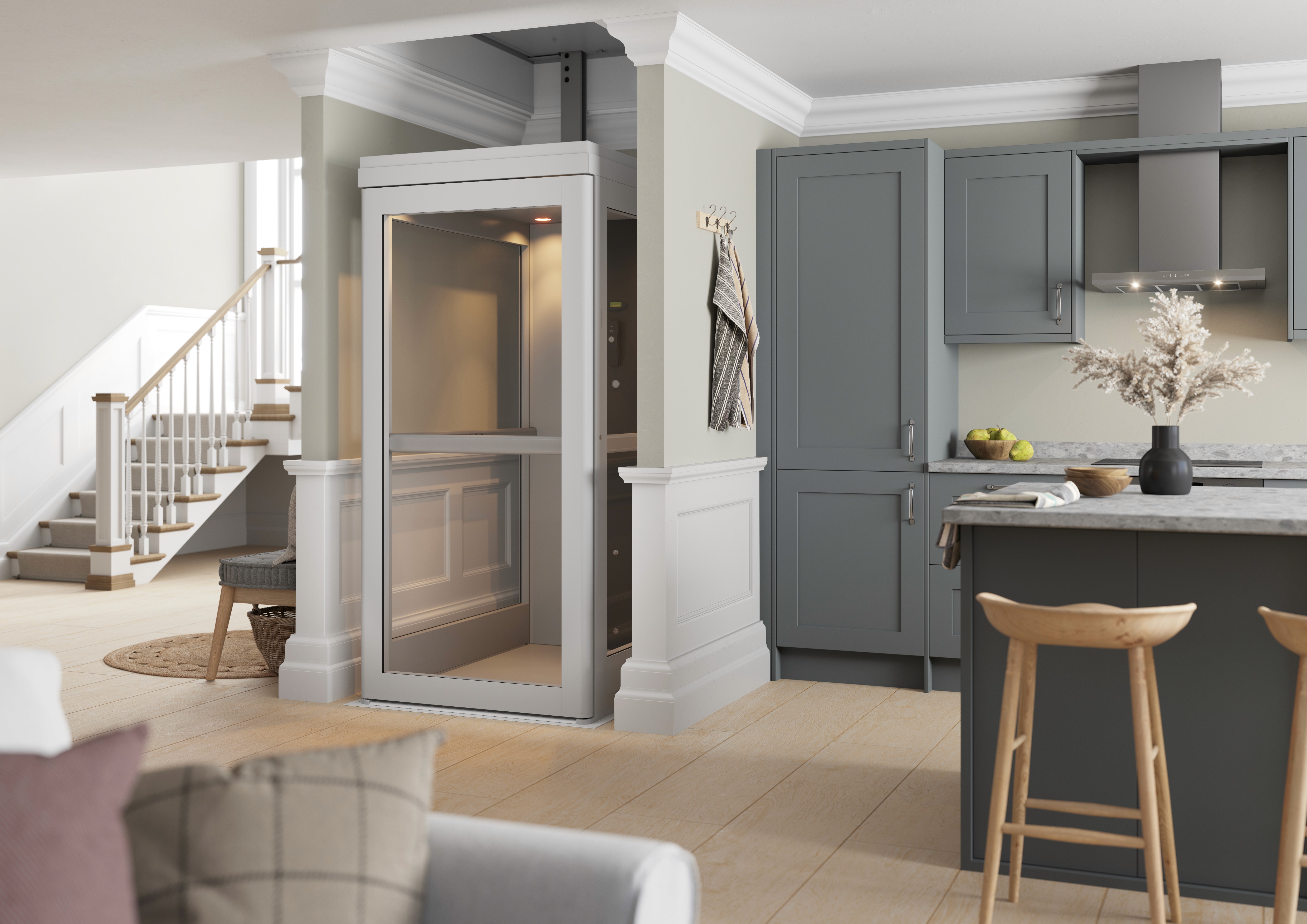
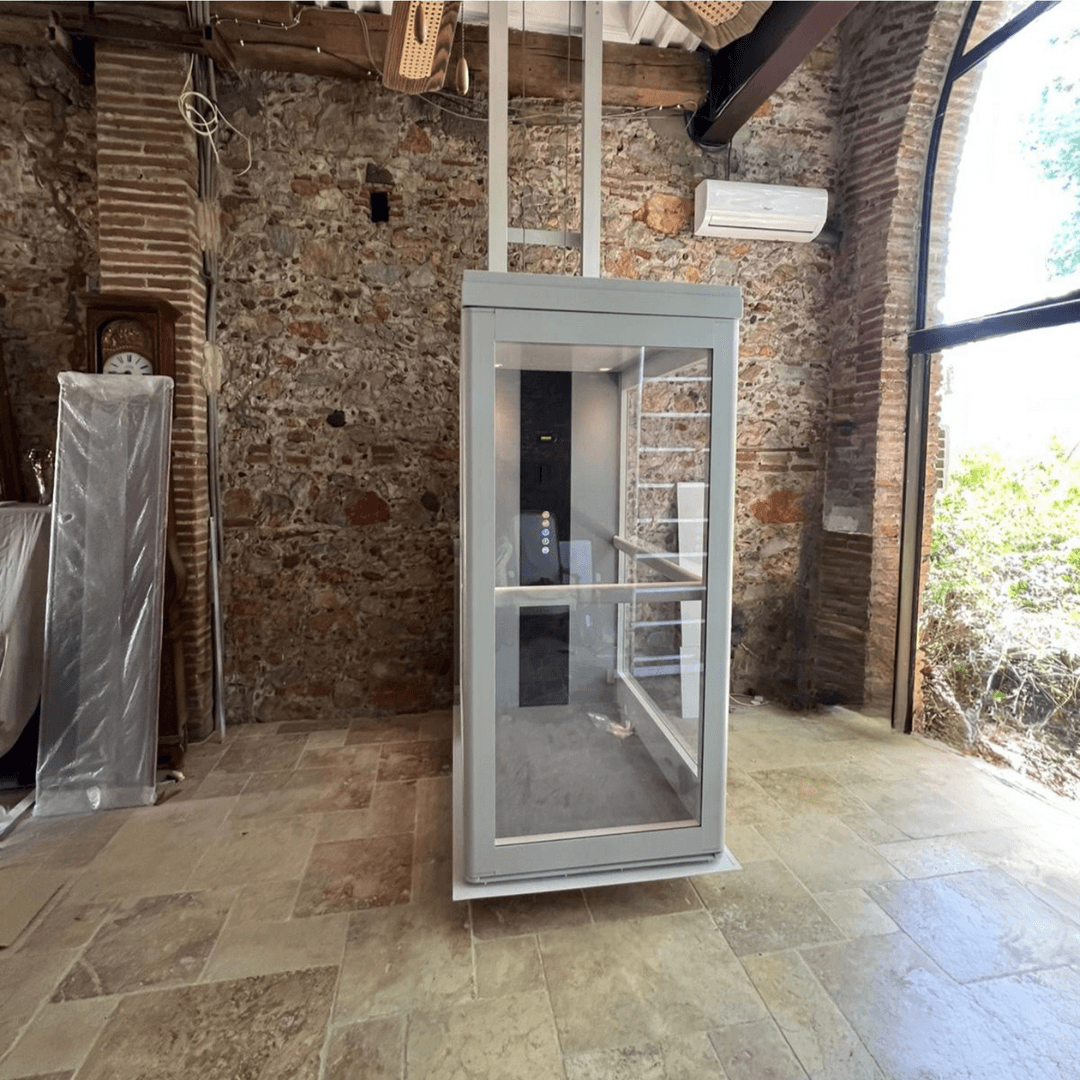
A home lift is a compact vertical lifting system installed within a residential property. Unlike an inclined platform stairlift, it travels straight up through the ceiling — ideal for users who need a fully enclosed cabin and prefer not to use the staircase.
Types of home lift
Home lifts range from open through-floor platform lifts to fully enclosed cabin lifts with automatic doors. Vacuum-powered pneumatic lifts are also available where a pit or shaft isn't practical.
How do home lifts work?
Most home lifts use a hydraulic, electric screw, or pneumatic drive system. The lift travels vertically through a pre-cut floor opening, with safety sensors, enclosed barriers or doors, and push-button controls as standard. Most installations take two to three days.
Platform Lift FAQ's
What is a platform lift?
A platform lift is a powered lifting device that carries a person — standing, seated in a wheelchair, or using a mobility aid — vertically between two levels of a building. The term covers a broad range of products including vertical platform step lifts for one to three steps, full-rise through-floor lifts for floor-to-floor access, and inclined platform stairlifts that travel along a staircase. Platform lifts are used in both residential and commercial properties and are governed by different standards to conventional passenger lifts.
A passenger lift is a conventional enclosed lift designed for high-volume continuous use in commercial or multi-storey buildings. It is governed by the Lift Regulations 2016, typically requires a machine room, and is significantly more expensive to install. A platform lift operates at lower speeds, requires no machine room or pit in most cases, can be installed with less structural work, and is governed by the Supply of Machinery (Safety) Regulations 2008. A platform lift is the most practical and cost-effective solution for most residential and smaller commercial access requirements.
A stairlift seats the user on a small chair attached to a rail fixed to the staircase and travels along the angle of the stairs. It requires the user to transfer from their wheelchair and cannot accommodate a mobility device. A platform lift carries the user on a full platform — either vertically between levels or along the staircase on an inclined platform stairlift — with no transfer required for wheelchair users. A platform lift is the correct solution for wheelchair users.
Platform lifts in the UK fall into three main categories. A vertical platform step lift rises vertically between 300mm and 2,000mm alongside existing steps, overcoming one to three steps without removing them. A through-floor platform lift — also called a homelift or residential lift — travels vertically between full floors of a building through an opening in the floor structure. An inclined platform stairlift travels along a rail fixed to an existing staircase, carrying a wheelchair user between floors without any transfer required.
What is a vertical platform lift?
A vertical platform lift is any platform lift that travels in a straight vertical direction — straight up and down. This includes both low-rise step lifts that overcome one to three steps and full-rise through-floor lifts that provide floor-to-floor access. The term distinguishes vertical platform lifts from inclined platform stairlifts, which travel along the angle of a staircase.
How is a platform lift powered?
Most residential platform lifts run on a standard 240V single-phase domestic electricity supply from a dedicated spur at your consumer unit. No specialist electrical installation is required in most cases. Commercial platform lifts may require a three-phase supply depending on the model and load capacity. A battery backup system is standard on all modern platform lifts, allowing the lift to return safely to the lower level in the event of a mains power failure.
The number of people a platform lift can carry depends on the platform size and the rated load capacity of the specific model. Most residential step lifts and through-floor platform lifts are designed to carry one person at a time — either standing, in a wheelchair, or using a mobility aid. Larger commercial platform lifts with bigger platforms and higher load capacities may accommodate two people. The rated load capacity — not the platform size alone — determines the safe maximum load. Always confirm load capacity with your installer before specifying a platform lift for multi-user use.
The number of floors a platform lift can serve depends on the type of lift. Low-rise vertical platform step lifts typically serve two levels separated by one to three steps, with a maximum travel of approximately 2,000mm. Full-rise through-floor platform lifts typically serve two floors and travel up to 3,000mm under BS EN 81-41. Some models can be configured to serve three floors. For travel distances greater than 3,000mm a different product specification may be required. Inclined platform stairlifts can in some cases serve multiple landings on the same staircase. Confirm the travel and floor requirements with your installer during the site survey.
The maximum weight capacity of a platform lift varies by type and model. Residential step lifts typically have a rated load capacity of 250kg to 400kg. Through-floor homelifts are typically rated at 225kg to 400kg. Commercial platform lifts are rated at higher capacities — typically 300kg to 500kg depending on the model. The rated load capacity covers the combined weight of the user, any wheelchair or mobility aid, and any items being carried. Always confirm the load capacity against the heaviest anticipated load — including the combined weight of a wheelchair user and their chair — before specifying a model.
Platform lift costs in the UK vary by type. A vertical platform step lift starts from approximately £6,389 installed for a basic single-step residential model. A through-floor homelift starts from approximately £17,500 installed for a standard two-floor installation. An inclined platform stairlift starts from approximately £8,000 for a straight residential staircase. Commercial platform lifts start from approximately £8,000 to £12,000 for a step lift and £15,000 to £35,000 for a full-rise commercial installation. Final costs depend on the lift type, travel height, platform size, and property requirements.
Building costs for a platform lift depend on the type of lift being installed. For a step lift, building costs are minimal — typically limited to any groundwork required to prepare the base surface, costing £200 to £800 in most cases. For a through-floor platform lift, the main structural cost is creating the floor opening — cutting joists, fitting trimmers, and finishing the opening edges — typically £500 to £1,500 for a standard timber floor. For concrete floors the cost is higher. Decoration and making good after installation typically adds £200 to £800. Commercial full-rise platform lifts may require more significant structural preparation. Your installer will confirm all structural costs during the site survey.
Platform lifts are economical to run. A typical residential platform lift uses approximately 0.1 to 0.3 kWh per journey — equating to a few pence per trip at current UK electricity rates. For domestic use the electricity running cost is negligible. The main ongoing cost is periodic servicing — typically £150 to £300 per annual service for residential lifts, and £250 to £500 per six-monthly LOLER examination for commercial lifts.
Residential platform lifts typically require an annual service costing between £150 and £300. Commercial platform lifts are subject to LOLER 1998 and require a thorough examination every six months, typically costing £250 to £500 per visit. A maintenance contract covering scheduled visits and emergency callouts is strongly recommended for all platform lift types and typically costs £200 to £500 per year depending on the lift type and usage level.
Can I get a grant for a platform lift?
Yes. The Disabled Facilities Grant (DFG) is available through local councils to fund platform lift installations for eligible disabled applicants. The maximum grant in England is £30,000 and in Wales it is £36,000. The grant is means tested based on household income and savings. Apply through your local council's adult social care or housing team. An occupational therapist assessment is required before the grant is approved. Do not begin any installation before receiving formal written grant approval.
Can I finance a platform lift?
Yes. Several finance options are available. Some platform lift installation companies offer finance directly — including interest-free credit for a fixed period or low-rate monthly payment plans. An unsecured personal loan from a bank or building society is another straightforward option. If eligible for the Disabled Facilities Grant, the DFG can be combined with savings or finance to cover any balance above the grant amount. Always compare the total amount repayable and the APR across finance options before committing.
In most cases planning permission is not required for a platform lift installation at a residential or commercial property as it falls under permitted development. Exceptions apply for listed buildings — listed building consent is required before any structural or external alteration. Properties in conservation areas should check with the local planning authority before proceeding with external installations. A reputable installer will advise on the planning position for your specific property.
For through-floor platform lifts — both residential and commercial — Building Regulations approval is required because the installation involves a structural alteration to the floor. The installation must be notified to the local authority or an approved inspector before work begins, and a completion certificate is issued on satisfactory inspection. For step lifts and inclined platform stairlifts, Building Regulations approval is not typically required as no structural alteration is involved. Your installer will confirm what is required for your specific installation.
No. Modern platform lifts are designed to require no pit and no machine room. This is one of the key advantages of contemporary platform lift technology. Step lifts sit directly on the ground surface. Through-floor platform lifts sit on the existing floor with no below-floor excavation required. This makes platform lifts significantly easier and less costly to install than older lift technologies.
How does a platform lift work?
A platform lift operates using a motorised drive system that raises and lowers the platform between two fixed levels. The most common drive systems are electric motor with rack and pinion or scissor jack mechanism for step lifts, and hydraulic, traction, or screw drive for through-floor platform lifts. The user operates the lift using simple push-button or joystick controls on the platform or at a remote call station. Safety devices including pressure-sensitive edges, safety barriers, door interlocks, and battery backup operate continuously throughout each journey.
Installation time varies by lift type. A step lift is typically installed in a single day. A through-floor homelift typically takes two to three days including structural floor opening preparation. An inclined platform stairlift on a straight staircase typically takes one to two days. Curved inclined platform stairlifts have a longer lead time due to bespoke rail manufacture, but the physical installation once the rail is ready typically takes one to two days. Commercial platform lifts vary depending on the specification and structural requirements.
What happens in a power cut?
All modern platform lifts include a battery backup system that activates automatically when mains power fails. The battery backup allows the lift to complete its current journey and return safely to the lower level so the user can exit. The lift remains parked at the lower level until mains power is restored. Battery backup is a standard safety feature on all reputable platform lifts sold in the UK — it ensures the occupant is never stranded between levels during a power failure.
How long does a platform lift last?
A well-maintained platform lift should last 15 to 25 years depending on the lift type, usage level, and quality of the original installation. Residential step lifts and through-floor homelifts used for typical domestic purposes typically last 20 years or more with appropriate annual servicing. Commercial platform lifts used in higher-frequency environments have a similar operational lifespan when properly maintained under LOLER-compliant service regimes.
A platform lift site survey typically takes between 30 minutes and one hour for a residential installation. Commercial site surveys may take longer depending on the complexity of the building and the number of access points being assessed. The surveyor will assess the installation location, take measurements, check the structural suitability of the site, identify the electrical supply position, and discuss lift type and specification options.
Yes — provided the platform size is specified correctly. A standard manual wheelchair requires a minimum platform width of approximately 750mm. A powered wheelchair requires 800mm to 900mm or wider. A mobility scooter may require 900mm x 1,400mm or larger. Always confirm the exact dimensions of the wheelchair or mobility device before specifying any platform lift. For commercial platform lifts, Approved Document M requires a minimum platform size of 900mm x 1,400mm for wheelchair access.
Is a platform lift safe?
Yes. Modern platform lifts are designed and tested to rigorous safety standards. Key safety features include pressure-sensitive edges that stop the lift immediately if an obstruction is detected, safety barriers preventing the user from rolling or stepping off during travel, battery backup in the event of a power failure, emergency stop controls, and door interlocks on enclosed models. All platform lifts sold in the UK should carry a CE or UKCA mark and comply with the relevant British and European standards — BS EN 81-41 for vertical platform lifts and BS EN 81-40 for inclined platform lifts.
Is a platform lift noisy?
Modern platform lifts are designed to operate quietly. Step lifts using electric or hydraulic drive systems are generally unobtrusive in domestic settings. Through-floor homelifts are similarly quiet, with hydraulic models typically the quietest in operation. Vibration-damping mounts and noise-insulated components are standard on most contemporary designs. Most users and households report their platform lift as unobtrusive in daily use.
Is a platform lift VAT free?
A platform lift may qualify for zero-rated VAT under HMRC Notice 701/7 if supplied and installed for a disabled person for domestic use, removing the standard 20% charge. This applies to residential platform lifts only — commercial installations are charged at standard rate VAT. Your installer will confirm your VAT position and apply the correct rate automatically.
The range of options varies between platform lift types and manufacturers. Common optional extras and bespoke features include:
- Larger platform sizes for powered wheelchairs or higher load requirements
- Outdoor weatherproof specification for external step lift or inclined stairlift installations
- Stanchion-mounted configuration for step lifts where no adjacent wall is available
- Custom powder coat colours or stainless steel finishes on the drive column and platform frame
- Bespoke landing door surrounds to match existing joinery or cabinetry for through-floor homelifts
- Glass cabin panels or full glass enclosures for through-floor platform lifts
- Folding seat within the cabin or on the platform for ambulant users who prefer to travel seated
- Remote call stations allowing the lift to be called from both landings
- Key switch operation for commercial platform lifts to prevent unauthorised use
- Battery backup upgrade options — extended capacity batteries for longer return-to-floor travel
- Telephone or emergency intercom systems for safety and reassurance
- Remote monitoring and diagnostics from some manufacturers
Your installer will present the available specification options for the recommended model and can advise on bespoke requirements during the site survey.
What size platform lift do I need?
The right platform size depends on the user's requirements. For a standing ambulant user, most standard platform sizes are suitable. For a standard manual wheelchair user, a minimum platform width of approximately 750mm is required. For a powered wheelchair, a minimum of 800mm to 900mm width is typically needed. For a mobility scooter, 900mm x 1,400mm or larger may be required. For commercial use, Approved Document M requires a minimum platform size of 900mm x 1,400mm. Always bring exact wheelchair or mobility device dimensions to any site survey.
The floor opening required depends on the specific model and cabin size. A compact through-floor platform lift typically requires an opening of approximately 900mm x 1,000mm. A larger wheelchair-accessible model requires approximately 1,100mm x 1,300mm or larger. The opening dimensions must be consistent on both the ground and upper floor. Your installer will confirm the exact opening dimensions required for the specified model during the site survey.
A through-floor homelift or step lift can add value to a residential property, particularly given the UK's ageing population and growing demand for accessible homes. A well-specified, professionally installed platform lift demonstrates future-proofing and accessibility. However, the impact on property value varies depending on property type, location, and installation quality.
Most residential and commercial properties can accommodate some type of platform lift. A compact step lift requires very little space alongside existing steps. A through-floor platform lift requires a consistent floor area on both levels — typically from 900mm x 1,000mm for the smallest models. An inclined platform stairlift requires a staircase wide enough to accommodate the folded platform. A site survey will confirm which platform lift solutions are feasible for your specific property.
Platform lifts are installed by specialist lift installation companies — not general builders or contractors. A reputable platform lift installation company will carry out a full site survey, manage any required Building Regulations approvals, install and commission the lift to the manufacturer's specification, and provide a warranty on parts and labour. Platform Lift UK connects homeowners and businesses across England, Wales, Scotland, and Northern Ireland with vetted platform lift installation companies — free of charge and with no obligation.
The Disabled Facilities Grant is the primary government funding mechanism for platform lift installations for disabled people in the UK. The DFG is administered by local councils and covers up to £30,000 in England and £36,000 in Wales. Where total cost exceeds the grant, the balance can be funded through personal savings, a personal loan, or finance offered by the installation company. An occupational therapist assessment is required as part of the DFG application. Contact your local council's adult social care or housing team to begin the process.
What is a platform lift?
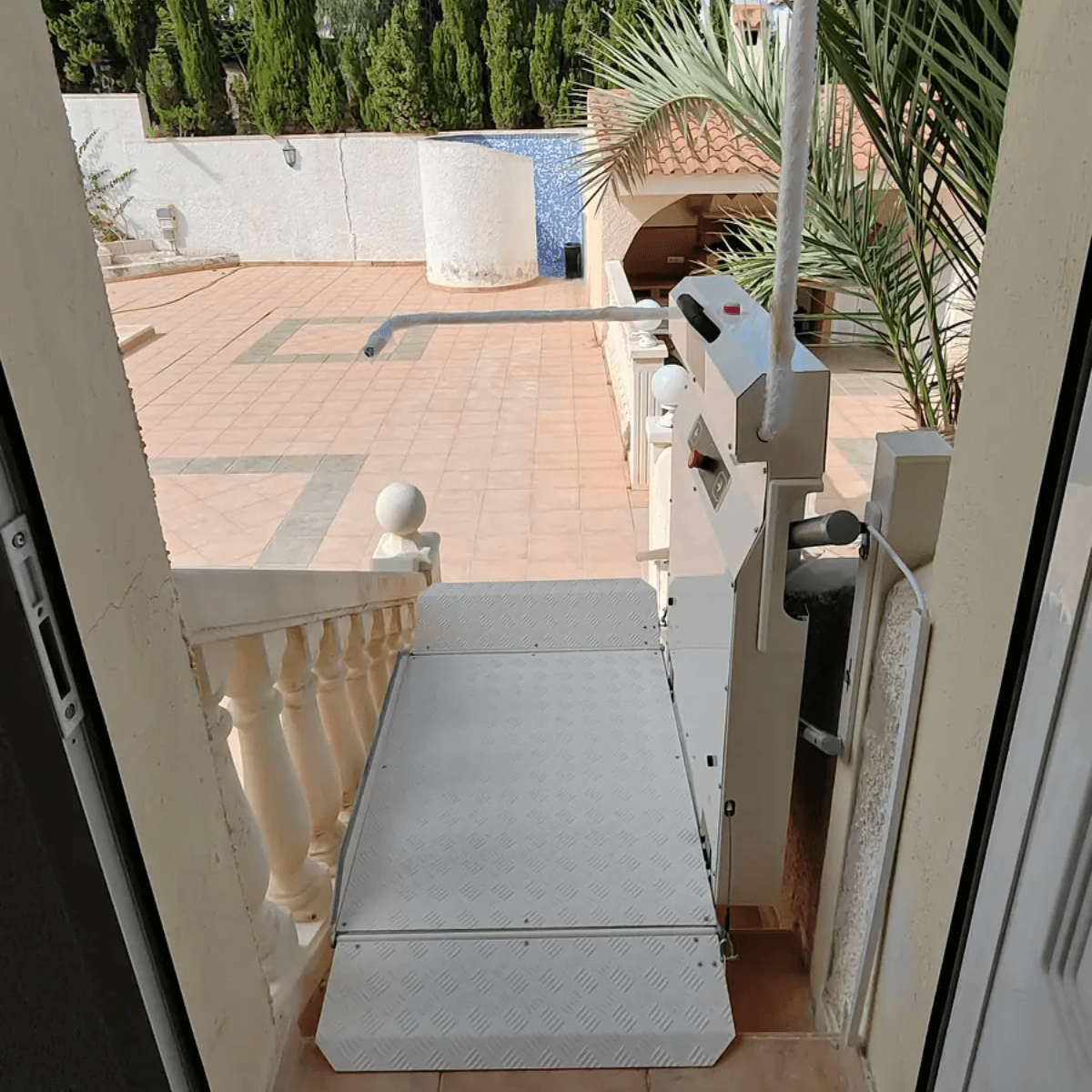
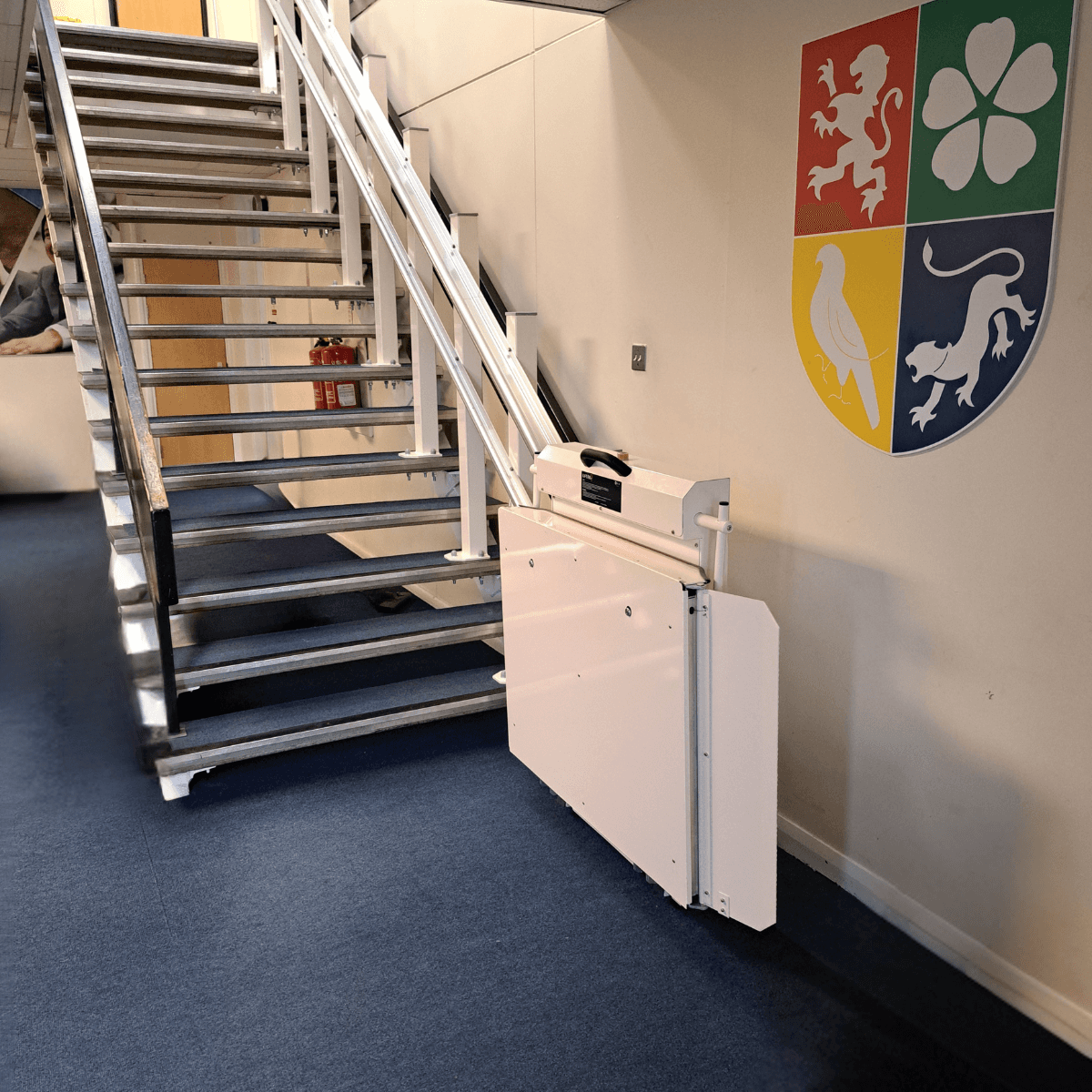
A platform lift is a compact vertical or inclined lifting system that carries passengers between levels without the need for a traditional lift shaft. Unlike a stairlift, it accommodates wheelchair users and can be installed indoors or outdoors with minimal structural work.
Types of platform lift
Platform lifts come in several configurations — from open step lifts and inclined platform lifts that travel along a staircase, to enclosed vertical platform lifts with automatic doors. There is a solution to suit most domestic and commercial properties.
How platform lifts work
Most platform lifts use an electric screw, hydraulic, or rack-and-pinion drive system. The unit travels along a track or rises vertically, with safety sensors, folding platforms or enclosures, and simple push-button controls as standard. Most installations require no pit or machine room.
Step Lift FAQ's
What is a step lift?
A step lift — also called a vertical platform step lift or low-rise platform lift — is a powered lifting platform designed to carry a person vertically between two levels separated by one to three steps or a height change of up to approximately 2,000mm. Unlike a stairlift which travels along the angle of a staircase, a step lift rises straight up and down alongside the existing steps, leaving them fully intact. Step lifts are used at residential entrances, internal split levels, and commercial building thresholds.
A stairlift seats the user on a small chair attached to a rail and travels along the angle of the stairs — it cannot accommodate a wheelchair and requires the user to transfer. A step lift carries the user on a full platform, meaning wheelchair users can use it without any transfer. A step lift installs alongside existing steps without fixing to them and leaves the steps fully accessible to other users.
A step lift is a type of platform lift specifically designed for low-rise applications — overcoming one to three steps or a height change of up to 2,000mm. A through-floor platform lift provides full floor-to-floor access between storeys. An inclined platform stairlift travels along the staircase for wheelchair users. The term platform lift covers all three types.
Three main configurations are available. A wall-mounted step lift fixes its drive column to an adjacent wall. A stanchion-mounted step lift uses freestanding posts fixed to the ground — suitable where no wall is available. An integrated step lift is built into the step structure itself and used in prestige commercial settings. All types are available in indoor and outdoor specifications.
An outdoor step lift is engineered for external use using stainless steel or powder-coated aluminium construction, sealed weatherproof motor and control units, drainage channels in the platform floor, and UV-resistant finishes. Not all step lifts are rated for outdoor use — always confirm outdoor certification before specifying a model for an external entrance.
How is a step lift powered?
Most step lifts run on a standard 240V single-phase domestic electricity supply from a dedicated spur at your consumer unit — no specialist electrical installation is required. A battery backup system is standard on all modern step lifts, allowing the platform to return safely to the lower level in a mains power failure. The battery is a safety feature only and does not power the lift for normal use.
Most residential step lifts carry one person at a time — standing, in a wheelchair, or using a mobility aid. Standard residential step lifts have a rated load capacity of 250kg to 400kg, covering the combined weight of the user and any wheelchair or mobility aid. Always confirm load capacity against the heaviest anticipated load.
A step lift overcomes one to three steps or a height change of up to approximately 2,000mm. For a greater number of steps or a full staircase between floors, an inclined platform stairlift or through-floor homelift is the more appropriate solution.
Most residential step lifts carry between 250kg and 400kg — the combined weight of all occupants, wheelchair or mobility aid, and any items carried. Commercial step lifts may carry up to 400kg to 500kg. Always confirm the rated load capacity against the heaviest anticipated combined load before specifying.
Step lift costs start from approximately £6,389 installed for a basic single-step residential model. For two to three steps costs typically rise to £8,000 to £12,000. Commercial-grade outdoor step lifts start from £10,000 to £15,000. Final costs depend on height of travel, mounting configuration, indoor or outdoor specification, and any groundwork or electrical supply works required.
Step lifts require minimal building work. The main costs are groundwork to prepare the base surface — typically £300 to £1,500 if required — and a dedicated electrical spur from the consumer unit, typically £200 to £500 if not already present. No structural alteration to the property is involved so decoration and making good is generally not required.
Step lifts use approximately 0.1 to 0.3 kWh per journey — a few pence per trip at current UK electricity rates. Running costs for domestic use are negligible. The main ongoing cost is periodic servicing — typically £150 to £250 per annual service.
Residential step lifts require an annual service costing £150 to £250. Commercial step lifts subject to LOLER require a six-monthly examination typically costing £200 to £400 per visit. A maintenance contract typically costs £150 to £350 per year.
Can I get a grant for a step lift?
Yes. The Disabled Facilities Grant is available through local councils and can fund up to £30,000 in England and £36,000 in Wales toward a step lift installation for eligible disabled applicants. The grant is means tested. Apply through your local council's adult social care or housing team. An occupational therapist assessment is required before approval. Do not begin any installation before receiving formal written grant approval.
Can I finance a step lift?
Yes. Some installation companies offer finance directly — including interest-free credit or monthly payment plans. An unsecured personal loan is another option. Since step lifts start from £6,389, the Disabled Facilities Grant frequently covers the full cost for eligible applicants, making finance less commonly needed than for higher-cost lift types.
Can I get VAT relief on a step lift?
Yes — in many cases. A step lift supplied and installed for a disabled person for domestic use may qualify for zero-rated VAT under HMRC Notice 701/7, saving 20% on the total cost. Your installer will confirm eligibility and apply the correct VAT rate automatically. Standard rate VAT at 20% applies to commercial installations.
In most cases planning permission is not required as it is classed as permitted development. Listed buildings require listed building consent before any external alteration. Properties in conservation areas should check with the local planning authority. Conservation officers are generally supportive of step lift installations as they are fully reversible.
In most cases no — a step lift does not involve structural alteration to the property. For commercial installations being specified for Equality Act or Part M compliance, your installer will confirm whether any regulatory notification is required.
No. Step lifts sit directly on the ground or floor surface alongside the existing steps. The drive mechanism is contained within the compact drive column. No below-surface excavation is required.
How does a step lift work?
A step lift uses a simple electric or hydraulic drive system that raises and lowers the platform vertically between two fixed levels. The user boards at the lower level and operates the lift using push-button controls on the platform or at a remote call station. Safety sensors monitor for obstructions throughout the journey. The platform locks securely at the upper level and the user exits.
Most residential step lift installations are completed within a single day — including fixing the drive column or stanchion posts, assembling the platform, connecting the electrical supply, and commissioning all safety devices. Where significant groundwork is required this may be a separate preparatory visit.
What happens in a power cut?
All modern step lifts include a battery backup that activates automatically when mains power fails, allowing the platform to return safely to the lower level so the user can exit. The lift remains parked at the lower level until mains power is restored. Battery backup is standard on all reputable step lifts sold in the UK.
How long does a step lift last?
A well-maintained step lift typically lasts 15 to 20 years or more. Outdoor step lifts may require slightly more attention due to weather exposure but regular annual servicing mitigates this significantly.
A step lift site survey typically takes 20 to 45 minutes. The surveyor assesses the number and height of steps, surface condition at the base, wall availability for mounting, electrical supply position, and whether an indoor or outdoor specification is required.
Yes — provided the platform size is correctly specified. A step lift carries the wheelchair user and their chair as a complete unit — no transfer required. A standard manual wheelchair needs a minimum platform width of approximately 750mm to 800mm. A powered wheelchair needs 800mm to 900mm or wider. Always confirm exact wheelchair dimensions before specifying.
Is a step lift safe?
Yes. Key safety features include pressure-sensitive edges, folding safety barriers, anti-slip platform surface, battery backup, and emergency stop controls. All step lifts for use by people with impaired mobility should comply with BS EN 81-41 and carry a CE or UKCA mark.
Is a step lift noisy?
Modern step lifts are designed to operate quietly. Soft-start motor controllers — standard on most contemporary models — eliminate sudden jolts and reduce operational noise. Most users report step lifts as unobtrusive in everyday use.
A step lift may qualify for zero-rated VAT under HMRC Notice 701/7 if supplied and installed for a disabled person for domestic use, removing the standard 20% charge. Your installer confirms eligibility and handles the declaration.
Common options include:
Larger platform sizes for powered wheelchairs or higher load requirements
Outdoor weatherproof specification for external installations
Stanchion-mounted configuration where no wall is available
Custom powder coat colours to complement the property
Stainless steel or brushed aluminium finishes
Folding handrail options — single or double sided
Remote call stations for operation from both upper and lower levels
Key switch operation for commercial or shared-access installations
Extended battery backup
Automatic folding entry ramp
What size step lift do I need?
For a standing ambulant user most standard sizes are suitable. For a standard manual wheelchair a minimum platform width of 750mm to 800mm is required with a depth of 1,000mm to 1,200mm. For a powered wheelchair a minimum width of 800mm to 900mm is needed. Always bring exact wheelchair dimensions to any site survey.
Most step lifts have a platform of approximately 800mm x 1,000mm to 900mm x 1,200mm with the drive column adding a small footprint to one side. When in the lowered position the total depth is typically under 400mm. Existing steps remain fully accessible alongside the lift at all times.
No. A step lift installs alongside existing steps without removing or altering them. The steps remain fully accessible to all other users at all times. The platform folds or retracts when not in use so it does not obstruct the steps.
Outdoor-rated step lifts are designed to operate in cold and wet conditions — with sealed weatherproof controls, anti-corrosion materials, drainage channels in the platform, and in some models anti-freeze heating elements. Always confirm the model carries appropriate outdoor certification and IP rating for external installations.
Who installs step lifts in the UK?
Step lifts are installed by specialist lift installation companies — not general builders. Platform Lift UK connects homeowners and businesses across England, Wales, Scotland, and Northern Ireland with vetted step lift installation companies — free of charge and with no obligation.
The Disabled Facilities Grant covers up to £30,000 in England and £36,000 in Wales. Since step lifts start from £6,389, the DFG frequently covers the full cost for eligible applicants. Apply through your local council's adult social care or housing team. An occupational therapist assessment is required as part of the application.
What is a step lift?
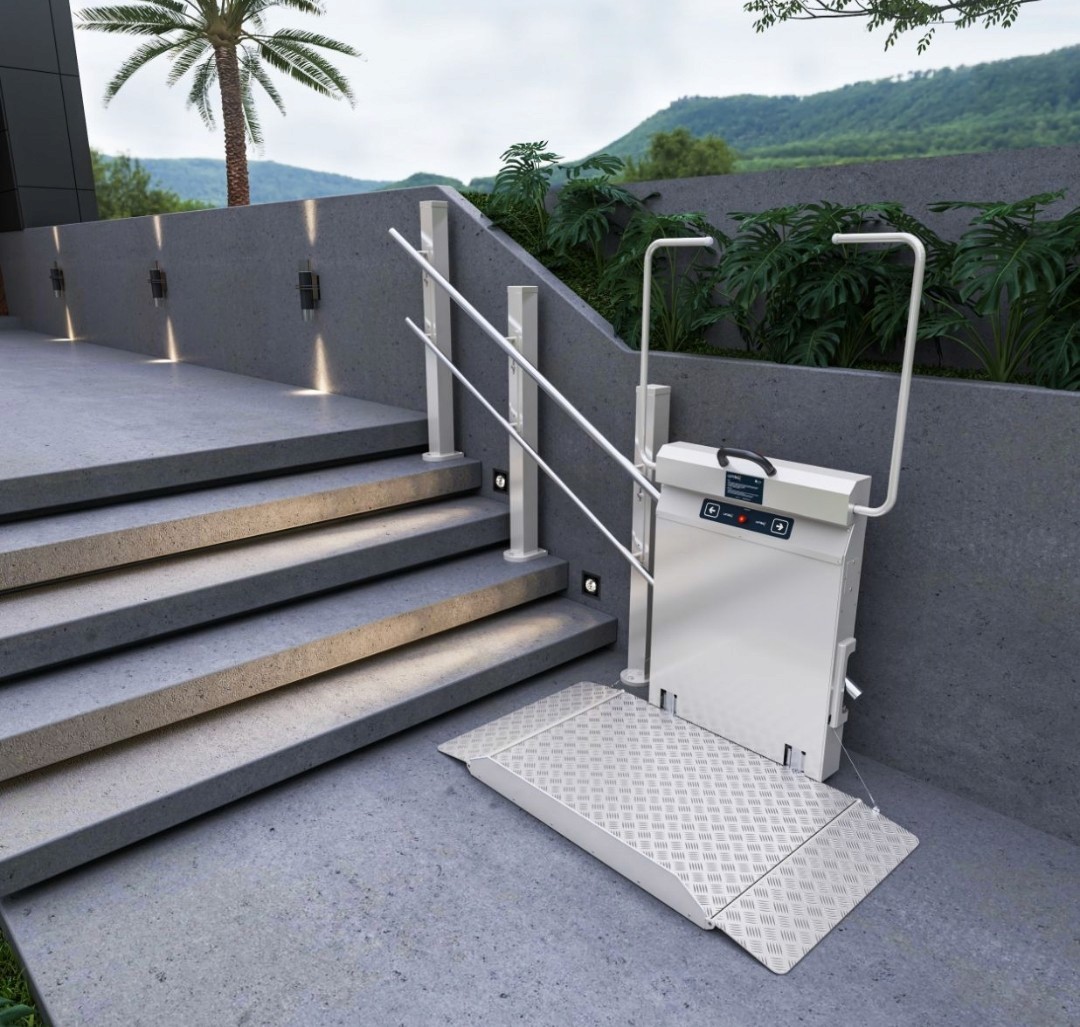
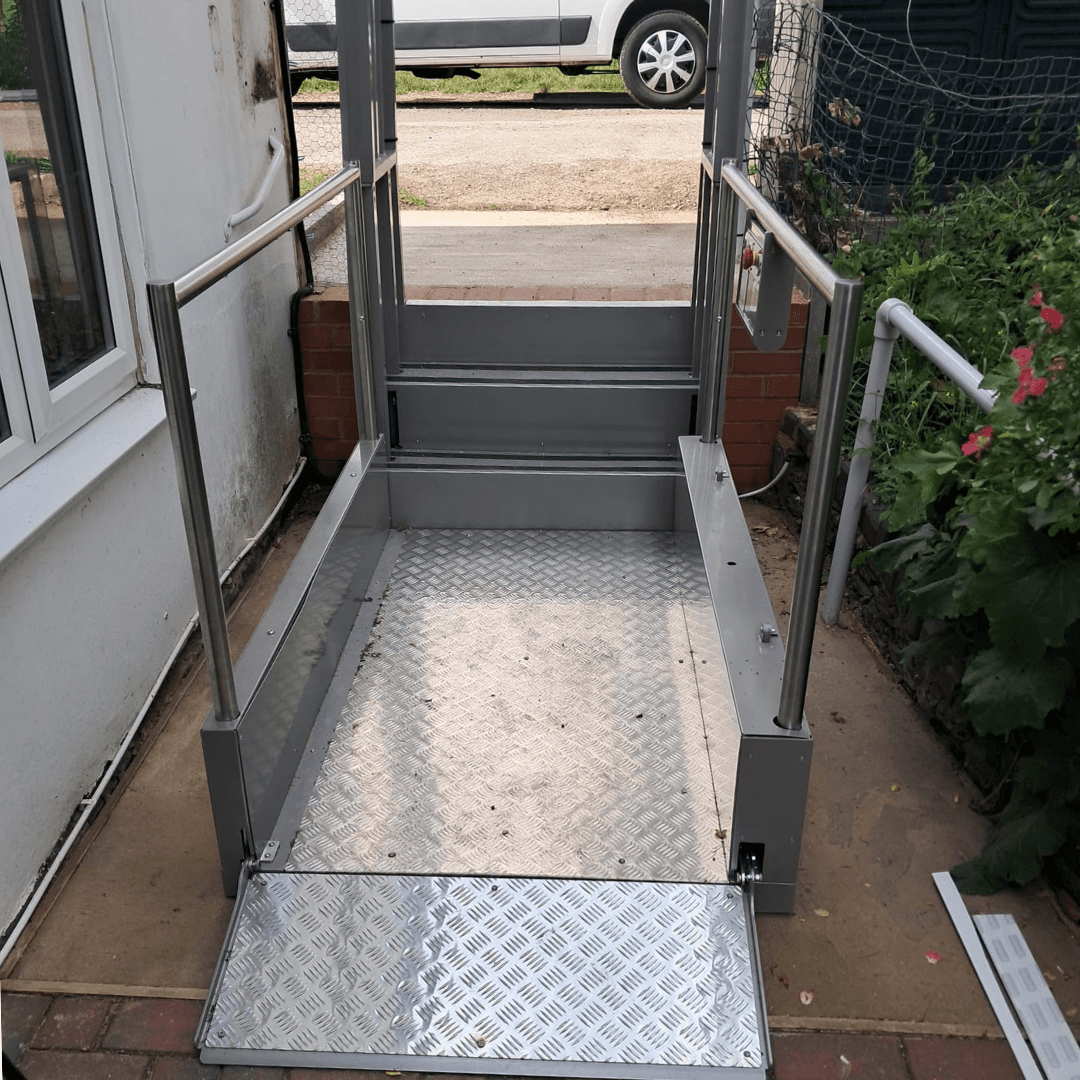
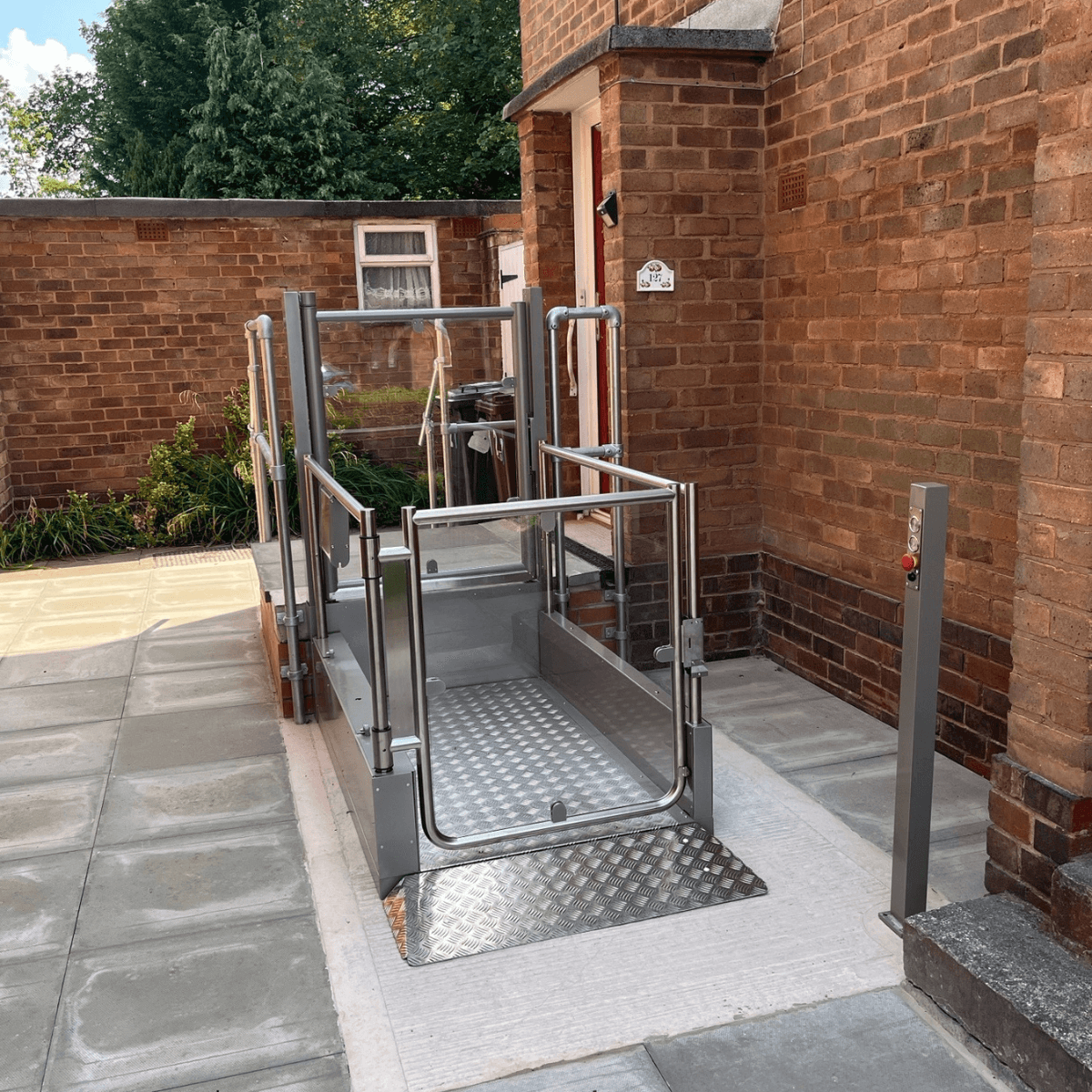
A step lift is a compact vertical platform lift designed to raise users over a small number of steps — typically between one and three. It sits flush against the steps, requires no ramp or shaft, and can be installed indoors or outdoors with minimal groundwork.
Types of step lift
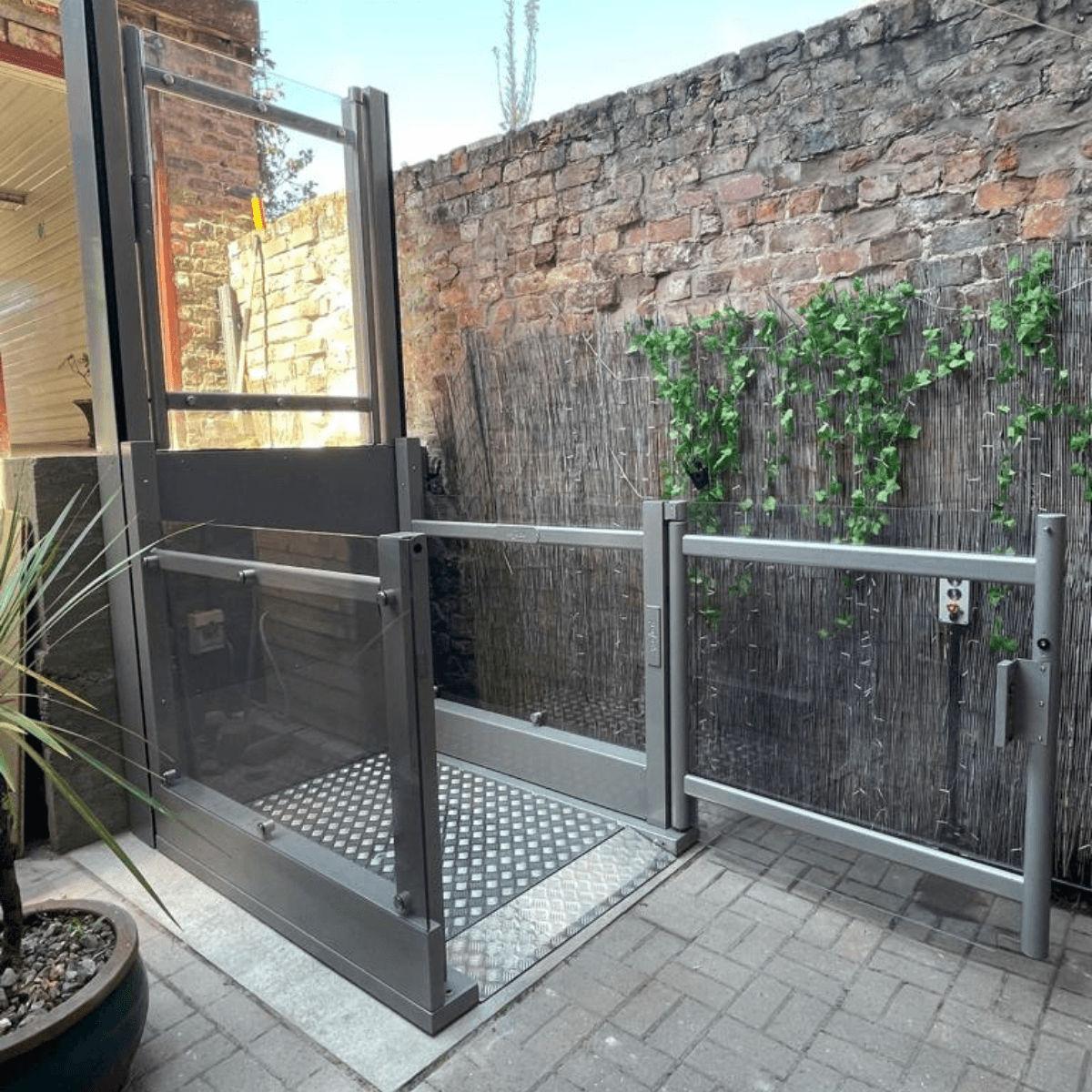
Step lifts are available in open or part-enclosed configurations, with options for single or double entry, glass or solid side panels, and manual or automatic gates. Both wall-mounted and freestanding stanchion-mounted versions are available to suit different properties.
How do step lifts work?
Step lifts use an electric drive system to raise and lower a platform vertically over a fixed height. A simple push-button control operates the lift, with safety sensors and edge protection as standard. Most units are weatherproof and suitable for permanent outdoor installation.
Dumbwaiter Lift FAQ's
A dumbwaiter lift is a small goods-only powered lift designed to carry items — food, laundry, files, stock, medical supplies, or other cargo — between floors of a building without requiring a person to carry them. Unlike a passenger lift or platform lift, a dumbwaiter is not designed or certified to carry people. The cabin or platform dimensions are sized specifically for goods rather than passengers. Dumbwaiter lifts are used in homes, restaurants, hotels, care homes, offices, libraries, and retail premises.
A passenger lift is designed and certified to carry people and must comply with the Lift Regulations 2016. A dumbwaiter is designed for goods only — it is significantly smaller, operates at lower speeds, and is governed by the Supply of Machinery (Safety) Regulations 2008 rather than the Lift Regulations. A dumbwaiter must never be used to carry people — this is both a safety and a legal requirement.
The terms dumbwaiter and service lift are often used interchangeably in the UK market. Both describe a goods-only lift designed to move items between floors. Some suppliers use the term service lift to describe heavier-duty commercial models, while dumbwaiter more commonly refers to residential and light commercial units. The distinction is not formally defined — the key specification to check is the load capacity, cabin size, and certification of the specific product.
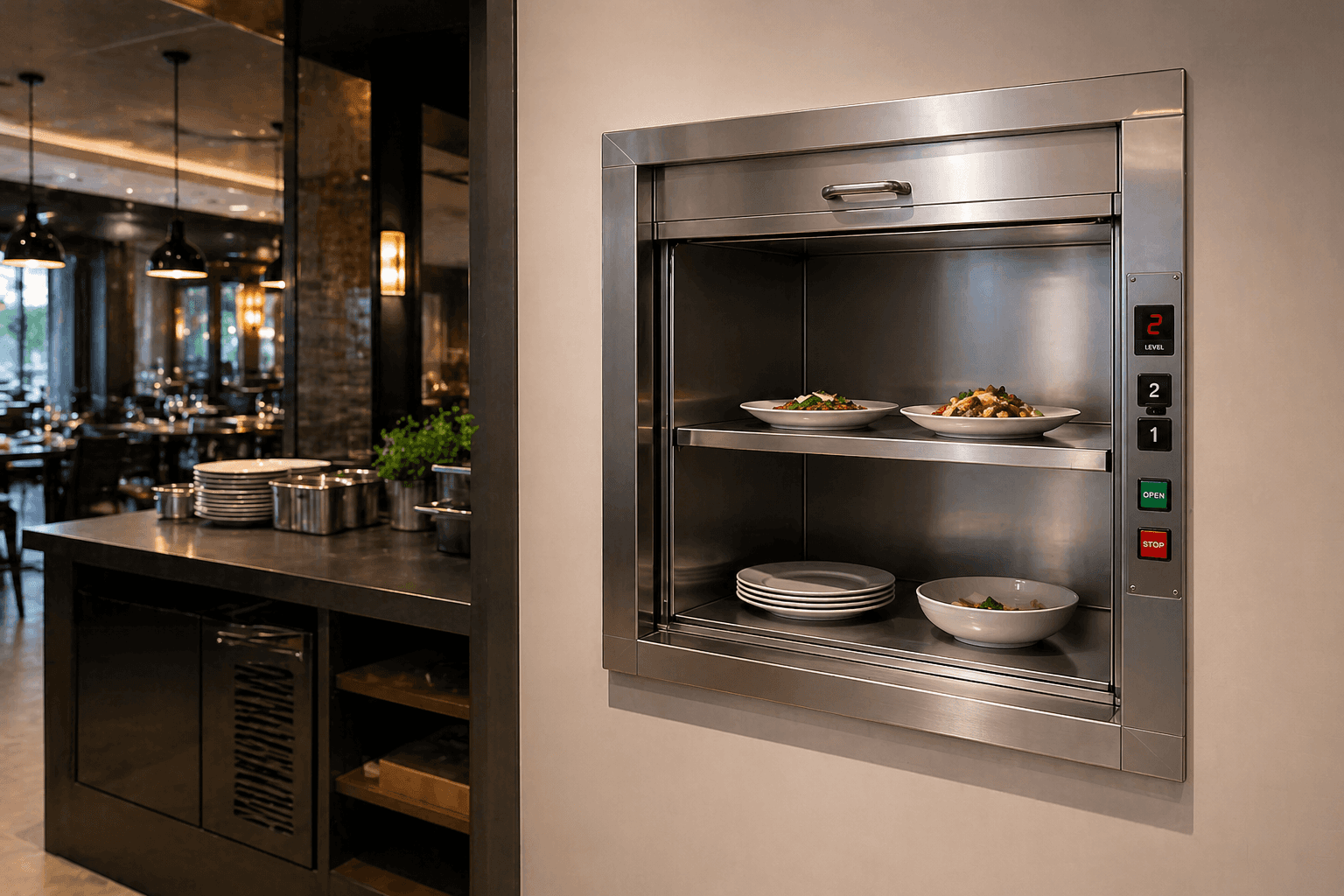
A counter-level dumbwaiter — sometimes called a pass-through lift or service hatch lift — is a compact dumbwaiter designed to deliver items directly to counter or worktop height at the upper landing rather than to floor level. These are widely used in restaurants and food service environments where kitchen staff need to transfer plated dishes directly to a service station without lifting. The cabin arrives at counter height on both floors, eliminating bending and reducing the risk of spillage.
Dumbwaiter lifts in the UK fall into three main categories. A residential dumbwaiter is compact, typically carrying 25kg to 100kg, and designed for domestic use — moving groceries, laundry, or household items between floors. A commercial dumbwaiter is larger and more robust, typically carrying 100kg to 300kg or more, and designed for restaurants, care homes, and office buildings. A manual dumbwaiter uses a pulley and rope system rather than a powered motor — the lowest cost option but limited to light loads and low-frequency use.
Most residential dumbwaiters run on a standard 240V single-phase domestic electricity supply from a dedicated spur at the consumer unit — the same supply used for most household appliances. Commercial dumbwaiters with larger motors may require a three-phase electrical supply. Your installer will confirm the electrical requirements for the specific model during the site survey. Battery backup is available on many models to allow the cabin to return to a safe position in the event of a mains power failure.
Most dumbwaiters are designed to serve two floors — the most common configuration for both residential and commercial use. Some models can be configured to serve three or more floors, with additional landing doors and extended shaft requirements for each additional floor. Each additional floor adds cost to the installation. Confirm the number of floors required with your installer when requesting a quotation.
The maximum weight capacity of a dumbwaiter varies by model and type. Residential dumbwaiters typically carry between 25kg and 100kg. Commercial dumbwaiters are rated at 100kg to 300kg or more depending on the model. Heavy-duty commercial models for industrial or healthcare use may carry higher loads. Always specify the maximum weight of the heaviest single load you intend to carry — not the average load — when requesting a quotation. The rated load capacity of the dumbwaiter must equal or exceed this figure.
Dumbwaiter costs start from approximately £8,000 to £12,000 installed for a residential two-floor installation where a suitable shaft void already exists. Where a new shaft needs to be constructed the cost typically rises to £12,000 to £18,000. Commercial dumbwaiter installations typically start from £15,000 to £25,000 for a standard two-floor configuration. Heavy-duty or bespoke commercial installations can cost £25,000 to £40,000 or above. Final costs depend on the cabin size, number of floors, drive system, shaft construction requirements, and finish specification.
The main building cost for a dumbwaiter installation is shaft construction — either lining an existing void such as a cupboard stack, or building a new shaft from scratch. Lining an existing void typically costs £500 to £2,000. Constructing a new shaft from blockwork or timber studwork typically costs £3,000 to £8,000 depending on the floor span, construction method, and number of floors. Landing door apertures and surrounds, and any decoration or making good after installation, are additional costs. Your installer will confirm all building costs during the site survey.
Dumbwaiters are economical to run. A typical residential dumbwaiter uses approximately 0.1 to 0.3 kWh per journey — a few pence per trip at current UK electricity rates. For typical domestic use electricity costs are negligible. Commercial dumbwaiters in high-cycle restaurant or care home environments use more electricity but running costs remain modest compared to other operational costs.
Residential dumbwaiters require a service every 6 to 12 months, typically costing £150 to £300 per visit. Commercial dumbwaiters in high-cycle environments typically require quarterly servicing at £250 to £500 per visit. A maintenance contract for a residential dumbwaiter typically costs £200 to £400 per year. Commercial maintenance contracts vary depending on the cycle frequency and model.
The Disabled Facilities Grant is specifically for adaptations that help disabled people access and move around their home — it does not typically fund dumbwaiter lifts as these are goods-only devices. If a dumbwaiter is being installed as part of a broader package of adaptations for a disabled person and a case can be made for its necessity, it may be considered alongside other DFG-funded works. Speak to your local council's occupational therapist for guidance on whether a dumbwaiter could form part of your DFG application.
Yes. Some dumbwaiter installation companies offer finance options directly — including interest-free credit for a fixed period or monthly payment plans. An unsecured personal loan from a bank or building society is another option for residential dumbwaiter purchases. For commercial dumbwaiter installations, business finance or equipment leasing may be more appropriate. Always compare the total amount repayable and APR before committing to any finance arrangement.
VAT relief on dumbwaiters depends on the specific application. For residential dumbwaiters installed in a disabled person's home as part of a qualifying adaptation for domestic use, the reduced rate of VAT at 5% may apply in some circumstances under HMRC Notice 701/7. Standard rate VAT at 20% applies to commercial dumbwaiter installations. The VAT position for residential dumbwaiters is less clear-cut than for passenger platform lifts — always confirm your VAT position with your installer before agreeing a final price.
In most cases planning permission is not required for a dumbwaiter installed within a residential or commercial property as the installation falls under permitted development. External installations or installations in listed buildings or conservation areas may require planning permission or listed building consent. A reputable installer will advise on the planning position for your specific property and building type.
A dumbwaiter installation in a domestic property is subject to Building Regulations notification, primarily in relation to any structural work involved in creating or modifying the shaft — such as cutting through floor joists to create an opening. The dumbwaiter unit itself is governed by the Supply of Machinery (Safety) Regulations rather than the Lift Regulations. A reputable installation company will advise on and manage any required Building Regulations notifications as part of the installation service.
Yes — a dumbwaiter requires a vertical shaft to travel through between floors. In existing buildings this can sometimes use an existing void such as a cupboard stack aligned on successive floors, which significantly reduces installation cost. Where no suitable void exists a new shaft must be constructed — typically from blockwork, timber studwork, or a proprietary enclosure system. The minimum shaft dimensions vary between manufacturers and models but a typical residential dumbwaiter requires approximately 600mm x 600mm in plan. Your installer will assess shaft options during the site survey.
A dumbwaiter operates using a motorised drive system — most commonly an electric rope or cable drive, rack and pinion, or hydraulic system — that raises and lowers the cabin between fixed landings. The user loads items into the cabin at one floor, closes the landing door, and operates push-button call controls to send the cabin to the required landing. Multi-floor models allow calling from any landing. Safety devices include door interlocks that prevent the cabin from moving unless all landing doors are closed, and overload sensors that prevent operation if the rated load capacity is exceeded.
Most residential dumbwaiter installations where a suitable shaft void already exists are completed within one to two days. Where significant shaft construction is required this may add an additional one to three days depending on the complexity of the works. Commercial dumbwaiter installations in new builds or major refurbishments are typically carried out as part of a broader construction programme. Your installer will confirm the expected installation programme during the quotation process.
Modern dumbwaiters are mechanically simple and reliable. If a breakdown occurs the cabin typically remains stationary at its last position — it does not drop or move unexpectedly due to safety braking systems. Most reputable installation companies offer emergency callout services as part of a maintenance contract. Regular annual or bi-annual servicing is the most effective way to prevent unexpected breakdowns. In a commercial environment where the dumbwaiter is business-critical, a maintenance contract with a guaranteed response time is strongly recommended.
A well-maintained dumbwaiter typically lasts 20 to 25 years or more. Commercial dumbwaiters used in high-cycle restaurant or care home environments may have a shorter effective lifespan depending on usage intensity and the quality of the maintenance regime. Regular servicing is the single most important factor in extending operational lifespan. Drive ropes or chains, landing door mechanisms, and motor components are the parts most commonly requiring attention over the lifespan of the product.
A dumbwaiter site survey typically takes between 30 and 60 minutes for a straightforward residential or commercial installation. The surveyor will assess shaft options, measure the available void or plan new shaft construction, confirm the number and location of landings, identify the electrical supply position, and discuss cabin size, drive system, and landing door finish options.
Yes — when correctly installed and maintained. Key safety features on modern dumbwaiters include door interlocks that prevent the cabin from moving unless all landing doors are fully closed, overload sensors that prevent operation if the rated capacity is exceeded, and safety braking devices that hold the cabin in position if the drive mechanism fails. A dumbwaiter must never be used to carry people — attempting to ride a dumbwaiter is extremely dangerous and illegal. Clear signage at each landing stating the goods-only purpose of the lift is strongly recommended for commercial installations.
Modern dumbwaiters are designed to operate quietly — particularly important for residential use where the lift travels through living or sleeping areas. Contemporary drive systems using vibration-damping motor mounts and noise-insulated shaft linings produce significantly less noise than older drum-and-cable systems. Soft-start motor controllers are standard on most contemporary models. Most homeowners report residential dumbwaiters as unobtrusive in daily use.
A dumbwaiter is a type of lift in the broad sense — it is a powered device that moves a payload between levels of a building. However, it is not a passenger lift and is not designed or certified to carry people. A dumbwaiter is governed by the Supply of Machinery (Safety) Regulations rather than the Lift Regulations that apply to passenger lifts. The key distinguishing feature is that a dumbwaiter carries goods only — never people.
Common options and bespoke features include:
- Cabin size upgrades for larger loads or specific tray formats
- Counter-level delivery — cabin arrives at worktop height rather than floor level at upper landings
- Stainless steel interior finish for food service and healthcare environments
- Custom landing door surrounds — bespoke joinery integration or powder-coated steel to match existing cabinetry
- Multi-floor configuration — serving three or more landings from a single installation
- Digital display panels showing the current position of the cabin at each landing
- Programmable door-open times at each landing
- Key switch operation to restrict use to authorised users
- Battery backup system for return-to-floor operation in a power failure
- Remote monitoring and fault diagnostics on some commercial models
- Hygiene-rated finishes for food preparation environments
The range of options varies between manufacturers and models. Your installer will present the available specification options for the recommended model during the site survey.
The right dumbwaiter size depends on the items you need to transport. For residential use — groceries, laundry, bottles — a small cabin of approximately 450mm x 450mm x 450mm internal is usually sufficient. For larger household items a medium cabin of 600mm x 600mm x 600mm is more appropriate. For commercial restaurant or care home use, a cabin large enough to accommodate the specific tray format, trolley, or equipment being transported is required — typically 700mm x 800mm or larger. Always specify the dimensions and weight of the largest single load before requesting a quotation.
The minimum shaft size depends on the specific model. A compact residential dumbwaiter typically requires a shaft of approximately 600mm x 600mm in plan. Larger residential and commercial models require proportionally larger shafts. In addition to plan dimensions, adequate head clearance at the top of the shaft and clear height at each landing for the door and control panel must be confirmed. Your installer will specify the exact shaft dimensions required for the recommended model during the survey.
A dumbwaiter can add practical value and convenience to a multi-storey home, particularly for older residents or those with mobility limitations who want to avoid carrying heavy items on stairs. Whether it adds financial value to the property depends on the buyer profile and the quality of the installation — a well-integrated dumbwaiter with bespoke joinery landing doors that blends into the kitchen or dining room is more likely to be seen as a positive feature than a basic functional installation.
Most residential and commercial properties can accommodate a dumbwaiter. The key question is whether an existing shaft void is available — a cupboard stack aligned on successive floors is the ideal scenario. If no void exists, a new shaft can be constructed in most properties with appropriate structural works. The minimum footprint required is approximately 600mm x 600mm per floor — a modest space requirement that can be accommodated in most kitchens, utility rooms, or service areas. A site survey will confirm the most practical shaft location for your specific property.
Dumbwaiters are installed by specialist lift installation companies — not general builders or joinery contractors. A reputable dumbwaiter installation company will carry out a full site survey, assess shaft options, specify the correct product for the application, manage any required Building Regulations notifications, install and commission the lift to the manufacturer's specification, and provide a warranty on parts and labour. Platform Lift UK connects homeowners and businesses across England, Wales, Scotland, and Northern Ireland with vetted dumbwaiter installation companies — free of charge and with no obligation.
Dumbwaiters are used across a wide range of residential and commercial settings. In residential properties they are typically installed by homeowners wanting to avoid carrying heavy loads on stairs — particularly older residents or those with mobility limitations. In commercial settings, restaurants and hotels use dumbwaiters to transfer food and equipment between kitchen and service floors. Care homes use them for meals, laundry, and medical supplies. Offices and libraries use them for document and equipment transport between floors. Retail premises use them for stock movement between storage and sales floors.
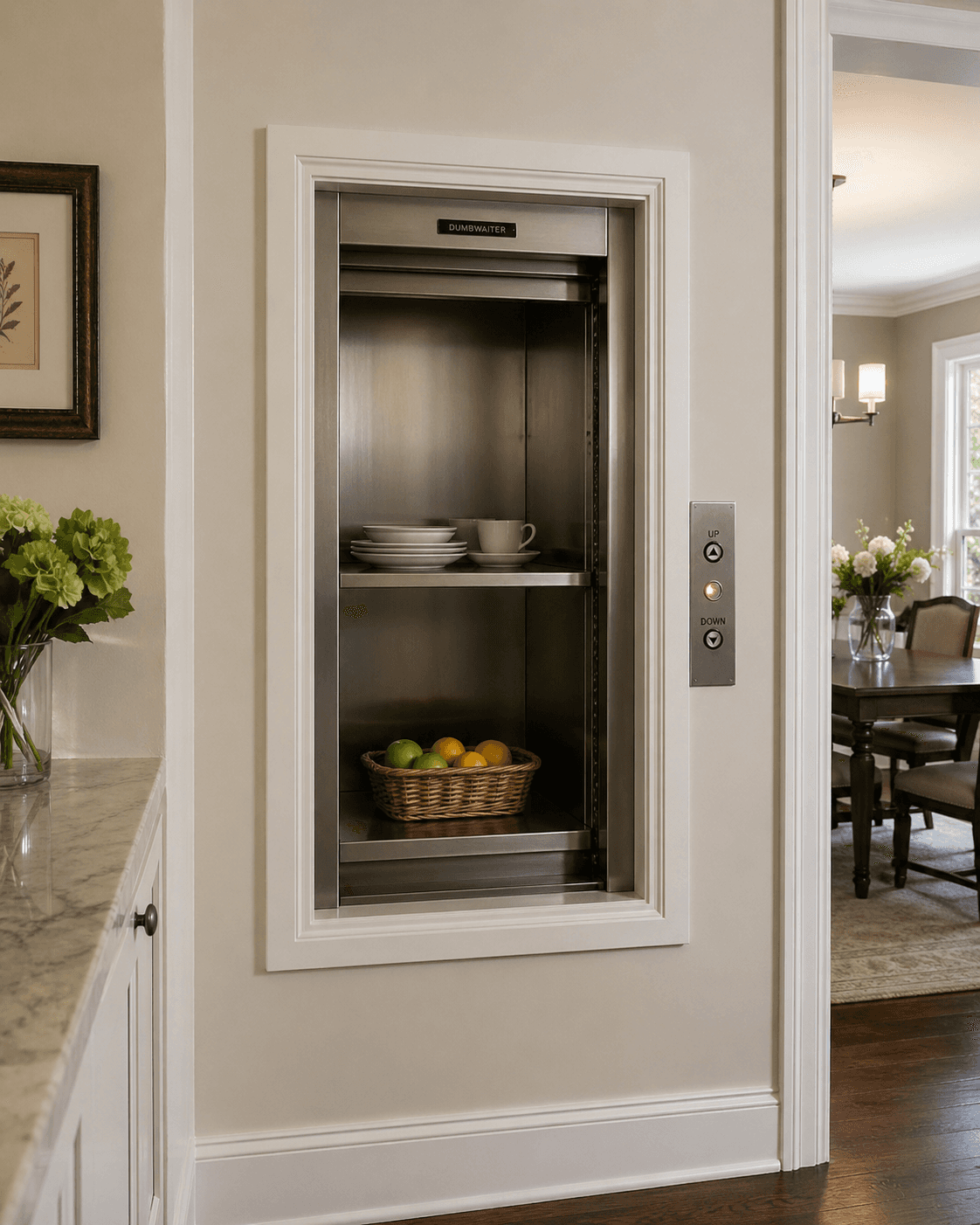
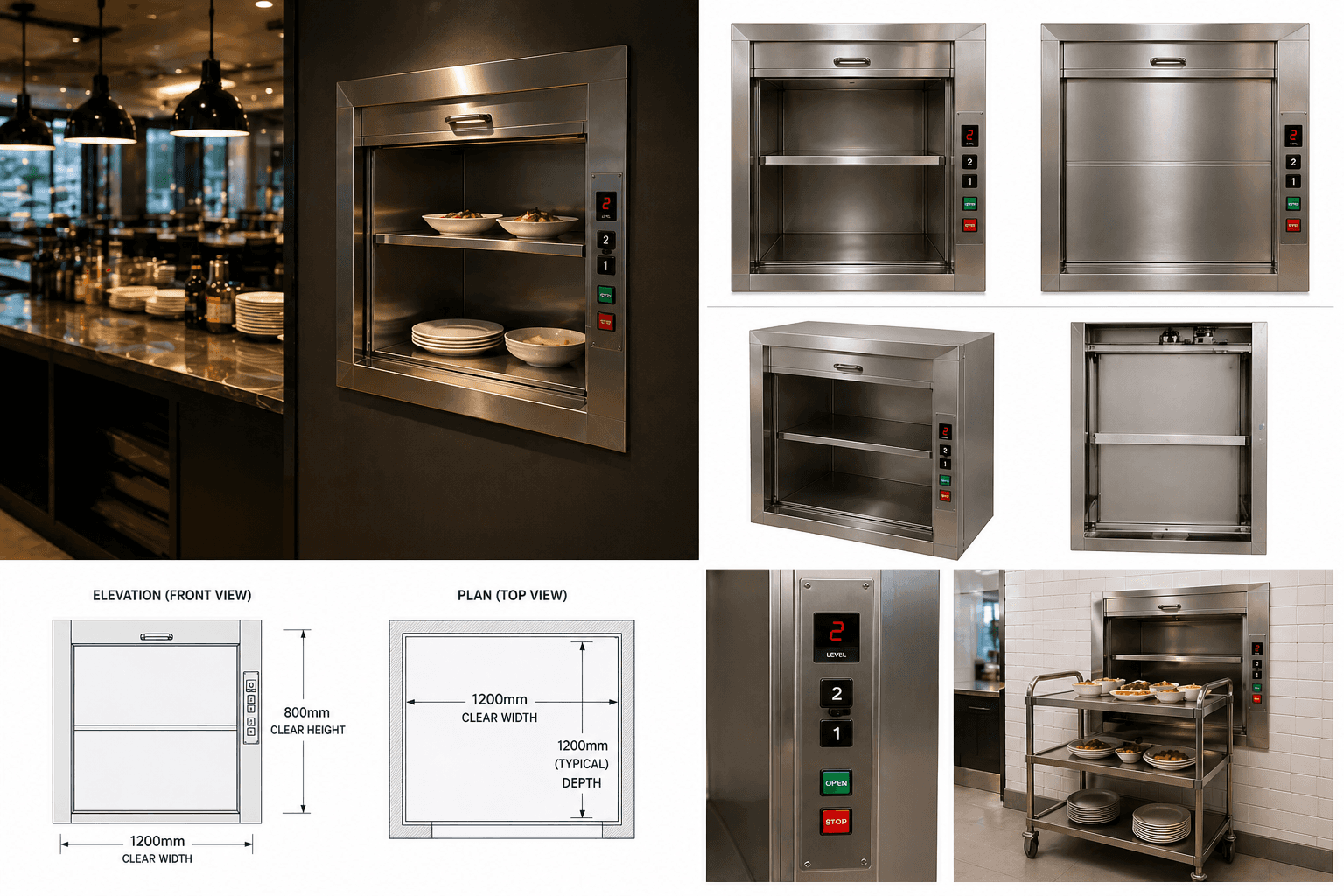
Compact and purpose-built, modern dumbwaiters require no passenger lift shaft or machine room. Most units fit neatly into a wall cavity with a standard single-phase power supply and minimal structural alteration.