Independent advice on inclined platform stairlifts across the UK. Compare straight and curved staircase options, VAT exemption guidance, and get free no-obligation quotes from vetted installers.

StepLifts®

What Are Step Lifts

Types

Costs

Get a Brochure

Homelift Guide.

Homelift Guide.

Safe access, every step.

Safe access, every step.

Brochure

A home lift can transform daily life for anyone finding the stairs difficult — giving back independent access to every floor of the home without the need for major structural work.

A home lift can transform daily life for anyone finding the stairs difficult — giving back independent access to every floor of the home without the need for major structural work.

This guide walks you through the different types of home lift available, what they cost, and everything you need to know before buying.

This guide walks you through the different types of home lift available, what they cost, and everything you need to know before buying.

What is a home lift?

What is a home lift?

What is a home lift?

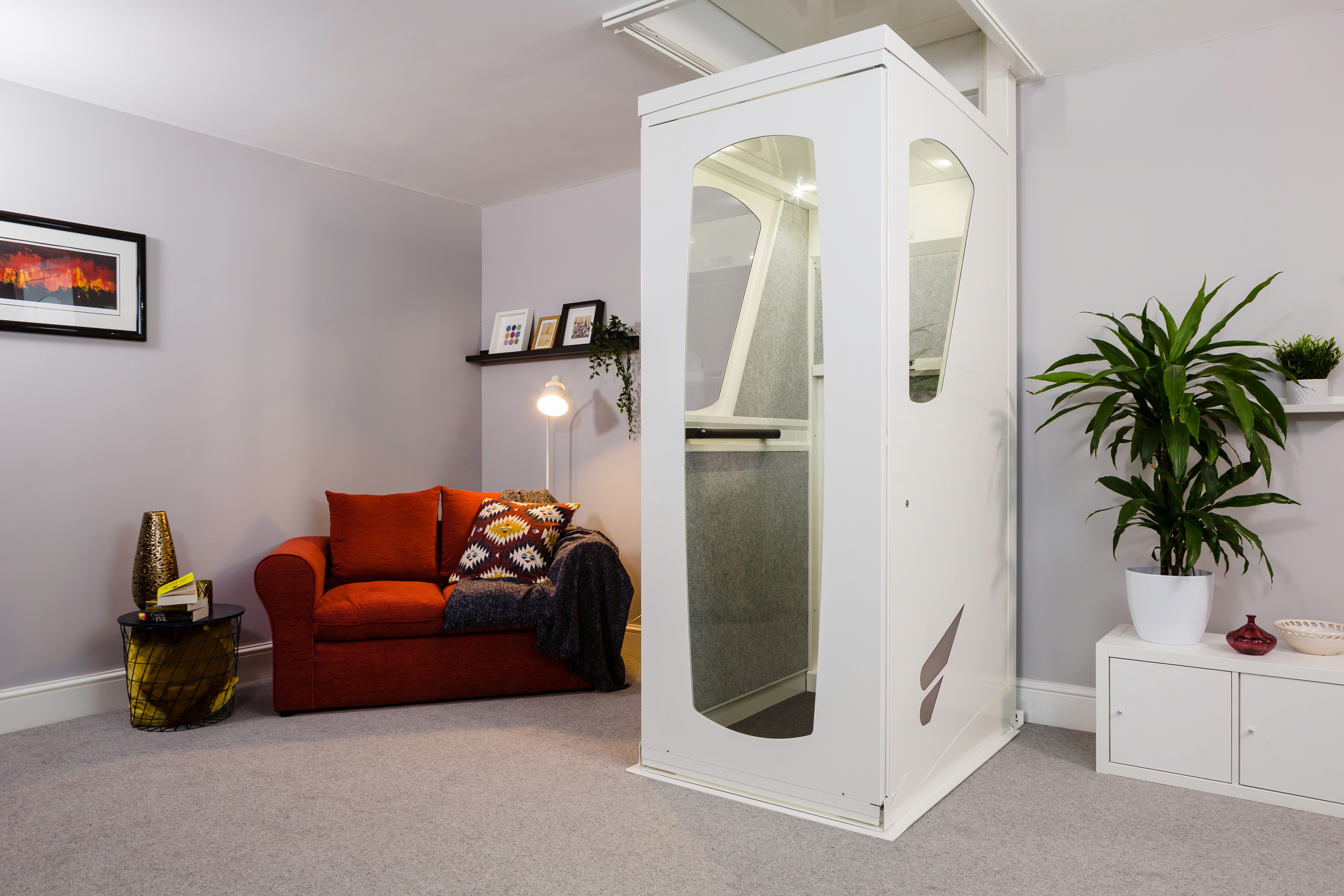
A home lift is a compact vertical lifting system installed within a residential property, carrying passengers between floors through an opening in the ceiling. Unlike an inclined platform stairlift which travels along the staircase, a home lift travels straight up and down — making it suitable for users who need a fully enclosed cabin and prefer not to use the staircase at all.

A home lift is a compact vertical lifting system installed within a residential property, carrying passengers between floors through an opening in the ceiling. Unlike an inclined platform stairlift which travels along the staircase, a home lift travels straight up and down — making it suitable for users who need a fully enclosed cabin and prefer not to use the staircase at all.

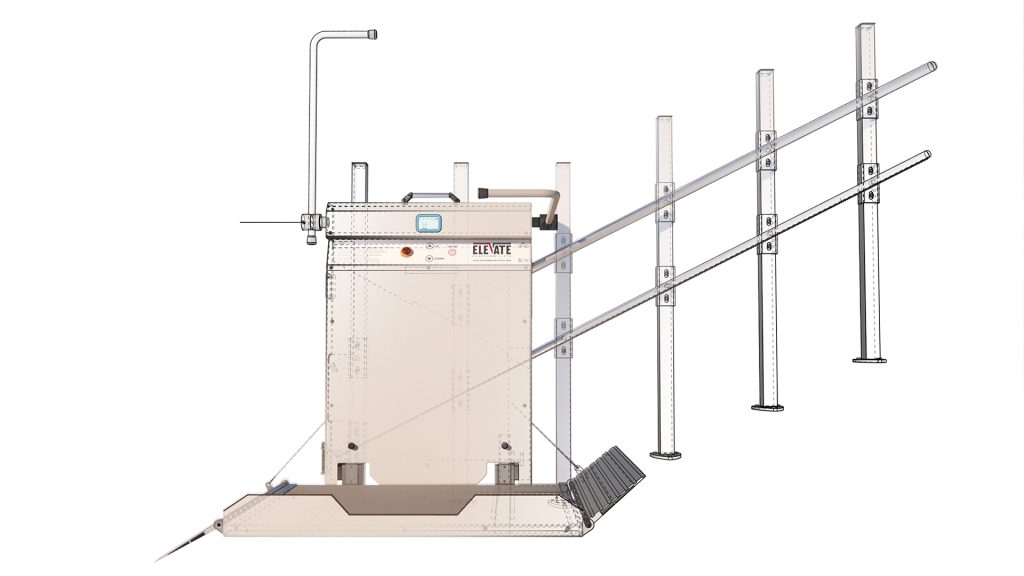
Technical illustration of an Elevate inclined platform stairlift — showing the motorised carriage unit, inclined rail system, platform with folding entry ramp, and wall-mounted support posts
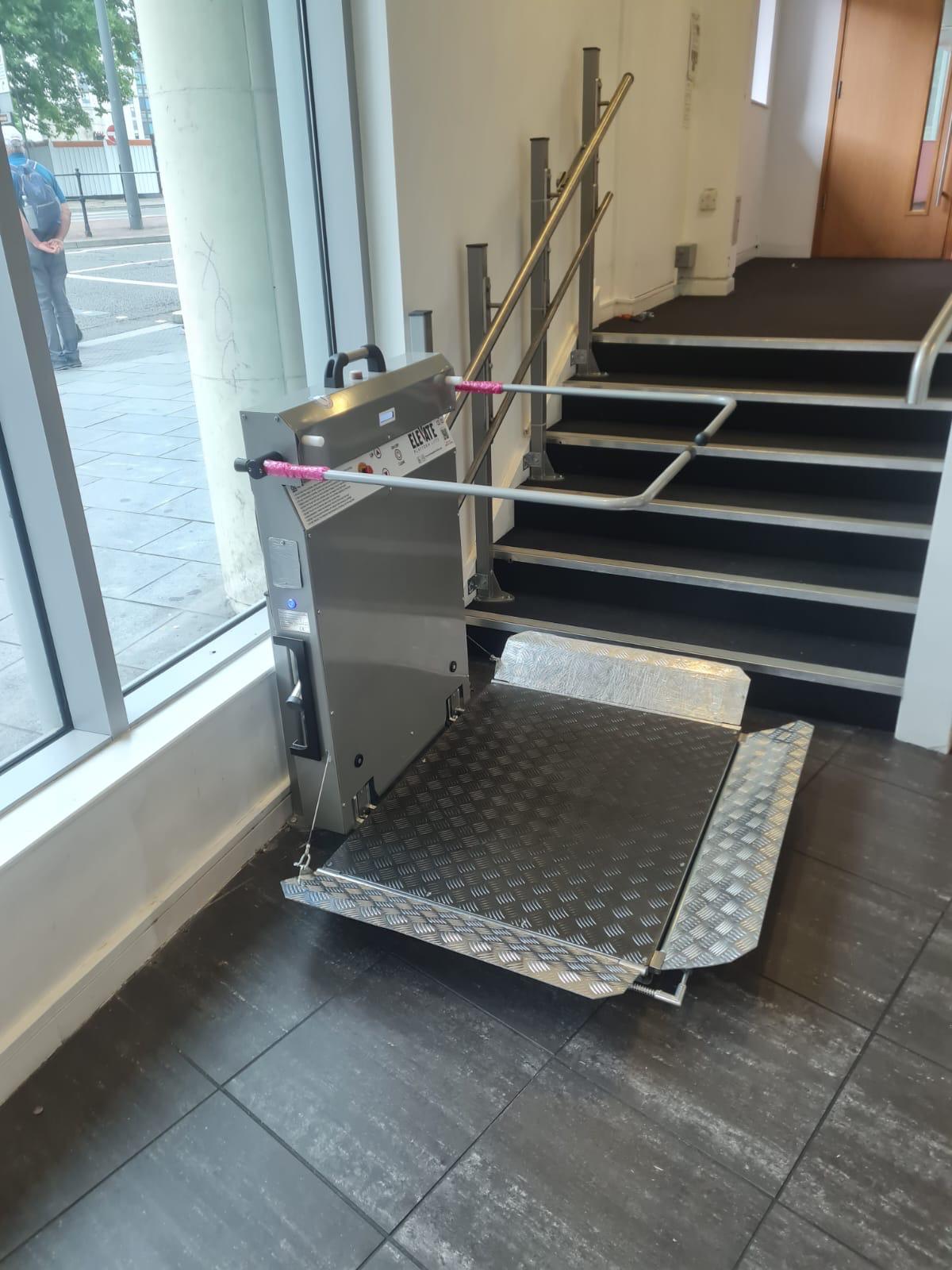
Elevate inclined platform stairlift at lower landing in a commercial building — chequerplate platform fully deployed with folding entry ramp, installed beside internal steps with floor-to-ceiling glazing, stainless steel handrails visible on staircase

Types of home lift

Types of home lift

Types of home lift

Home lifts are available in several configurations to suit different properties and budgets — from through-floor platform lifts with an open or partially enclosed platform, to fully enclosed cabin lifts with automatic doors and a finished interior. Vacuum-powered pneumatic lifts are also available for properties where a pit or shaft is not practical. There is a home lift solution to suit most domestic properties, room layouts, and accessibility requirements.

Home lifts are available in several configurations to suit different properties and budgets — from through-floor platform lifts with an open or partially enclosed platform, to fully enclosed cabin lifts with automatic doors and a finished interior. Vacuum-powered pneumatic lifts are also available for properties where a pit or shaft is not practical. There is a home lift solution to suit most domestic properties, room layouts, and accessibility requirements.

How do home lifts work?

How do home lifts work?

How do home lifts work?

Most home lifts operate using a hydraulic, electric screw, or pneumatic drive system. The lift travels vertically through a pre-cut opening in the floor between levels, with safety sensors, enclosed barriers or doors, and simple push-button controls as standard. Modern home lifts require no machine room and can be installed with minimal structural work, typically within two to three days.

Most home lifts operate using a hydraulic, electric screw, or pneumatic drive system. The lift travels vertically through a pre-cut opening in the floor between levels, with safety sensors, enclosed barriers or doors, and simple push-button controls as standard. Modern home lifts require no machine room and can be installed with minimal structural work, typically within two to three days.

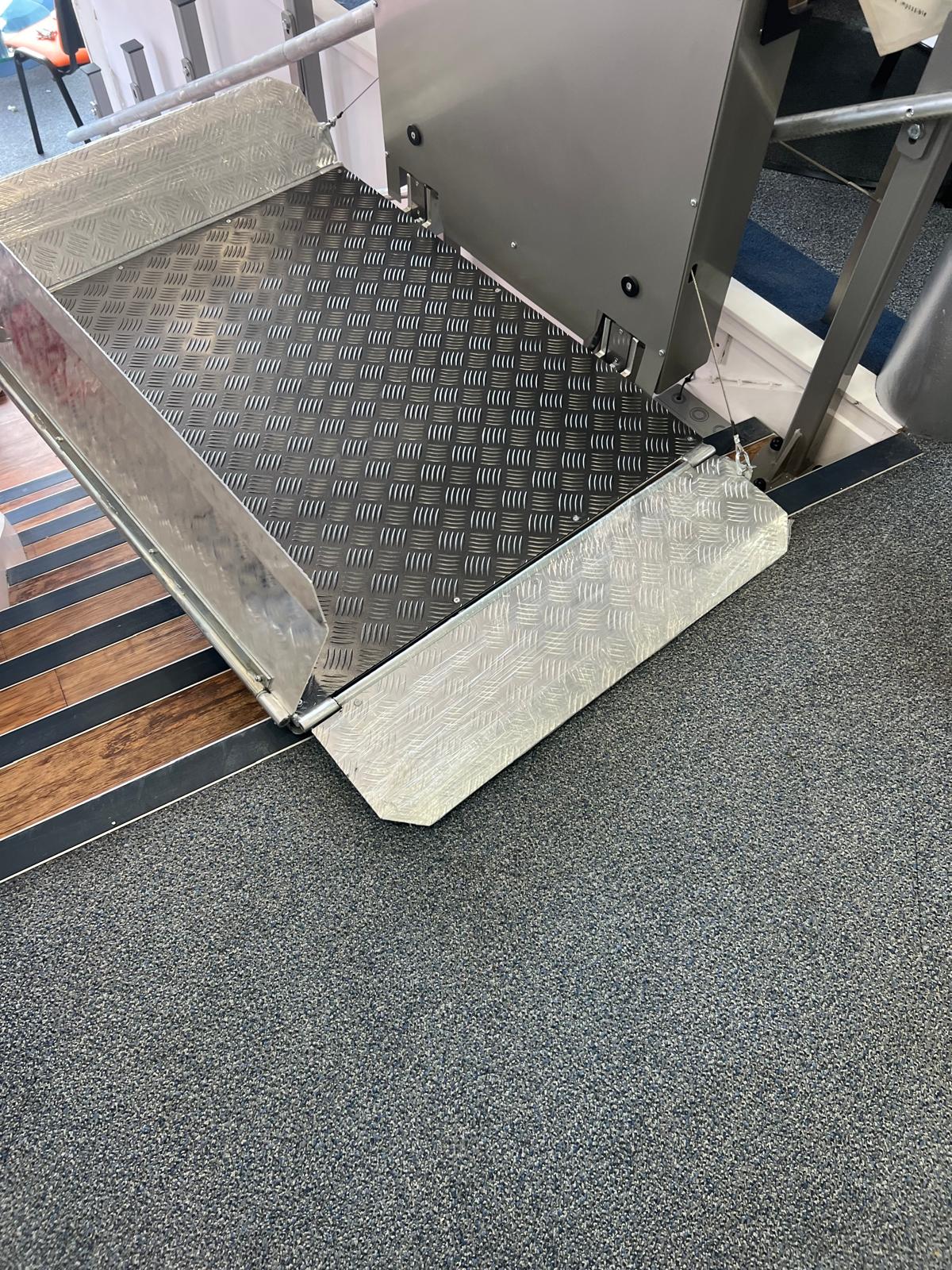
Indoor inclined platform stairlift at lower landing — anti-slip chequerplate platform with folding entry ramp deployed onto carpeted floor, staircase rail visible to the left, commercial interior installation

Cost Considerations

The cost of a home lift varies depending on the type of lift, the size of the cabin, the number of floors served, site conditions, and the level of finish required. Installation, ongoing servicing, and long-term maintenance should all be factored into your budget when considering a home lift solution.

Seeking multiple quotes ensures the best value. Government funding, such as the Disabled Facilities Grant, may also be available for eligible homeowners across the UK. Click here to get a free quotation.

Compliance & Regulations

Home lifts installed in the UK must comply with relevant British and European standards including BS EN 81-41 for vertical platform lifts and BS EN 81-3 for private residence lifts, alongside applicable building regulations. Meeting these standards ensures safe operation and legal compliance in a domestic setting.

Proper documentation, routine inspection, and annual servicing are essential for continued safe use and insurance compliance.

How Much Does a Home Lift Cost in the UK?

How Much Does a Home Lift
Cost in the UK?

Home lift costs vary depending on the type of lift, cabin size, number of floors served, and the specification and finish selected. As a general guide: a through-floor platform lift with an open or semi-enclosed platform typically starts from around £14,000 to £20,000 installed. A fully enclosed cabin lift with automatic doors and a finished interior typically costs from £17,000 to £30,000 depending on the model and specification. Pneumatic vacuum lifts — which require no pit or shaft — typically start from around £20,000 installed. VAT relief is available on home lifts purchased for the personal use of a person with a disability or chronic illness — covering both the product and the installation. The Disabled Facilities Grant is also available through local councils and can fund home lift installations for eligible applicants up to £30,000 in England.

The only way to get an accurate cost for your specific property is a free survey by a qualified installer. Platform Lift UK arranges this for you at no cost and with no obligation to proceed. Click here for a quotation.

Do I Need Planning Permission for a Home Lift?

Do I Need Planning Permission
for a Home Lift?

In most cases planning permission is not required for a home lift installation at a residential property. The works are generally classed as permitted development — a domestic adaptation that does not require local authority approval. If your property is listed or within a conservation area, listed building consent may be required before any works begin, particularly where external alterations or structural modifications are involved.

For properties requiring a through-floor opening, Building Regulations approval will typically be required to ensure the structural integrity of the floor is maintained and the installation meets safety standards. Your installer will advise on this and manage any required applications on your behalf.

Home Lifts and the Equality Act 2010

Home Lifts and the
Equality Act 2010

While home lifts are primarily a domestic product, they are increasingly specified in smaller commercial buildings, care homes, and mixed-use properties where a full passenger lift is not practical. For businesses, the Equality Act 2010 places a legal duty on service providers to make reasonable adjustments to ensure disabled people can access their services. A home lift or vertical platform lift can fulfil this duty in smaller premises where a commercial lift is disproportionate in cost or scale.

Where a home lift is being installed in a commercial or semi-commercial setting, your installer will advise on the applicable regulations and ensure the installation meets Part M of the Building Regulations.

How Does a Home Lift Work?

Most home lifts operate using an electric screw, hydraulic, or pneumatic drive system. The lift travels vertically through an opening cut in the floor between levels — the cabin rising smoothly from the lower floor to the upper floor at the touch of a button. Safety sensors detect any obstruction in the path of travel and halt the lift immediately. Enclosed doors or barriers prevent the user from exiting until the cabin has reached the correct level, and battery backup allows the lift to descend to the lower floor in the event of a power failure.

Controls are simple push-button operation inside the cabin, with call stations at each floor allowing the lift to be sent or called from outside. Modern home lifts are quiet, compact, and designed to complement a domestic interior rather than dominate it.

Types of Home Lift — Which is Right for Your Property?

Types of Home Lift — Which is
Right for Your Property?

Home lifts are available in several configurations to suit different properties, budgets, and levels of accessibility need. Through-floor platform lifts offer an open or semi-enclosed platform that passes through a ceiling opening — a cost-effective solution where a full cabin is not required. Fully enclosed cabin lifts provide a finished interior with automatic doors, handrails, and interior lighting, and are the most popular choice for homeowners seeking a long-term, aesthetically considered solution. Pneumatic vacuum lifts use air pressure rather than a mechanical drive and require no pit, shaft, or machine room — making them suitable for properties where structural work needs to be kept to a minimum.

The right choice depends on your property layout, the number of floors to be served, your budget, and whether the lift needs to accommodate a wheelchair or mobility aid. Platform Lift UK's vetted installers will advise on the most appropriate solution for your specific circumstances during a free no-obligation survey.
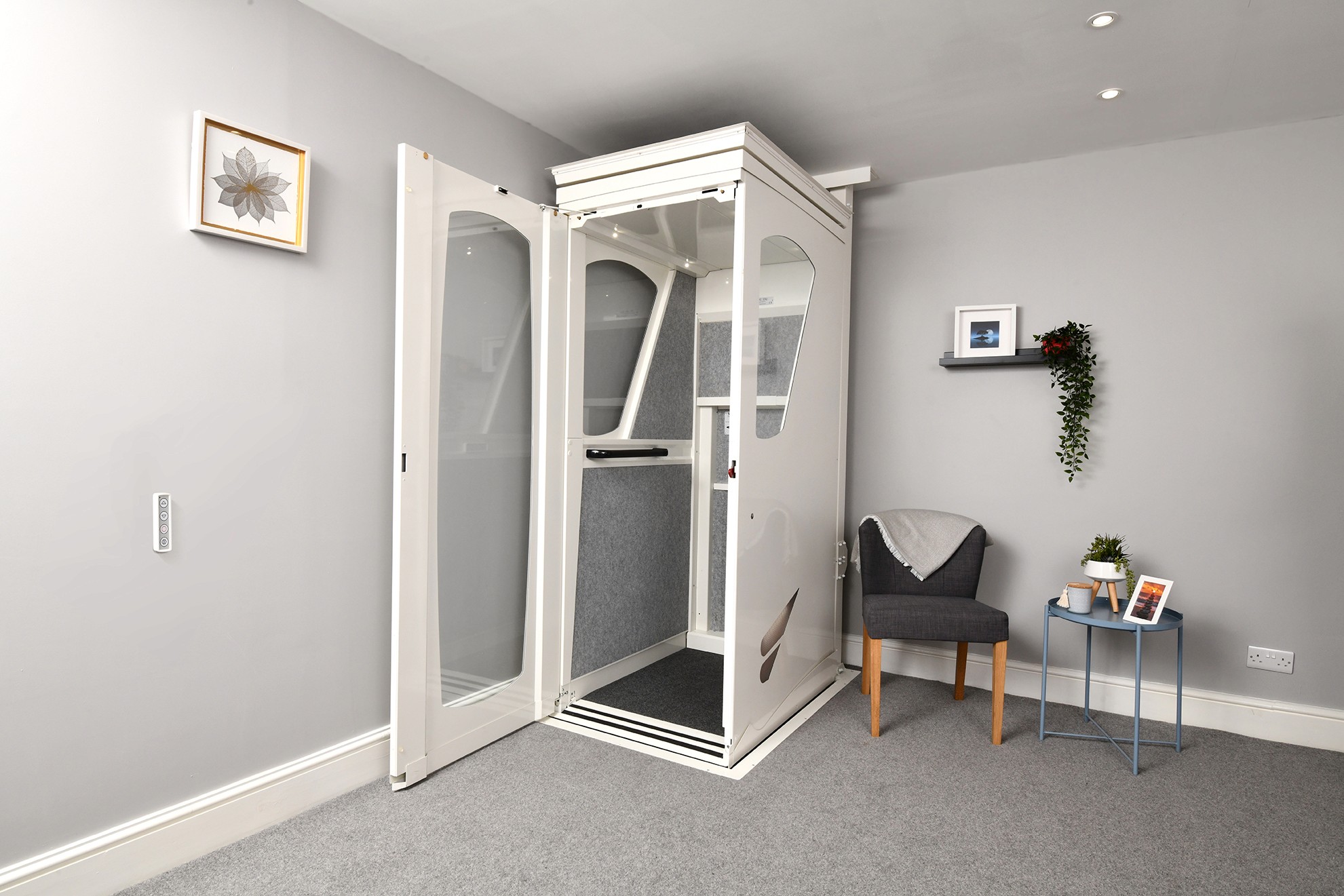
Elevate AVA Reach home lift installed in a UK residential bedroom — white enclosed cabin with open hinged door showing grey upholstered interior, wall-mounted call control panel, through-floor installation with compact footprint

Accessibility for all.

Accessibility for all.

Home lifts enable wheelchair users, those with limited mobility, and anyone finding the stairs difficult to move independently between floors — providing safe, comfortable access to every level of the home without relying on the staircase.

Home lifts enable wheelchair users, those with limited mobility, and anyone finding the stairs difficult to move independently between floors — providing safe, comfortable access to every level of the home without relying on the staircase.

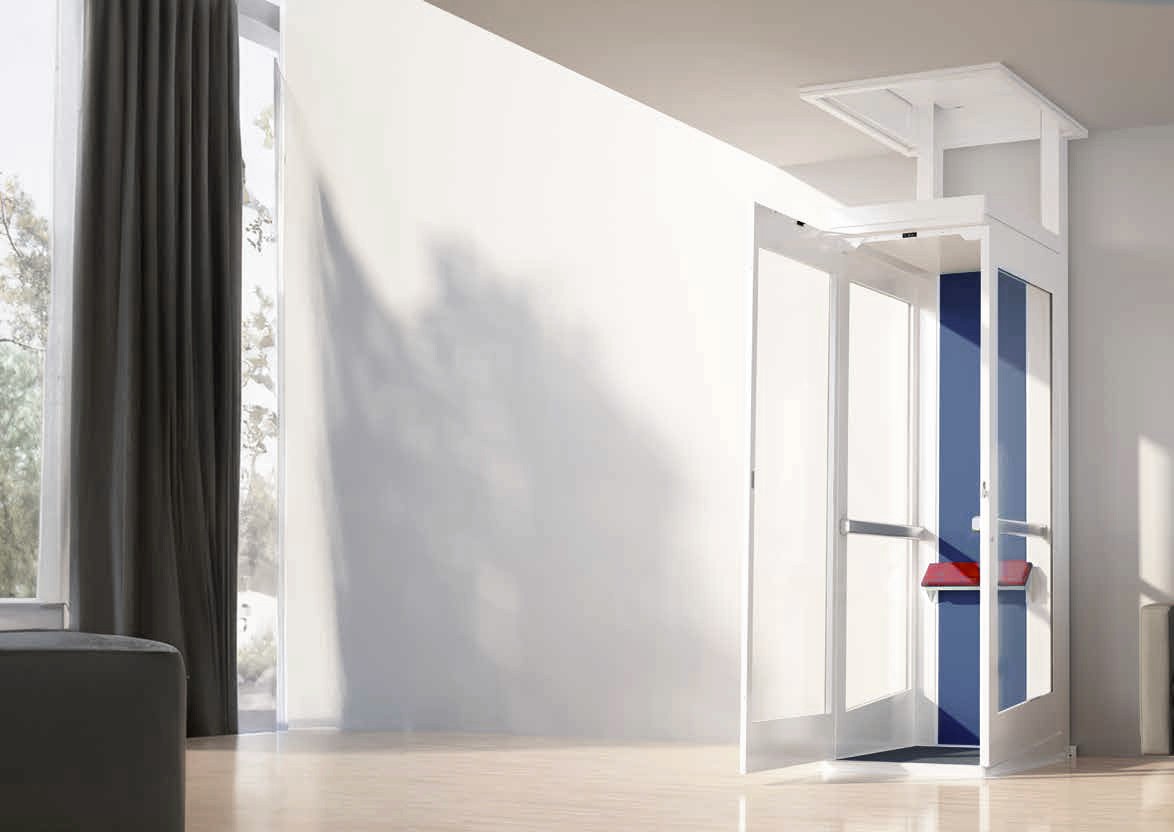
Elevate AVA Swift through-floor home lift in a residential interior — white aluminium frame with full-height glass panels, blue upholstered interior and red fold-down seat, open hinged door showing compact cabin at lower landing position

Space-saving solution.

Space-saving solution.

Compact and designed to complement a domestic interior, modern home lifts require no external shaft or machine room — with most installations needing only a modest floor opening and a standard single-phase power supply, leaving the rest of the home largely undisturbed.
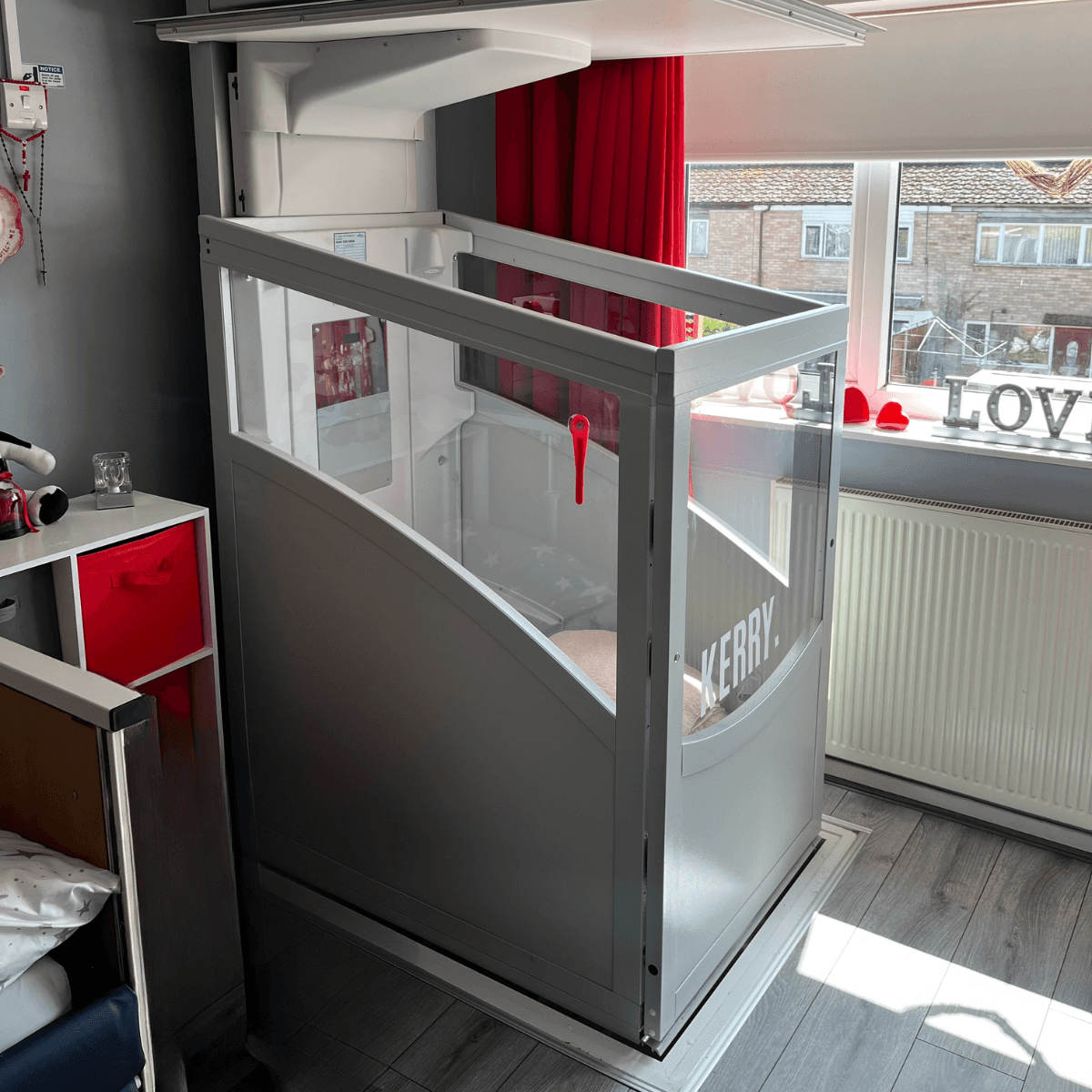
through-floor home lift installed in a UK residential bedroom — grey aluminium frame with toughened glass panels, red emergency handle visible, ceiling aperture showing upper floor level, compact domestic installation on timber flooring

Fast installation.

Fast installation.

Most home lift installations are completed within one to two days with minimal disruption to the property, making them a practical and increasingly popular long-term accessibility solution for UK homeowners.

Most home lift installations are completed within one to two days with minimal disruption to the property, making them a practical and increasingly popular long-term accessibility solution for UK homeowners.

What is a home lift?

A home lift is a compact vertical lifting system installed within a residential property, carrying passengers between floors through an opening in the ceiling. Unlike an inclined platform stairlift which travels along the staircase, a home lift travels straight up and down within an enclosed cabin — making it suitable for users who need fully enclosed, step-free access between floors without using the staircase at all.

How much does a home lift cost in the UK?

Home lift costs vary depending on the type, cabin size, number of floors served, and specification. Through-floor platform lifts typically start from around £8,000 to £14,000 installed. Fully enclosed cabin lifts with automatic doors and a finished interior typically cost from £15,000 to £30,000. Pneumatic vacuum lifts generally start from around £20,000 installed. Platform Lift UK arranges free no-obligation surveys with vetted installers so you can get an accurate cost for your specific property.

Do I need planning permission for a home lift?

In most cases planning permission is not required for a home lift installation at a residential property. However, Building Regulations approval will typically be required for the through-floor opening to ensure the structural integrity of the floor is maintained. If your property is listed or within a conservation area, listed building consent may also be required. Your installer will advise on all required approvals and manage any applications on your behalf.

Are home lifts VAT exempt?

A home lift purchased for the personal use of a person with a disability or chronic illness may qualify for zero-rated VAT under HMRC Notice 701/7, saving 20% on the total cost of the product and installation. Your installer will confirm eligibility during the survey and handle the declaration paperwork as standard.

How long does a home lift installation take?

Most home lift installations are completed within two to three days depending on the lift type and the condition of the property. Through-floor platform lifts are generally quicker to install than fully enclosed cabin lifts, which may require additional finishing work around the ceiling aperture. Your installer will confirm the expected timescale during the survey.

Can a home lift accommodate a wheelchair?

This depends on the model and cabin size. Through-floor platform lifts are specifically designed to accommodate a wheelchair or mobility aid on an open platform. Fully enclosed cabin lifts vary in size — some models are large enough to accommodate a wheelchair, while others are designed for ambulant users or those who can transfer from a chair. Platform Lift UK's vetted installers will confirm which models are suitable for your requirements during a free no-obligation survey.

Download the free step lifts brochure or ask for your custom quote today.

Download the free step lifts brochure or ask for your custom quote today.

Get Started

Contact

Ifyouarelookingforahomelift,cabinlift,steplift,platformlift,ordumbwaiterorsimplyneedadviceonwheretostartPlatformLiftUKisheretohelp.

Ifyouarelookingforahomelift,cabinlift,steplift,platformlift,ordumbwaiterorsimplyneedadviceonwheretostartPlatformLiftUKisheretohelp.

Reach out today and you’ll get a clear plan, honest advice, and a team that cares about the outcome as much as you do. Whether you prefer a quick call or a simple email, getting started is easy.

Contact

Ifyouarelookingforahomelift,cabinlift,steplift,platformlift,ordumbwaiterorsimplyneedadviceonwheretostartPlatformLiftUKisheretohelp.

Reach out today and you’ll get a clear plan, honest advice, and a team that cares about the outcome as much as you do. Whether you prefer a quick call or a simple email, getting started is easy.

© 2026 All rights reserved.

© 2026 All rights reserved.

© 2026 All rights reserved.