Wheelchair Platform Lift for Home
How to choose a home platform lift that actually fits your wheelchair: matching chair size and weight to platform dimensions, access and capacity.
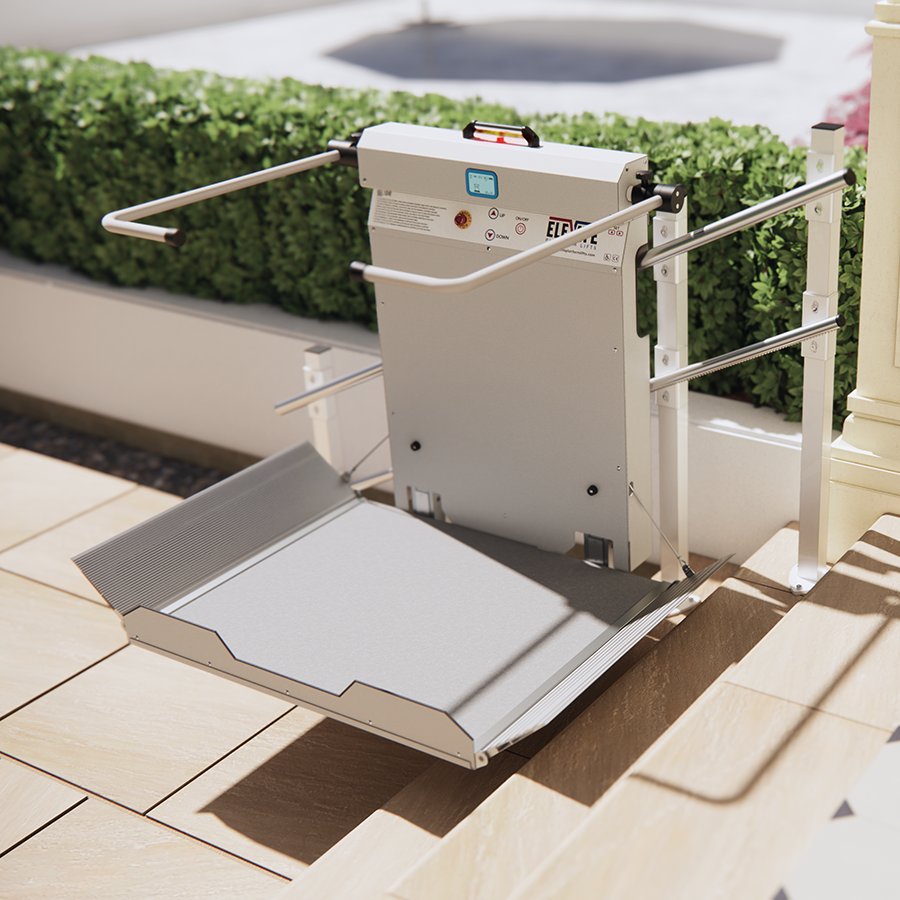
Start with the wheelchair, not the lift
Before you look at any lift, note down three things about the wheelchair — ideally with the user seated in it:
Overall length and width, including footplates and any rear-mounted battery or motor
Turning circle, if the user will need to turn on the platform
Combined weight of the chair plus the user, plus anything routinely carried
Powered wheelchairs are the ones that catch people out. They are longer, wider and much heavier than manual chairs — a heavy powered chair alone can weigh over 150kg before the user is seated. That is why capacity and platform size, not price, should lead the decision.
Chair type | Rough weight (chair only) | Typical footprint | Notes |
|---|---|---|---|
Manual wheelchair | 13–20 kg | Compact | Easy fit on most platforms |
Powered wheelchair | 50–150+ kg | Longer and wider | Check length and turning space |
Mobility scooter | 40–150+ kg | Longest | Often needs a Large platform |
Matching your chair to the platform
Home wheelchair platform lifts come in several platform sizes. Using the widely-installed Garaventa Opal step lift as a concrete reference, the standard sizes look like this:
Platform | Platform size | Suits |
|---|---|---|
Standard | 914 × 1242 mm | Manual chairs, compact powered chairs, straight-through use |
Mid-size | 914 × 1394 mm | Longer powered chairs needing more depth |
Large 1 | 1100 × 1546 mm | Larger powered chairs and scooters |
Large 2 | 1125 × 1519 mm | Corner sites needing a turn on the platform |
The rule of thumb: the platform should comfortably exceed the chair's footprint in both directions, with room to position and reverse off. If the user needs to turn on the platform rather than drive straight through, size up — turning a powered chair needs far more clear space than parking one.
Access: straight-through vs adjacent
How the two gates are arranged decides whether the user drives straight across the platform or has to turn on it. This matters more than most buyers realise.
Access type | Gate positions | User does | Best for |
|---|---|---|---|
Straight-through | Opposite, at 180° | Drives on one end, off the other | Most wheelchair users; no turning needed |
Adjacent | At 90° | Enters and turns to exit | Corner positions where layout forces it |
Straight-through is almost always easier for a wheelchair user, because there is no need to turn. Adjacent access is a solution for a corner site, but it demands a larger platform and more skill to use. Where you have the choice, straight-through wins.
Capacity: don't buy to the limit
A typical home wheelchair platform lift has a rated capacity around 340kg. That sounds ample, but do the sum for your situation:
Powered wheelchair: up to 150kg or more
User: varies
Carer, if they travel too: varies
Anything carried: shopping, oxygen, a bag
Add these up and leave a comfortable margin — you do not want to be routinely near the rated limit. If a carer will often travel with the user, or the chair is a heavy powered model, mention it at survey stage so the installer specifies a lift with headroom to spare.
Independent use matters
For many wheelchair users the whole point is autonomy — using the lift without waiting for help. Features that support that:
Hold-to-run controls on the platform, reachable from a seated position
Call stations at each landing, so the lift can be summoned from either level
A power door opener, so gates open automatically on arrival — valuable for users with limited grip or reach
Straight-through access, removing the need to turn
Anti-slip surface and a handrail for stability
If independent use is the goal, prioritise the power door opener and straight-through access. Between them they remove the two tasks — turning, and hauling a gate open — that most often force a wheelchair user to ask for help.
Which home lift types work for wheelchair users
Type | Wheelchair use | Notes |
|---|---|---|
Step lift | Excellent | Open platform sized for chairs; entrances and split levels |
Incline platform lift | Good | Folding platform carries chair and user along the stairs |
Through-floor homelift | Excellent | Carries chair and user between floors |
Enclosed platform lift | Excellent | As above, weatherproof and enclosed |
Stairlift | Not suitable | Requires transfer out of the wheelchair |
A stairlift is not a wheelchair lift — it carries a seated user who has transferred out of their chair. If staying in the wheelchair is essential, you need one of the platform types above.
Costs and funding
Wheelchair platform lifts for the home start from the same points as other domestic platform lifts:
Type | From (installed) |
|---|---|
Step lift | £6,389 |
Incline platform lift | £8,000 |
Enclosed platform lift | £10,000 |
Through-floor homelift | £17,500 |
Full detail is in the disabled platform lifts prices guide. Two routes may reduce the cost for a wheelchair user, though neither is automatic.
The Disabled Facilities Grant is council funding for adaptations, but it is means tested for most adult applicants — it is assessed on income and savings, and not everyone qualifies. The means test does not apply where the disabled person is a child. Where a grant is awarded, the mandatory maximum is £30,000 in England, £36,000 in Wales and £25,000 in Northern Ireland, with Scotland running a separate Scheme of Assistance. Whether you receive anything, and how much, depends on your assessment. Our Disabled Facilities Grant guide explains eligibility and how to apply.
Zero-rated VAT can remove 20% from a lift installed in a private residence for a disabled person. This is conditional: you complete a declaration of eligibility and your installer confirms the supply qualifies.
A short checklist before you enquire
Measure the wheelchair — length, width, turning circle
Weigh the chair, and add the user and anyone who travels with them
Decide whether the user will drive straight through or turn on the platform
Note the rise and whether the lift is indoor or outdoor
Flag independent use, so the installer specifies power doors and reachable controls
If you think you may be eligible for a Disabled Facilities Grant, check the means test and start the application early
FAQs (plain text)
What size platform do I need for a wheelchair? The platform should comfortably exceed your wheelchair's footprint in both directions, with room to position and reverse off. A manual chair fits a standard platform of around 914 by 1242 mm; a larger powered chair or scooter needs a Large platform of around 1100 by 1546 mm, especially if the user must turn on it.
What weight can a home wheelchair platform lift carry? A typical rated capacity is around 340kg. Add up the chair (up to 150kg or more for a powered model), the user, any carer travelling with them and anything carried, and leave a comfortable margin below the limit rather than buying to it.
Can a wheelchair user operate the lift on their own? Yes, with the right features: hold-to-run controls reachable from a seated position, call stations at each landing, a power door opener and straight-through access. Together these let most wheelchair users travel without assistance.
What is the difference between straight-through and adjacent access? Straight-through access places the gates opposite each other so the user drives on at one end and off at the other, with no turning. Adjacent access places the gates at 90 degrees, so the user turns on the platform — it suits corner sites but needs a larger platform.
Is a stairlift suitable for a wheelchair user? No. A stairlift carries a seated user who has transferred out of their wheelchair. If staying in the chair is essential, you need a platform lift — a step lift, incline platform lift, through-floor homelift or enclosed platform lift.
How much does a wheelchair platform lift for a home cost? Starting prices are around £6,389 for a step lift, £8,000 for an incline platform lift, £10,000 for an enclosed platform lift and £17,500 for a through-floor homelift. If you qualify, a Disabled Facilities Grant or zero-rated VAT may reduce what a disabled user pays.
Can I get funding for a wheelchair lift at home? You may be eligible, but it is not guaranteed. The Disabled Facilities Grant is means tested for most adults, so it is assessed on income and savings and not everyone qualifies (the means test does not apply to children). Where a grant is awarded, the maximum is £30,000 in England, £36,000 in Wales and £25,000 in Northern Ireland, with Scotland running a separate scheme. Separately, a lift for a disabled person in a private home may be zero-rated for VAT, subject to a declaration of eligibility.
