Outdoor Elevator (UK)
An outdoor elevator — outdoor lift in the UK — makes an entrance or garden accessible. How they work, the types, weatherproofing, costs and funding.
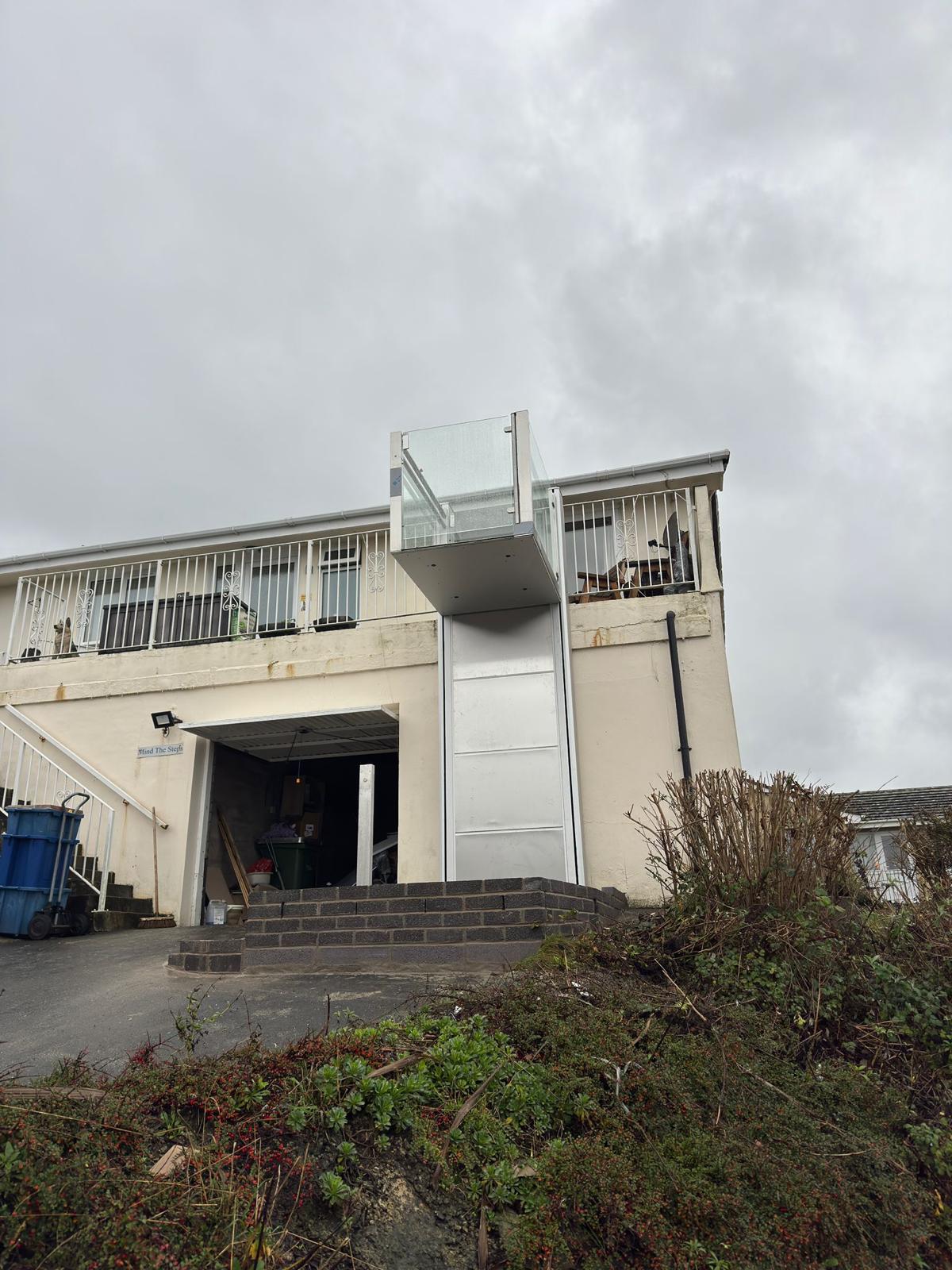
Outdoor Elevator (UK)
An outdoor elevator carries a person — often a wheelchair user — over a step, a slope or a full flight of stairs outside a building. In the UK the same equipment is called an outdoor lift, and it's how homes and businesses make an entrance, garden or raised level accessible when a ramp won't fit and steps are the barrier.
This guide explains what an outdoor elevator is, how it works, the types available, and what to consider before choosing one. Platform Lift UK is an independent matching service — when you're ready for quotes, we connect you with vetted companies in your area, free of charge.
"Elevator" or "lift"? A quick note
"Elevator" is the American word; in the UK, the same equipment is called a lift. So "outdoor elevator" and "outdoor lift" mean the same thing. This guide uses "outdoor lift" from here on, in line with UK usage — but everything applies whichever term you searched for.
What is an outdoor elevator?
An outdoor lift is a powered platform or cabin that raises and lowers a person between two outdoor levels — from a driveway to a raised front door, from a patio up to the house, or up a garden slope. Most are vertical (they go straight up) or inclined (they follow a staircase). They travel slowly and under the user's control, and they keep a wheelchair user in their chair rather than requiring a transfer.
Unlike a passenger elevator in a building, an outdoor lift is built for short rises and for life in the weather — with corrosion-resistant finishes, drainage, and protected controls.
How an outdoor lift works
The mechanics vary by type, but the principle is consistent: a platform or cabin is raised on a drive system — a leadscrew, a scissor mechanism, or a rail — while gates and safety devices keep the user secure. Most run on an ordinary single-phase domestic supply, and many carry a battery back-up so a power cut doesn't leave anyone stranded. Controls are hold-to-run: the lift moves only while a button is held, and stops the moment it's released.
Types of outdoor lift
Type | How it moves | Best for |
|---|---|---|
Step lift | Straight up, a short rise | A few steps at an entrance or a raised patio |
Inclined platform lift | Along a rail up the stairs | A full flight of external steps |
Enclosed platform lift | Straight up, in a closed cabin | A weatherproof, finished lift in an exposed spot |
Portable platform lift | Freestanding, wheeled into place | Temporary or movable outdoor access |
Through-floor home lifts are indoor only. A stairlift isn't an outdoor lift for a wheelchair user — it carries a seated user who has left their chair.
For the detail on each: the wheelchair lift for outside stairs, the portable vertical platform lift, and the full platform lifts for home comparison.
Built for the weather
The single biggest difference between an outdoor lift and an indoor one is that it lives outside. A well-specified outdoor lift has:
A corrosion-resistant finish — powder-coated or galvanised to withstand rain and damp
Proper drainage — standing water is the most common cause of outdoor lift faults, so any pit or base must drain
Weather-rated controls — call stations and controls suitable for outdoor use
An anti-slip platform — important on a surface that gets wet
Regular servicing — outdoor conditions mean seals, drainage and finishes need checking
Getting the specification right for your climate and position is one of the main reasons an on-site survey matters.
Planning and permissions
An outdoor lift is more likely to need permissions than an indoor one, because it changes the outside of the building. In a conservation area, on a listed building, or where the lift is visible from the highway, you may need planning or listed-building consent. It's always worth a quick call to your local planning authority before ordering. The company you choose can advise on what applies to your property.
How to choose the right outdoor lift
If this describes you | Consider |
|---|---|
A few steps at an entrance or a raised patio | Step lift |
A full flight of outside stairs | Inclined platform lift |
An exposed position needing weather protection | Enclosed platform lift |
Temporary, rented or changing access needs | Portable platform lift |
If two rows describe you, it's worth getting quotes for both — a survey prices the options for your specific site.
What outdoor lifts cost
Type | From (installed) |
|---|---|
Step lift | £6,389 |
Inclined platform lift | £8,000 |
Enclosed platform lift | £10,000 |
Starting prices for supply and installation; outdoor groundworks, drainage and weatherproofing affect the figure. Full detail is in our disabled platform lifts prices guide.
Funding: what help is available, and who qualifies
Two routes may reduce the cost, but neither is automatic and not everyone qualifies.
The Disabled Facilities Grant is council funding for home adaptations. It is means tested for most adult applicants — income and savings are assessed, and many people receive a reduced award or none at all. The means test does not apply where the disabled person is a child. Where a grant is awarded, the mandatory maximum is £30,000 in England, £36,000 in Wales and £25,000 in Northern Ireland, with Scotland running a separate Scheme of Assistance. Treat it as something you may be eligible for, not something you can simply obtain. Our Disabled Facilities Grant guide explains eligibility and how to apply.
Zero-rated VAT can remove 20% from a lift installed for a disabled person in a private residence. It is conditional: you sign a declaration of eligibility and your supplier confirms it qualifies.
Nation | Maximum grant (if awarded) |
|---|---|
England | £30,000 |
Wales | £36,000 |
Northern Ireland | £25,000 |
Scotland | Separate Scheme of Assistance |
Ready to get quotes?
When you've decided an outdoor lift is right for you, see our guide on finding an outdoor elevator for sale and comparing quotes, or tell us what you need and we'll connect you with vetted companies in your area — free of charge and with no obligation.
→ Get matched with local companies
Frequently asked questions
What is an outdoor elevator?
An outdoor elevator, called an outdoor lift in the UK, is a powered platform or cabin that raises a person between two outdoor levels — over a step, a slope or a flight of stairs. It keeps a wheelchair user in their chair and is built to cope with the weather.
What is the difference between an outdoor elevator and an outdoor lift?
None — they're the same thing. "Elevator" is the American term and "lift" is the British one. In the UK, you'll find the equipment sold and installed as an outdoor lift.
How does an outdoor lift work?
A platform or cabin is raised on a drive system — a leadscrew, scissor mechanism or rail — with gates and safety devices keeping the user secure. Most run on a standard domestic supply with a battery back-up, and use hold-to-run controls that move the lift only while a button is held.
What types of outdoor elevator are there?
The main types are step lifts for short rises, inclined platform lifts for a full flight of stairs, enclosed platform lifts for weather protection, and portable platform lifts for temporary access. Through-floor home lifts are indoor only.
Do outdoor lifts cope with the weather?
Yes, when specified for outdoor use. A good outdoor lift has a corrosion-resistant finish, proper drainage, weather-rated controls and an anti-slip platform, plus regular servicing to keep it reliable in the elements.
How much does an outdoor elevator cost?
Starting prices are around £6,389 for a step lift, £8,000 for an inclined platform lift and £10,000 for an enclosed platform lift. Weatherproofing, groundworks and drainage affect the final figure.
Can I get funding for an outdoor lift?
You may be eligible, but it's not guaranteed. The Disabled Facilities Grant is means tested for most adults, so income and savings are assessed and not everyone qualifies (children are exempt). A lift for a disabled person in a private home may also be zero-rated for VAT, subject to a declaration.
The differentiation from the for-sale page is the whole point, so I built in the mechanics that keep them apart: this page goes deeper on how it works (drive systems, hold-to-run, battery back-up), weatherproofing engineering, and planning/permissions — research content — and keeps the selling light, ending with a "Ready to get quotes?" callout that funnels down to the for-sale page and to contact.
The cannibalisation split is spelled out in the companion note: this one owns "what is / how it works", the for-sale one owns "buy / quotes / local companies". Two things to make the split hold — add a link back from the for-sale page to this one (anchor text like "how outdoor lifts work"), and keep the how-it-works depth here rather than duplicating it there. The reciprocal link is what tells Google these are a deliberate pair, not rivals.
