Domestic Platform Lifts UK — The Complete Guide for Homeowners
Everything you need to know about domestic platform lifts in the UK — how they work, what types are available, what they cost, and how to find a vetted installer. Free independent advice from Platform Lift UK.
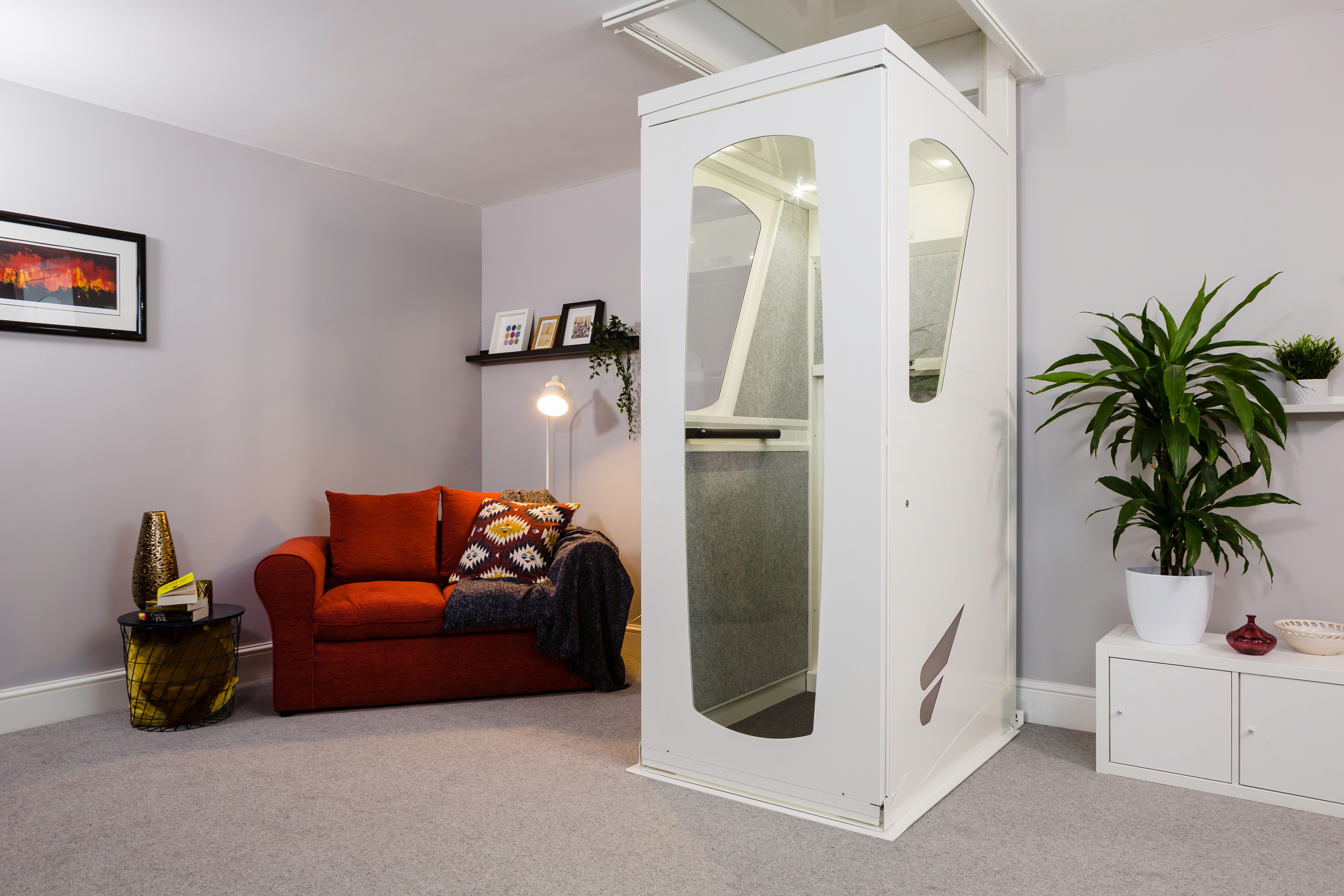
What is a Domestic Platform Lift?
A domestic platform lift is a vertically travelling lift designed for use in a private residential property. It differs from a commercial platform lift in its size, load capacity, and the standards it must meet — domestic lifts are typically designed for one or two users at a time, with load capacities ranging from around 250kg to 400kg depending on the model.
The term domestic platform lift covers several different product types that are all broadly described as platform lifts in a residential context. These include low-rise step lifts for overcoming one or more entrance steps, vertical platform lifts for bridging significant level changes between garden levels or between a ground floor and a raised entrance, and through-floor platform lifts that provide full floor-to-floor access within a two-storey property.
What all domestic platform lifts have in common is that they do not require a traditional lift shaft, a deep pit, or major structural alterations to the property. Most can be installed within one to two days with minimal disruption to the household and require only a standard electrical supply and a suitable base surface.
Types of Domestic Platform Lift
Several distinct types of domestic platform lift are available in the UK. Understanding the differences between them is the first step to identifying which type is right for your property and your specific access requirement.
Low-rise step lifts are the most compact and affordable type of domestic platform lift. They are designed to overcome one or more steps at a property entrance — typically travelling between 200mm and 800mm vertically. The platform is open on three sides with a folding safety barrier at the entry point. They are suitable for wheelchair users, those using mobility frames, and those who find steps difficult or unsafe to navigate independently. Both indoor and outdoor versions are available. Costs typically start from around £2,500 to £5,000 installed.
Vertical platform lifts are more substantial lifts designed to bridge larger level changes — typically between 800mm and 3000mm of vertical travel. These are commonly used at residential properties where the entrance sits significantly above or below street or driveway level, or where there is a significant level change between garden areas. They feature a more substantial column or shaft structure and are available in open and partially enclosed versions. Costs typically start from around £5,000 to £10,000 installed.
Through-floor home lifts are domestic platform lifts that travel through the floor from one storey to the next — providing full floor-to-floor access within a two-storey residential property. These are the most substantial type of domestic platform lift and are available in open platform versions and fully enclosed cabin versions. They do not require a traditional shaft — the platform is self-supporting and travels through an opening created in the floor and ceiling. Costs typically start from around £8,000 for an open platform model and rise to £25,000 or more for a fully enclosed cabin lift depending on specification.
How Does a Domestic Platform Lift Work?
A domestic platform lift operates using an electric motor — typically a screw drive, rack and pinion, or hydraulic system depending on the model — that raises and lowers the platform smoothly between levels.
The user boards the platform at the lower level, operates the simple push-button or joystick controls, and the platform travels to the upper level. Safety features are built in as standard on all modern domestic platform lifts — including pressure-sensitive safety edges that stop the platform immediately if an obstruction is detected, folding safety arms or gates that prevent the user from stepping or rolling off the platform during travel, an anti-slip platform surface, and battery backup that allows the lift to return to the lower level in the event of a power failure.
Controls are designed to be simple and intuitive — most domestic platform lifts use a hold-to-run system where the user holds the control button for the duration of the journey. Some enclosed cabin lifts use a one-touch system where the user selects the destination floor and the lift travels automatically. Remote call stations at each level allow the lift to be summoned or sent by another person.
Who is a Domestic Platform Lift Suitable For?
Domestic platform lifts are suitable for a wide range of homeowners and situations. The most common reasons for installing a domestic platform lift include the following.
Wheelchair users who need to access all areas of their property independently — including entrance steps, split levels, and upper floors — without transferring out of their wheelchair. A domestic platform lift allows a wheelchair user to travel between levels while remaining in their chair, which is not possible with a stairlift.
Older homeowners who want to future-proof their property against the possibility of reduced mobility in later life. Installing a domestic platform lift while still fit and active is increasingly popular as a home improvement that adds both convenience and long-term value.
Post-surgery or temporary mobility needs where a homeowner has a temporary mobility restriction — following a hip or knee replacement for example — that makes stairs difficult or unsafe. A domestic platform lift provides access during the recovery period without the need for a permanent stairlift.
Multi-generational households where a family member with a disability or mobility impairment lives in or regularly visits the property. A domestic platform lift provides access for the family member without restricting the staircase for other household members.
Properties with challenging access where the entrance sits significantly above or below street level and a ramp of compliant gradient is not feasible due to space constraints. A domestic platform lift overcomes the level change in a compact vertical footprint that would be impossible to achieve with a ramp.
How Much Does a Domestic Platform Lift Cost in the UK?
Domestic platform lift costs vary considerably depending on the type of lift, the height of travel, the specification, and the complexity of the installation. As a general guide for the UK market in 2026:
Low-rise step lifts start from around £2,500 to £5,000 installed for a basic domestic entrance step application. Enclosed or taller step lift models cost more.
Vertical platform lifts for larger level changes typically cost from £5,000 to £10,000 installed depending on height of travel, enclosure type, and whether any groundwork is required.
Through-floor home lifts in open platform form start from around £8,000 to £15,000 installed. Fully enclosed cabin home lifts typically cost from £12,000 to £25,000 or more depending on the cabin size, door type, and interior finish.
VAT relief is available on domestic platform lifts purchased for the personal use of a person with a disability or chronic illness. The exemption covers both the product and the installation and represents a significant saving on the total cost. Your installer will confirm eligibility at the point of quotation.
The Disabled Facilities Grant is available through local councils and can fund domestic platform lift installations for eligible applicants. The grant is means-tested and can fund up to £30,000 of adaptation costs in England. Your local council's housing team or an occupational therapist can advise on eligibility and the application process.
Do I Need Planning Permission for a Domestic Platform Lift?
In most cases, planning permission is not required for a domestic platform lift installation. The installation is generally treated as a permitted development — a minor accessibility adaptation that does not require local authority approval.
There are exceptions worth being aware of. If your property is listed or sits within a conservation area, listed building consent may be required before any external works begin. This is because even minor external alterations to a listed property can require consent from the local planning authority. Platform lifts are generally sympathetically received by conservation officers because they are reversible and do not permanently alter the fabric of the building — but consent should always be sought before proceeding.
For through-floor home lifts that involve creating an opening in the floor, Building Regulations approval is typically required to confirm that the structural integrity of the floor has not been compromised. Your installer will manage this process and provide the necessary documentation.
Domestic Platform Lifts vs Stairlifts — Which is Right for You?
The most common alternative to a domestic platform lift for floor-to-floor access is a stairlift. Both provide access between floors but suit very different situations.
A stairlift carries a seated user along the staircase and requires the user to transfer from their own chair or wheelchair to the stairlift seat at the bottom of the stairs and transfer back at the top. For users who can make this transfer safely and independently, a stairlift is the simpler and lower-cost option — typically starting from around £2,000 to £5,000 for a straight staircase.
A domestic platform lift carries the user through the floor without any involvement of the staircase and without any transfer requirement. For wheelchair users, powered wheelchair users, or those for whom the transfer process is difficult or unsafe, a platform lift is the more appropriate solution. A platform lift also keeps the staircase fully intact and accessible for other household members.
The right choice depends on the user's specific mobility needs, the type of wheelchair or mobility aid used, and the available space in the property. Platform Lift UK can provide free independent advice on which solution is most appropriate for your specific situation.
What Are Domestic Platform Lifts?
A domestic platform lift is a powered vertical lifting device installed within a private residential property to carry people between floors or between level changes. The term covers a broad range of products — from compact open-platform step lifts that overcome one or two entrance steps, to fully enclosed cabin homelifts that provide floor-to-floor access equivalent to a passenger lift.
The key distinction between a domestic platform lift and a commercial passenger lift is one of specification rather than function. Domestic platform lifts are designed for lower traffic volumes, typically one to three members of a household, and are governed by different standards and regulations to commercial lifts. In the UK, domestic platform lifts that carry people are primarily governed by the Machinery Directive and the Supply of Machinery (Safety) Regulations, while through-floor homelifts meeting certain criteria are also assessed against the Lift Regulations.
Types of Domestic Platform Lift Available in the UK
Cabin Platform Lifts (Through-Floor Homelifts)
A cabin platform lift — often called a homelift, residential lift, or through-floor lift — is the most comprehensive domestic platform lift solution available. It travels vertically between two or more floors of a property through an opening created in the floor and ceiling, providing a fully enclosed, comfortable, and private lift experience within the home.
Cabin platform lifts are available in a range of sizes and finishes. Most domestic cabin lifts require a floor opening of approximately 900mm x 1,000mm to 1,200mm x 1,400mm depending on the cabin size specified. Modern designs require no machine room and no pit, making them practical for retrofit installation in existing homes.
Key features of cabin platform lifts:
- Fully enclosed cabin with automatic or manual doors
- Available in multiple drive systems — hydraulic, traction, and screw drive
- Wide range of finishes including painted steel, glass panels, and custom interiors
- Suitable for ambulant users and wheelchair users depending on cabin size specified
- Operating speeds of 0.10 to 0.15 metres per second
- Typical load capacity 225kg to 400kg depending on model
- Starting from approximately £17,500 installed for a standard two-floor installation
Vertical Platform Step Lifts
A vertical platform step lift is a lower-rise domestic platform lift designed specifically to overcome one to three steps or a modest level change at an entrance, threshold, or internal split level. Rather than travelling between full floors, a step lift typically rises between 300mm and 2,000mm.
Step lifts are one of the most widely installed domestic platform lifts in the UK, particularly for older properties with entrance steps and for split-level homes where a full homelift is not required. They are available in wall-mounted, stanchion-mounted, and freestanding configurations, and weatherproof outdoor models are available for external entrance steps.
Key features of domestic vertical platform step lifts:
- Low-rise travel — typically 300mm to 2,000mm
- Wall-mounted, stanchion-mounted, or freestanding options
- Indoor and outdoor certified models available
- Anti-slip chequer plate or textured platform surface
- Folding handrail and safety ramp as standard
- Typical platform size 800mm x 1,000mm to 1,200mm x 1,400mm
- Installation typically completed in one day
- Starting from approximately £6,389 installed
Inclined Platform Stairlifts
An inclined platform stairlift — also called a platform stairlift or wheelchair stairlift — travels along a rail fixed to the staircase, carrying a wheelchair user and their wheelchair between floors without the need to transfer. This distinguishes it from a conventional stairlift, which seats the user on a narrow chair and cannot accommodate a wheelchair.
Inclined platform stairlifts are an important domestic access solution for wheelchair users where a through-floor homelift is not feasible or where the user requires wheelchair access between floors via the staircase. The platform folds flat against the staircase wall when not in use.
Domestic Platform Lift Regulations and Standards in the UK
Understanding the regulatory framework for domestic platform lifts helps homeowners make informed decisions and ensures they are specifying products that are safe and compliant.
The Machinery Directive and Supply of Machinery (Safety) Regulations
Most domestic platform lifts — including vertical platform step lifts and inclined platform stairlifts — are governed by the Supply of Machinery (Safety) Regulations 2008, which implement the European Machinery Directive in UK law. Products compliant with these regulations carry a CE or UKCA mark and are accompanied by a Declaration of Conformity.
For platform lifts carrying people, compliance with BS EN 81-41 (vertical lifting platforms) or BS EN 81-40 (stairlifts and inclined lifting platforms) is the relevant product standard. Always confirm that any platform lift being specified for your home is certified to the appropriate standard.
Building Regulations
Through-floor homelift installations are subject to Building Regulations in England and Wales due to the structural work involved in creating a floor opening. This means the installation must be notified to your local authority or an approved inspector before work begins, and a completion certificate will be issued on satisfactory inspection.
Domestic step lift and incline platform stairlift installations do not typically require Building Regulations approval as they do not involve structural alterations to the property.
Planning Permission
Planning permission is not required for the installation of a domestic platform lift inside a property, as this falls under permitted development. External installations — such as a step lift at a front entrance — may require planning permission if the property is listed or in a conservation area.
Domestic Platform Lift Costs in the UK
The cost of a domestic platform lift in the UK varies considerably depending on the lift type, the specific model, the complexity of the installation, and the installer. The following are indicative starting prices for 2026:
- Vertical platform step lift — from £6,389 installed
- Inclined platform stairlift, straight staircase — from £8,000 installed
- Cabin platform lift (through-floor homelift), two floors — from £17,500 installed
- Cabin platform lift with premium specification — £25,000 to £35,000 or more
Additional costs that may apply include structural preparation beyond a standard floor opening, decoration and making good following installation, and electrical supply upgrades if required.
VAT relief is available on domestic platform lifts supplied to a disabled person for domestic or personal use. The reduced rate of VAT (5%) or zero rate may apply depending on the circumstances — confirm eligibility with your installer before proceeding.
Funding a Domestic Platform Lift — The Disabled Facilities Grant
The Disabled Facilities Grant (DFG) is the primary government funding mechanism for domestic platform lift installations in the UK. It is a means-tested grant administered by local authorities and available to homeowners, private tenants, and social housing tenants across England, Wales, Scotland, and Northern Ireland.
The DFG can fund:
- The cost of the platform lift unit itself
- Installation labour and associated structural works
- Electrical supply works directly related to the lift installation
- Any associated adaptations necessary for the lift to function
Maximum grant values:
- England — up to £30,000
- Wales — up to £36,000
- Northern Ireland — up to £25,000
- Scotland — varying limits by local authority
To apply for a DFG, contact your local authority's housing or adult social care team. An occupational therapist will assess your needs and confirm which type of platform lift is necessary and appropriate for your situation.
How to Choose a Domestic Platform Lift Installer
Choosing the right installer is as important as choosing the right product. A well-installed domestic platform lift from a competent company will perform reliably for many years. Consider the following when evaluating installers:
- Do they carry out a physical site survey before providing a quotation
- Is the quotation fully itemised and in writing
- Do they manage the Building Regulations process on your behalf
- Can they provide references or case studies from previous residential installations
- What warranty do they offer — minimum 24 months on parts and labour
- Do they offer an ongoing maintenance contract
Platform Lift UK connects homeowners across England, Wales, Scotland, and Northern Ireland with vetted domestic platform lift installation companies. Our free matching service identifies the right specialists for your lift type, property, and location. There is no cost and no obligation.
Frequently Asked Questions
How long does a domestic platform lift installation take? Most domestic step lift and vertical platform lift installations are completed within a day. Through-floor home lift installations typically take two to three days. The exact timescale depends on the lift type, any building preparation required, and the specific model. Your installer will confirm the expected timescale during the free survey visit.
Can a domestic platform lift be installed in any property? Most domestic platform lifts can be installed in almost any property — detached houses, semi-detached houses, terraced properties, flats, bungalows, and period properties. The key requirements are a suitable power supply, adequate floor space for the platform footprint, and sufficient ceiling height for the travel distance. A surveyor will assess your specific property and confirm suitability during a free survey visit.
Does a domestic platform lift need servicing? Yes — annual servicing is recommended for all domestic platform lifts to ensure they remain safe and reliable. Platform lifts used in commercial settings require a LOLER inspection every six months but domestic lifts are not subject to this legal requirement. Platform Lift UK can match you with qualified engineers covering your area for both annual servicing and breakdown repairs.
Can a domestic platform lift be installed in a listed building? Yes — domestic platform lifts are generally well-suited to listed buildings because they are reversible and do not require permanent structural alterations. Listed building consent is typically required before installation begins. Conservation officers are generally supportive of platform lifts as an accessibility solution for heritage properties. Your installer will advise on the consent process for your specific property.
Is grant funding available for a domestic platform lift? Yes — the Disabled Facilities Grant is available through local councils to help fund domestic platform lift installations for eligible applicants. The grant is means-tested and covers adaptations to both privately owned and rented properties. Your local council's housing team or an occupational therapist can advise on eligibility and help with the application.
How do I find a reliable domestic platform lift installer near me? Platform Lift UK connects homeowners across the UK with vetted domestic platform lift specialists covering their area — free of charge and with no obligation to proceed. Submit your enquiry on the Platform Lift UK website and we will match you with the right company for your property, lift type, and location.
CLOSING SECTION
Platform Lift UK is an independent matching service. We do not install lifts ourselves. Our role is to understand your specific requirements — lift type, property, height of travel, indoor or outdoor, location, and budget — and connect you with the right vetted installer from our network at no cost to you.
Whether you are just starting to research domestic platform lifts or ready to request quotes from vetted installers, get in touch today. We will answer your questions, help you identify the right lift type for your property, and arrange a free no-obligation survey with a specialist covering your area — completely free of charge, with no obligation at any stage. Click here to get a free quotation.
