Home Lift Installation UK: What to Expect, How Long It Takes, and What It Costs
Planning a home lift installation in the UK? This guide covers everything you need to know — from choosing the right lift type and finding an installer, to understanding costs, timescales, and what happens on installation day.
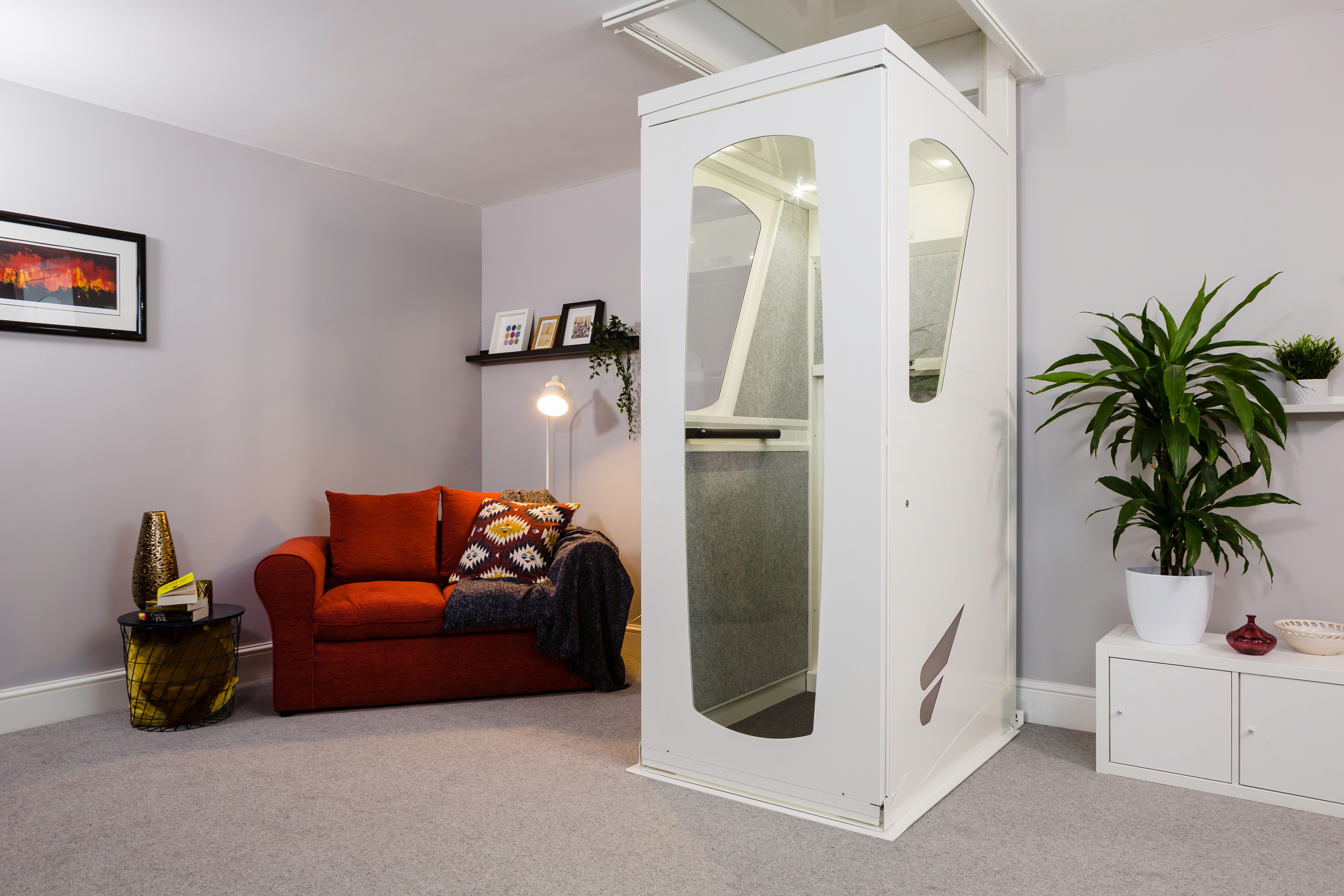
Home Lift Installation UK: A Complete Guide to Costs, Timescales and What to Expect
What Types of Home Lift Can Be Installed in a UK Property?
Before planning an installation, it is important to understand which lift types are available and which is appropriate for your property and mobility needs. The main options for UK residential properties are:
Through-Floor Homelifts
A through-floor homelift is the most common type of home lift installation in the UK. It travels vertically between two floors of a property by passing through an opening created in the ceiling and floor above. The cabin is fully enclosed, the doors are typically automatic, and the experience is equivalent to using a small passenger lift.
Through-floor homelifts are available in a wide range of configurations — from compact models requiring a floor opening of approximately 1,000mm x 900mm to larger models capable of accommodating powered wheelchairs. Modern homelifts do not require a machine room or a pit, which makes them practical for retrofit installation in existing domestic properties.
Vertical Platform Step Lifts
A vertical platform step lift is a lower-cost alternative designed to overcome one to three steps or a modest level change within or around the property. Rather than travelling between full floors, a step lift rises between 300mm and 2,000mm, making it ideal for entrances, split-level properties, or internal level changes.
Step lifts are available for indoor and outdoor installation and can be installed in a single day with minimal structural work. They are often the first access solution considered for properties with entrance steps or small level changes, and they are one of the most frequently funded adaptations under the Disabled Facilities Grant.
Incline Platform Stairlifts
An incline platform stairlift travels along a rail fixed to the staircase, carrying a wheelchair user and their wheelchair between floors without requiring transfer. Unlike a conventional stairlift, the platform is large enough to accommodate a standard wheelchair, and the platform folds flat when not in use so the staircase remains accessible to other household members.
Choosing the Right Installer for a Home Lift Installation
The quality of a home lift installation depends as much on the installer as on the product. A well-specified lift installed by an experienced, competent company will perform reliably for many years. A poorly installed lift — regardless of product quality — can result in ongoing problems, costly remedial work, and potentially unsafe equipment.
When evaluating home lift installation companies, look for the following:
- A site survey before any quotation is confirmed — remote or online quotes without a physical visit cannot accurately assess your property
- Clear written quotations covering the full scope of works including structural preparation, electrical connection, and any making good required after installation
- Evidence of previous residential installations — ask to see case studies or request references from previous customers
- Confirmation of which building regulations applications they will manage on your behalf
- A clear warranty offer — minimum 24 months on parts and labour is a reasonable expectation
- Ongoing maintenance and servicing packages — all home lifts require periodic servicing
Platform Lift UK is a free independent service that connects homeowners with vetted home lift installation companies across England, Wales, Scotland, and Northern Ireland. Every company in our network has been assessed before being admitted. Our service carries no cost and no obligation.
What Happens During a Home Lift Installation?
Many homeowners are anxious about the disruption that home lift installation might cause. In practice, a typical through-floor homelift installation is a contained, relatively brief process that causes significantly less disruption than most major home improvement projects.
### Stage 1 — Site Survey
Before any installation work begins, a qualified surveyor from the installation company will visit your property to assess the proposed lift location, confirm the structural requirements, take precise measurements, and discuss any finish options. This survey is essential — it allows the company to specify the correct product, identify any structural issues in advance, and provide an accurate quote.
### Stage 2 — Structural Preparation
For a through-floor homelift, an opening must be created between the ground and upper floor. This involves cutting through the floor structure — typically floorboards and joists — and creating a reinforced opening of the correct dimensions for the lift shaft.
This work is usually carried out by a joiner or structural carpenter ahead of the main lift installation day. It typically takes half a day to a day depending on the floor construction. In some properties where the floor structure is more complex — concrete floors, heavily engineered timber systems — additional structural preparation may be required.
### Stage 3 — Lift Installation
The main lift installation is typically completed in one to two days for a standard two-floor homelift. The installation team will:
- Assemble the lift tower or shaft structure within the prepared opening
- Install the drive mechanism — hydraulic, traction, or screw drive depending on the product
- Fit and connect the landing doors on both the lower and upper floors
- Connect the lift to the electrical supply
- Commission the lift — testing all safety devices, door interlocks, emergency stop functions, and control systems
### Stage 4 — Inspection and Sign-Off
Following installation, the lift must be inspected and signed off before it can be used. For homelifts in England and Wales, the installation is subject to Building Regulations and will require a completion certificate. Your installation company should manage this process, including notifying the local authority and arranging for the required inspection.
Some manufacturers also carry out their own factory acceptance testing and commissioning checks as part of the installation process.
### Stage 5 — Handover and Training
A reputable installation company will provide a full handover, walking you through the operation of the lift, demonstrating the safety features, explaining how to carry out basic user maintenance such as cleaning the sensors, and providing documentation including the user manual, warranty documentation, and service schedule.
How Long Does a Home Lift Installation Take?
This is one of the most frequently asked questions about home lift installation in the UK. The total duration from first contact to fully operational lift depends on several factors:
- The type of lift chosen
- The lead time of the manufacturer or supplier
- The complexity of the structural preparation required
- The availability of the installation team
- The building regulations process
As a general guide:
- **Step lift installation** — survey to installation typically 2 to 6 weeks; installation itself takes 1 day
- **Through-floor homelift** — survey to installation typically 4 to 12 weeks; installation takes 2 to 3 days including structural preparation
- **DFG-funded installations** — the grant approval process adds significant time; allow 3 to 12 months from initial DFG application to installation complete, depending on your local authority
If your installation is being funded through the Disabled Facilities Grant, the grant must be formally approved before you instruct any contractor. Do not begin any installation work before receiving written grant approval.
Home Lift Installation Costs in the UK
Home lift installation costs vary considerably depending on the lift type, the specific product, the complexity of the installation, and the installer's pricing. The following figures are indicative starting prices for straightforward installations in the UK in 2026:
- **Vertical platform step lift** — from approximately £6,389 installed, including the unit, standard installation, and electrical connection
- **Through-floor homelift, two floors** — from approximately £17,500 installed for an entry-level model, rising to £30,000 or more for a fully specified cabin lift with premium finishes
- **Incline platform stairlift, straight staircase** — from approximately £8,000 installed
Additional costs that may apply to some installations include:
- Structural preparation beyond a standard floor opening — additional joinery, beam work, or concrete cutting
- Electrical supply upgrade if the existing consumer unit cannot accommodate the lift supply
- Decoration and making good of the areas disturbed during installation
- Planning fees if listed building consent or other permissions are required
Always request a fully itemised written quotation before proceeding so there are no unexpected costs at the end of the project.
Building Regulations for Home Lift Installation
Through-floor homelift installations are subject to Building Regulations in England and Wales. This is because the installation involves a structural alteration — the creation of an opening through a structural floor. Building Regulations approval is required to ensure the structural work is carried out safely and to an appropriate standard.
In practice, this means:
- Your installation company must notify the local authority before work begins, or use an approved inspector
- The structural work will be subject to inspection during and after completion
- A completion certificate will be issued when the work is signed off — keep this document as it is relevant for future property sales
Step lift installations and incline platform stairlift installations do not typically require Building Regulations approval as they do not involve structural alterations, though it is always worth confirming this with your installer for your specific property and local authority.
Planning permission is not required for most home lift installations, as they fall under permitted development. Exceptions include listed buildings and properties in conservation areas, where listed building consent or planning permission may be required for any external alteration.
Home Lift Installation and the Disabled Facilities Grant
The Disabled Facilities Grant is the primary government funding mechanism for home lift installations in the UK. It is available to homeowners, private tenants, and social housing tenants and can fund all or a significant portion of the cost of a lift installation for a disabled person.
Key points about the DFG in relation to home lift installation:
- Maximum grant of £30,000 in England and £36,000 in Wales
- Means tested for homeowners and private tenants — not means tested for disabled children
- Requires an occupational therapist assessment to confirm the adaptation is necessary
- Apply through your local authority's housing or adult social care team
- Do not instruct an installer before formal written grant approval
For a detailed guide to the Disabled Facilities Grant, see our dedicated DFG article.
How to Find a Home Lift Installation Company Near You
Platform Lift UK is a free, independent matching service connecting homeowners across England, Wales, Scotland, and Northern Ireland with vetted home lift installation companies. When you submit an enquiry, we assess your requirements and match you with the right specialists for your lift type, property, and location.
Our service carries no cost to you at any stage. We are funded by the installation companies in our network, not by you. There is no obligation to proceed with any company we recommend.
