Apr 23, 2026
Wheelchair Lifts UK — The Complete Guide for Homeowners and Businesses
Everything you need to know about wheelchair lifts in the UK — how they work, what types are available, what they cost, and how to find a vetted installer. Free independent advice from Platform Lift UK.
What is a Wheelchair Lift?
A wheelchair lift is a broad term used to describe any powered lifting device that enables a wheelchair user to travel between levels while remaining seated in their wheelchair. It is not a specific product category — it is a descriptor that encompasses a range of different lift types that all achieve the same outcome in different ways.
The most important thing to understand about wheelchair lifts is that they are fundamentally different from stairlifts. A stairlift carries a seated user along a rail fixed to the staircase — but it requires the user to transfer from their wheelchair to the stairlift seat at the bottom and transfer back at the top. For many wheelchair users, particularly full-time wheelchair users or powered wheelchair users, this transfer is not possible or not safe. A wheelchair lift eliminates the transfer requirement entirely — the user boards the lift in their wheelchair, travels between levels, and exits the lift still in their wheelchair.
The range of wheelchair lift types available in the UK means there is a solution for almost every situation — from a single entrance step at a domestic property to multi-floor access in a commercial building, from a narrow staircase in a listed building to a split-level garden at a residential property.
Types of Wheelchair Lift Available in the UK
Understanding the different types of wheelchair lift available is the first step to identifying which solution is right for your specific property and access requirement.
Vertical platform step lifts are the most compact and affordable type of wheelchair lift. They travel vertically — straight up and down — between a lower and upper level, typically overcoming between 200mm and 2000mm of height. They are used at domestic and commercial property entrances where one or more steps prevent independent wheelchair access and where a ramp is not feasible. Both indoor and outdoor versions are available. Costs start from around £2,500 to £5,000 installed.
Through-floor wheelchair lifts travel vertically through the floor from one storey to the next within a residential property. They provide full floor-to-floor wheelchair access without the user needing to use the staircase at all. The platform or cabin rises through an opening in the floor and ceiling between the ground and first floor. Available in open platform and fully enclosed cabin versions. Costs start from around £8,000 installed for an open platform and rise to £25,000 or more for a fully enclosed cabin lift.
Incline wheelchair platform lifts travel along a rail fixed to the staircase — carrying the wheelchair user and their wheelchair up and down the stairs while remaining in the chair. The platform folds flat when not in use leaving the staircase fully accessible to walking users. Available for straight and curved staircases. Commonly used in commercial buildings, schools, churches, theatres, and listed buildings where the staircase cannot be bypassed. Costs start from around £3,000 to £6,000 for a straight staircase and from £8,000 to £20,000 or more for a curved staircase.
Outdoor wheelchair lifts are vertical platform lifts specified for external use — at residential entrances, garden terraces, external steps, and any outdoor location where a level change prevents wheelchair access. Specified with weatherproof stainless steel or powder-coated aluminium frames and drainage channels in the platform floor. Designed for year-round outdoor use in UK weather conditions. Costs vary depending on height of travel and specification.
Commercial wheelchair platform lifts are more substantial lifts for commercial buildings requiring wheelchair access between floors. Available as open platform lifts for travel up to three metres and as fully enclosed cabin lifts for greater travel distances. Must comply with BS EN 81-41 and Part M of the Building Regulations for commercial applications. Costs start from around £10,000 to £15,000 for a commercial open platform lift and rise to £40,000 or more for a fully enclosed multi-floor cabin installation.
How Does a Wheelchair Lift Work?
The operating principle varies by lift type but all wheelchair lifts share the same fundamental mechanism — a motorised platform or cabin that travels between levels guided by a column, rail, or shaft structure.
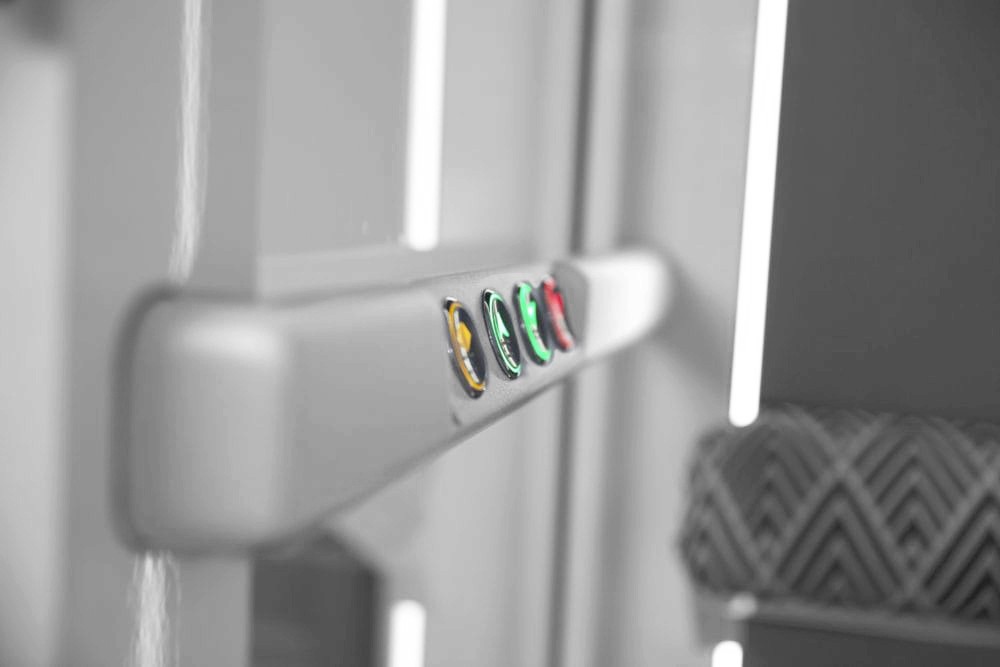
The wheelchair user positions their chair on the platform at the lower level, operates the simple push-button or joystick controls, and the platform travels smoothly to the upper level. The controls are designed to be operable from a seated position in a wheelchair — typically mounted at a height of 750mm to 1200mm above floor level to comply with accessibility standards.
Safety features are built in as standard on all modern wheelchair lifts — including pressure-sensitive safety edges that stop the platform immediately if an obstruction is detected, safety arms or gates that secure the wheelchair on the platform during travel, anti-slip platform surfaces, automatic levelling to arrive flush with the floor at each level, and battery backup that allows the lift to return to the lower level safely in the event of a power failure.
For incline platform lifts, the mechanism is slightly different — the platform travels along a rail fixed to the stair treads rather than rising vertically. The safety arms fold up to allow the wheelchair to board and lower down to secure it for travel. At the top and bottom landings the platform levels automatically and the arms raise to allow the wheelchair to exit.
Who is a Wheelchair Lift Suitable For?
Wheelchair lifts are suitable for any wheelchair user who needs to access levels in a building or outdoor space that are currently inaccessible. The specific situations where a wheelchair lift is appropriate include the following.
Full-time wheelchair users who cannot use stairs at all and require a lift to access every level of their property or building independently. A through-floor home lift or vertical platform lift is typically the most appropriate solution for full-time wheelchair users in a residential setting.
Powered wheelchair users whose powered chair cannot be folded or transported on a stairlift. Most powered wheelchairs are too large and too heavy for a stairlift — a platform lift with an appropriately sized platform is required. Platform dimensions must be confirmed against the specific dimensions of the powered chair before a lift is specified.
Part-time wheelchair users who can manage stairs on good days but need a wheelchair lift available for days when their condition makes stairs difficult or unsafe. This is common for users with progressive conditions — MS, Parkinson's disease, and similar — where mobility varies day to day.
Visitors and family members in commercial or domestic settings where a family member or regular visitor uses a wheelchair and needs access to all areas of the property. A domestic platform lift provides this access without restricting the staircase for other household members.
Commercial buildings where wheelchair access to all areas is required under the Equality Act 2010. Any commercial building where a wheelchair user cannot access a floor or area that other visitors can access has a potential Equality Act liability that a wheelchair lift can address.
Wheelchair Lifts vs Stairlifts — Understanding the Difference
One of the most common sources of confusion when researching mobility solutions is the difference between a wheelchair lift and a stairlift. They are not interchangeable and the distinction is important.
A stairlift is designed for a user who can walk short distances but finds stairs difficult — they transfer from their wheelchair or walking aid to the stairlift seat, travel up or down the staircase seated, and transfer back at the landing. Stairlifts are the more affordable option — typically £2,000 to £5,000 for a straight staircase — and are appropriate for users who can safely manage the two transfers required at each journey.
A wheelchair lift is designed for users who cannot or should not transfer out of their wheelchair for any reason — because they are a full-time wheelchair user, because they use a powered wheelchair, because their condition makes transferring unsafe, or because the transfer process is undignified or too physically demanding. A wheelchair lift carries the user in their chair, eliminating the transfer entirely.
The right choice depends entirely on the individual user's specific needs and capabilities. If you are unsure which solution is appropriate, an occupational therapist assessment is strongly recommended before committing to any product. Platform Lift UK can also provide free independent advice on which lift type is most likely to suit your specific situation.
Wheelchair Lift Costs — What to Expect in the UK
Wheelchair lift costs in the UK vary considerably depending on the type of lift, the height of travel, the installation environment, and the specific manufacturer and model. The following provides a realistic guide for 2026.
Vertical platform step lifts for one to three steps at a domestic property typically start from £2,500 to £5,000 installed. These are the most affordable wheelchair lift type and suit the majority of domestic entrance step applications.
Through-floor wheelchair lifts for floor-to-floor access in a two-storey home start from around £8,000 for an open platform model and rise to £12,000 to £25,000 for a fully enclosed cabin lift depending on the specification and interior finish.
Incline wheelchair platform lifts for straight staircases start from around £3,000 to £6,000. Curved staircase versions start from £8,000 and can rise to £20,000 or more depending on the complexity of the staircase geometry.
Outdoor wheelchair lifts for residential properties with significant level changes typically cost from £5,000 to £12,000 installed depending on height of travel, frame specification, and any groundwork required.
Commercial wheelchair platform lifts start from around £10,000 to £15,000 for an open platform lift and rise to £40,000 or more for a fully enclosed multi-floor cabin installation in a commercial building.
VAT relief is available on wheelchair lifts purchased for the personal use of a person with a disability or chronic illness. The exemption covers both the product and the installation. Your installer will confirm eligibility at the point of quotation.
The Disabled Facilities Grant is available through local councils and can fund wheelchair lift installations for eligible applicants — funding up to £30,000 of adaptation costs in England. Your occupational therapist or local council's housing team can advise on eligibility and assist with the application.
Planning Permission and Building Regulations
For most residential wheelchair lift installations planning permission is not required. The installation is generally treated as permitted development. However there are circumstances where consent is required.
If your property is listed or in a conservation area, listed building consent may be required before any external works begin. Conservation officers are generally supportive of wheelchair lift installations because they are reversible — but consent must be obtained before work starts.
For through-floor home lifts that involve creating an opening in the floor, Building Regulations approval is typically required to confirm that the structural integrity of the floor has not been compromised.
For commercial wheelchair lift installations, Building Regulations approval is typically required — particularly for Part M compliance. For incline platform lifts in commercial buildings, BS EN 81-40 compliance documentation will be required at practical completion.
Your installer will advise on all consent requirements for your specific property and manage any required applications on your behalf.
Finding a Reliable Wheelchair Lift Installer
The wheelchair lift market in the UK includes hundreds of companies ranging from large national installers to small regional specialists — and the quality varies considerably. Choosing the wrong company can result in a poorly specified lift, a substandard installation, and ongoing reliability problems that are expensive and stressful to resolve.
The most important things to check when appointing any wheelchair lift installer include their specific experience with your lift type, their compliance credentials and UKCA marking documentation, their insurance, their customer reviews on independent platforms, their warranty terms, and their ongoing servicing and maintenance capability.
Platform Lift UK takes the guesswork out of this process entirely. We assess every company in our network against these criteria before we refer any customer to them. When you submit an enquiry through Platform Lift UK you can be confident that the company we introduce you to has been independently evaluated and has the right experience for your specific lift type, property, and location.
Frequently Asked Questions
What is the difference between a wheelchair lift and a platform lift? A platform lift is a broad category of lift type. A wheelchair lift is a platform lift specifically designed and sized to carry a wheelchair user and their wheelchair. All wheelchair lifts are platform lifts but not all platform lifts are large enough or designed specifically for wheelchair use. When specifying a lift for a wheelchair user always confirm the platform dimensions against the specific dimensions of the wheelchair being used.
Can a powered wheelchair use a platform lift? Yes — but the platform dimensions and load capacity must be confirmed against the specific dimensions and weight of the powered wheelchair. Powered wheelchairs are typically larger and heavier than manual wheelchairs. Always provide the dimensions and weight of the specific wheelchair to your installer at the survey stage so the correct platform size and load capacity can be specified.
How wide does a doorway need to be for a wheelchair lift? For Part M compliance in commercial buildings the minimum clear door width for a wheelchair lift is 900mm. For residential applications the practical minimum is around 800mm clear width to accommodate a standard manual wheelchair. Powered wheelchairs may require a wider clear door width — confirm the specific chair dimensions with your installer.
Can a wheelchair lift be installed in a narrow hallway? Many compact platform lifts can be installed in tight spaces — the smallest through-floor home lifts have a footprint of around 700mm x 700mm. However the available space at both the lower and upper landing must be assessed by a surveyor to confirm that a lift of appropriate platform size can be installed and that there is sufficient manoeuvring space for a wheelchair user at each level. A free survey visit will confirm what is achievable in your specific property.
Does a wheelchair lift need a pit? Most modern wheelchair lifts are designed to minimise or eliminate the need for a pit. Many step lifts and vertical platform lifts have a surface-mounted base that requires only a shallow recessed threshold of 10mm to 50mm at the lower level rather than a full excavated pit. Through-floor home lifts are typically self-supporting and do not require a pit. Your installer will confirm the exact base requirements during the survey.
How do I get a free quote for a wheelchair lift? Submit an enquiry through the Platform Lift UK website. Tell us about your property, the level change you need to overcome, the type of wheelchair being used, and your location. We will assess your requirements and match you with a vetted wheelchair lift specialist covering your area — free of charge and with no obligation to proceed.
CLOSING SECTION
Platform Lift UK is an independent matching service. We do not install lifts ourselves. Our role is to understand your requirements — lift type, wheelchair dimensions, property, level change, indoor or outdoor, location, and budget — and connect you with the right vetted installer from our network at no cost to you.
Whether you are just starting to research wheelchair lifts or ready to request quotes from vetted installers, get in touch today. We will answer your questions, help you identify the right lift type for your property and your specific wheelchair, and arrange a free no-obligation survey with a specialist covering your area — completely free of charge and with no obligation at any stage.
