
Dumb Waiter Lifts UK — The Complete Guide for Homes and Businesses
Everything you need to know about dumb waiter lifts in the UK — how they work, what types are available, what they cost, and how to find a vetted installer. Free independent advice from Platform Lift UK.
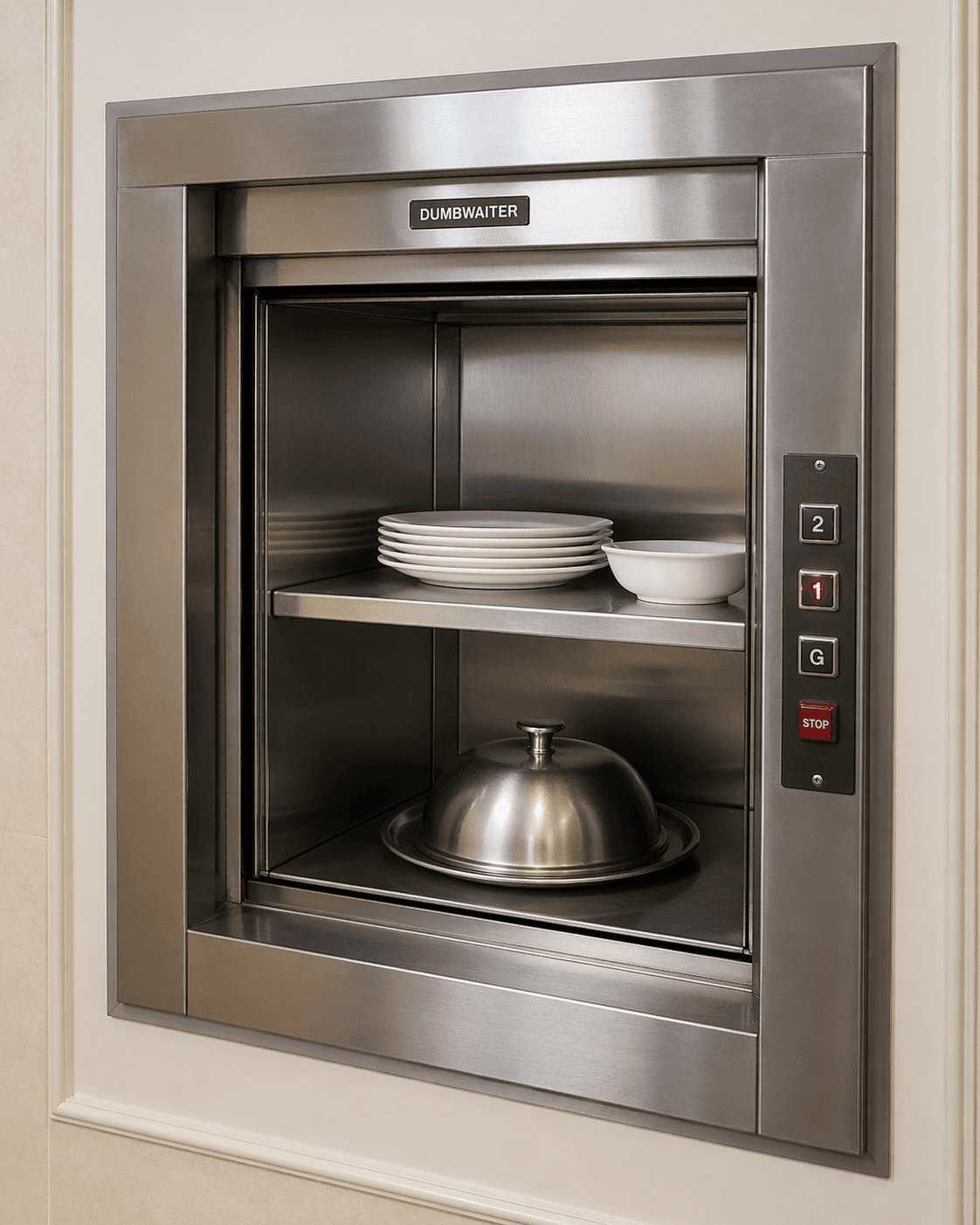
What is a Dumb Waiter Lift?
A dumb waiter lift — also spelled dumbwaiter — is a small goods lift designed to carry items rather than people between two or more floors of a building. The name dates back to the 18th century when mechanical food service lifts were used in grand houses to carry dishes from the kitchen to the dining room without requiring a servant to make the journey — hence the lift was a waiter that did not speak.
Modern dumb waiters are electrically powered, quiet in operation, and available in a wide range of sizes and load capacities to suit everything from a small domestic installation carrying a few kilograms of laundry to a heavy commercial installation carrying fully loaded catering trolleys weighing several hundred kilograms.
Unlike a passenger lift, a dumb waiter does not need to meet the same structural or safety standards for carrying people. This makes them significantly simpler and more affordable to install than a full passenger lift, while still providing reliable and efficient vertical goods movement.
How Does a Dumb Waiter Lift Work?
A dumb waiter operates on a straightforward principle. A platform or cabinet travels vertically within a shaft or guide structure between two or more floors, driven by an electric motor using a traction or hydraulic drive system.
The user places items on the platform, closes the door, selects the destination floor using a simple push-button control, and the platform travels smoothly and quietly to the selected level. At the destination floor, the door opens and the items are removed. The platform can then be sent back to the original floor or called to any other floor it serves.
Modern dumb waiters include safety features as standard — including door interlocks that prevent the platform from moving unless all doors are properly closed, overload sensors that prevent the lift from operating if the load exceeds its rated capacity, and automatic levelling that ensures the platform arrives flush with the floor at each level for easy loading and unloading.
Controls are typically simple call-and-send push buttons at each floor level, with the option for more sophisticated control systems in larger commercial installations serving multiple floors.
Types of Dumb Waiter Lift Available in the UK
Dumb waiter lifts are available in a range of types and specifications to suit different applications. The right type depends on the load capacity required, the number of floors served, the available shaft space, and whether the installation is for domestic or commercial use.
Light domestic dumb waiters are compact lifts designed for residential use — typically carrying loads of 25kg to 50kg between two floors. These are suited to homes where carrying laundry, groceries, or other household items between floors is a daily inconvenience. They have a small footprint, are quiet in operation, and can typically be installed within a day. Costs start from around £3,000 to £6,000 installed.
Medium commercial dumb waiters are more substantial lifts designed for restaurants, cafes, bars, hotels, and small office buildings — typically carrying loads of 50kg to 150kg between two or more floors. These are the most commonly installed type in the UK hospitality sector, where they are used to move food, crockery, and supplies between kitchen and service floors. Costs typically range from £6,000 to £15,000 installed depending on load capacity, number of floors, and specification.
Heavy commercial dumb waiters are large-capacity goods lifts for industrial kitchens, hotels, hospitals, retail stock rooms, and any application where heavy loads need to be moved between multiple floors. Load capacities range from 150kg to 500kg or more. These installations are more complex and typically require a dedicated shaft. Costs start from around £15,000 and can rise significantly depending on specification.
Countertop dumb waiters are compact units designed to sit on or be built into a kitchen counter — typically in restaurants or commercial kitchens where the kitchen is directly above or below the service area. These are the smallest and most affordable type, suited to very short travel distances of one to two metres.
Where Are Dumb Waiter Lifts Used?
Dumb waiters are used across a surprisingly wide range of settings in the UK.
In the hospitality sector, dumb waiters are an essential piece of equipment in any multi-storey restaurant, hotel, pub, or club. Moving food, drinks, crockery, linen, and supplies between kitchen and service floors is a constant operational requirement — and carrying these items by hand on stairs is inefficient, tiring, and a significant manual handling risk for staff.
In healthcare settings, dumb waiters are used in hospitals, care homes, and nursing homes to move meals, medication, linen, and waste between floors — reducing staff workload and improving hygiene by minimising the movement of goods through patient areas.
In retail, dumb waiters are used to move stock between storage and sales floors in multi-storey shops and department stores — particularly in older buildings where a full goods lift cannot be accommodated.
In residential properties, dumb waiters are increasingly popular in larger homes — particularly those with basement kitchens, wine cellars, or home offices on upper floors. They are also used in residential care settings where residents or carers need to move meals, laundry, or supplies between floors without carrying them on stairs.
In offices, dumb waiters are used to move files, documents, post, and supplies between floors in buildings where a full passenger lift is not available or not appropriate for goods movement.
How Much Does a Dumb Waiter Lift Cost in the UK?
Dumb waiter costs vary considerably depending on load capacity, number of floors served, shaft requirements, and the complexity of the installation. As a general guide for the UK market in 2026:
Light domestic dumb waiters serving two floors with a load capacity of 25kg to 50kg typically start from around £3,000 to £6,000 installed. This is the most affordable entry point and covers most residential applications.
Medium commercial dumb waiters serving two to three floors with a load capacity of 50kg to 150kg typically cost from £6,000 to £15,000 installed. This covers the majority of restaurant, hotel, and commercial hospitality installations.
Heavy commercial dumb waiters with load capacities above 150kg or serving more than three floors start from around £15,000 and can rise to £30,000 or more for large-capacity or complex multi-floor installations.
Additional costs to factor in include the shaft or enclosure structure if one is not already present, any building works required to create floor openings, electrical supply installation, and any redecoration following installation. A fully inclusive quotation covering all elements should be requested from your installer.
VAT is charged on dumb waiter lifts at the standard rate for commercial installations. For domestic installations purchased for the personal use of a person with a disability or chronic illness, VAT relief may apply — your installer will confirm eligibility.
Do I Need Planning Permission for a Dumb Waiter Lift?
For most domestic dumb waiter installations, planning permission is not required. The installation is generally treated as an internal alteration and falls within permitted development rights.
For commercial installations, Building Regulations approval may be required depending on the nature of the installation and the building type. Your installer will advise on this and can manage any required applications on your behalf.
If your property is listed or in a conservation area, listed building consent may be required before any works begin — even for internal alterations. Your installer will advise on the consent process for your specific property.
LOLER and Dumb Waiter Maintenance
Dumb waiters used in commercial settings are subject to the Lifting Operations and Lifting Equipment Regulations 1998 — commonly known as LOLER. Under LOLER, any lifting equipment used at work must be thoroughly examined by a competent person at regular intervals — for dumb waiters used in commercial settings this is typically every six months.
LOLER examinations must be carried out by a qualified engineer and a written report produced following each examination. It is the responsibility of the business owner or building manager to ensure LOLER examinations are carried out on time and that the lift is taken out of service if the examination identifies any safety issues.
For domestic dumb waiters not used in a commercial setting, LOLER does not strictly apply — but annual servicing is strongly recommended to ensure the lift remains safe and reliable over time.
Platform Lift UK can match you with qualified lift engineers covering your area for both LOLER examinations and routine servicing contracts on all types of dumb waiter lift.
Dumb Waiter Lifts vs Full Goods Lifts — Which Do I Need?
The choice between a dumb waiter and a full goods lift depends primarily on what you need to carry and whether any people need to travel in the lift.
A dumb waiter is designed exclusively for goods — no person should ever travel in a dumb waiter, regardless of its size. If there is any requirement for people to travel in the lift — for example, a carer accompanying a wheelchair user, or a member of staff travelling between floors — a full passenger or goods lift is required rather than a dumb waiter.
If the requirement is purely for goods movement and the items being carried fit within the platform dimensions and weight capacity of a dumb waiter, a dumb waiter is the more appropriate, more affordable, and simpler solution. Dumb waiters have lower installation costs, lower maintenance costs, and simpler regulatory requirements than full goods lifts.
A surveyor from a vetted installer will assess your specific requirements during a free site visit and recommend the most appropriate solution.
Frequently Asked Questions
Can anyone travel in a dumb waiter lift? No — dumb waiters are designed exclusively for goods. No person should ever travel in a dumb waiter regardless of its size. If people need to travel between floors a passenger lift or goods lift with appropriate safety features is required.
How much weight can a dumb waiter carry? Load capacities range from around 25kg for a small domestic unit to 500kg or more for a heavy commercial installation. The right capacity depends on what you need to carry — your installer will advise on the appropriate specification during a survey.
How quiet is a dumb waiter lift? Modern dumb waiters are designed for quiet operation — particularly important in restaurant and hospitality settings where noise from a goods lift would disturb diners. Most modern units produce minimal noise during operation, comparable to a quiet domestic appliance.
How long does a dumb waiter installation take? Most domestic and small commercial dumb waiter installations are completed within one to two days. Larger commercial installations or those requiring a new shaft structure may take longer. Your installer will confirm the expected timescale during the survey.
Does a dumb waiter need a shaft? Not always — some compact dumb waiter models are self-supporting and can be installed without a separate shaft structure, providing there is a suitable floor opening between levels. Larger commercial units typically require a dedicated shaft. Your installer will advise during the survey.
How do I find a reliable dumb waiter installer? Platform Lift UK connects you with vetted dumb waiter lift specialists covering your area — free of charge and with no obligation to proceed. Get in touch to start the process.
CLOSING SECTION
Platform Lift UK is an independent matching service. We do not install lifts ourselves. Our role is to understand your requirements — lift type, load capacity, number of floors, property type, location, and budget — and connect you with the right vetted installer from our network at no cost to you.
Whether you are researching dumb waiter lifts for a busy restaurant kitchen, a multi-storey hotel, or a private home, get in touch today. We will answer your questions, help you identify the right specification for your needs, and arrange a free no-obligation survey with a vetted installer covering your area.
