Disabled Facilities Grant and Platform Lifts — Everything You Need to Know
Can the Disabled Facilities Grant fund a platform lift, step lift, or home lift in the UK? Platform Lift UK explains exactly how the grant works, who is eligible, and how to apply — free independent advice with no obligation.
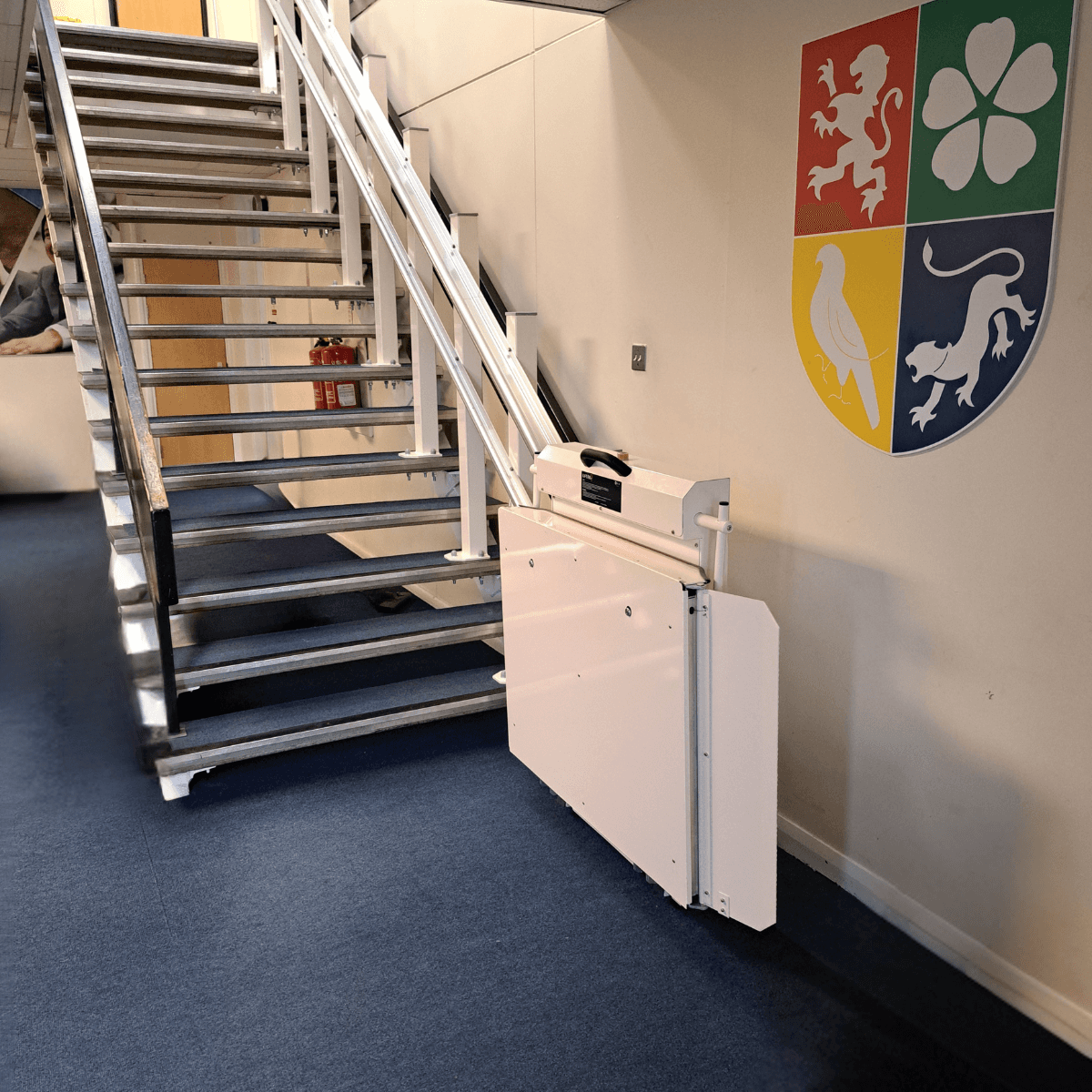
What is the Disabled Facilities Grant?
The Disabled Facilities Grant — commonly referred to as the DFG — is a means-tested government grant available through local councils in England, Wales, Scotland, and Northern Ireland. It is designed to fund adaptations to a property that are necessary to meet the needs of a disabled person living there.
The grant is provided under the Housing Grants, Construction and Regeneration Act 1996 and is administered by local housing authorities — typically the district or borough council — rather than social services or the NHS. In England, the maximum grant amount is £30,000. In Wales the maximum is £36,000. In Northern Ireland it is £25,000. Scotland operates a slightly different system through its own Housing Support Grant arrangements.
The DFG is a mandatory grant in England and Wales — meaning that if you meet the eligibility criteria the council is legally required to provide funding up to the maximum amount. It is not a discretionary fund that can run out. If you are eligible you are entitled to it.
The grant can fund a wide range of home adaptations including ramps, grab rails, wet rooms, widened doorways, and — critically — platform lifts, step lifts, vertical platform lifts, and through-floor home lifts where these are assessed as necessary to meet the disabled person's mobility needs.
Who is Eligible for the Disabled Facilities Grant?
To be eligible for the Disabled Facilities Grant you must meet three criteria.
First, the property must be your main or only home — not a holiday home or a second property. The grant applies to both owner-occupied properties and privately rented properties. If you are a tenant you will need your landlord's permission before any adaptation work can begin, but you are still eligible to apply.
Second, the adaptation must be assessed as necessary and appropriate to meet your disability needs by an occupational therapist. The occupational therapist — typically employed by the local council's adult social care team — will assess your mobility needs, the layout of your property, and which adaptations would enable you to live more independently and safely at home. The OT assessment is a mandatory part of the process and the council will not approve a grant without one.
Third, the grant is means-tested — meaning the amount you receive depends on your financial circumstances. Some people receive the full cost of the adaptation up to the maximum grant limit. Others receive a partial contribution. The means test takes into account your income, savings, and any benefits you receive. People receiving certain benefits — including Universal Credit, Housing Benefit, and Pension Credit — typically receive the full grant amount for adaptations up to the maximum without any contribution required.
There is no age limit for the DFG. Children, working-age adults, and older people can all apply. The grant is for the disabled person — not the property owner — so the disability condition can relate to a physical disability, sensory impairment, learning disability, or any other condition that affects the person's ability to access, move around, or use essential facilities in their home.
What Does the Disabled Facilities Grant Cover?
The DFG covers adaptations that are assessed as necessary and appropriate to meet the disabled person's needs. The legislation sets out specific categories of eligible adaptation — and platform lifts, step lifts, and home lifts fall within these categories in several specific circumstances.
Facilitating access to and from the dwelling — this covers adaptations that enable the disabled person to enter and exit their home independently or with reduced assistance. If entrance steps prevent a wheelchair user from entering their property, a step lift or vertical platform lift providing access from street or driveway level to the front door is a directly eligible adaptation under this category.
Making the dwelling safe — this covers adaptations that reduce the risk of falls or injury associated with the disabled person's condition. If using the stairs creates a significant fall risk — as it often does for people with Parkinson's disease, MS, or following a stroke — a through-floor home lift providing safe floor-to-floor access without using the stairs can be funded under this category.
Facilitating access to the principal family room — this covers adaptations enabling the disabled person to access the room they use most for daily living. If mobility limitations prevent a person from reaching a living room on a different level from their bedroom, a home lift can be assessed as necessary under this category.
Facilitating access to and use of a bedroom — this is one of the most commonly cited categories for through-floor home lift funding. If a disabled person cannot safely access their bedroom on an upper floor and is sleeping downstairs in unsuitable conditions, an OT assessment will typically recommend a home lift to restore safe bedroom access.
Facilitating access to bathroom facilities — where the only bathroom in a property is on a floor the disabled person cannot safely access, a home lift providing access to that floor is a directly eligible adaptation.
Not every platform lift application will be approved — the OT must assess the specific lift as necessary and appropriate for the individual's needs, and the works must be reasonable and practicable to carry out on the property. However platform lifts, step lifts, and home lifts are well-established eligible adaptations with a long track record of DFG approval across England, Wales, Scotland, and Northern Ireland.
How Much Can the Disabled Facilities Grant Cover?
The maximum grant amounts for the Disabled Facilities Grant in 2026 are as follows.
In England the maximum grant is £30,000. This covers the full installation cost of most step lifts, vertical platform lifts, and open platform through-floor home lifts. For fully enclosed cabin home lifts or more complex installations, the grant may cover the majority of costs with a contribution required from the applicant depending on the means test result.
In Wales the maximum grant is £36,000. Wales also operates the Care and Repair Cymru service which can provide additional support and assistance with applications.
In Northern Ireland the maximum grant is £25,000. The application process in Northern Ireland is managed through the Housing Executive rather than a district council.
In Scotland the system is different — adaptations are typically funded through the Scheme of Assistance administered by local councils. There is no single fixed maximum but substantial funding is available for eligible applicants assessed as needing adaptations.
The means test determines what proportion of the eligible costs the grant will cover. If your income and savings are below certain thresholds — or if you receive qualifying benefits — the grant will cover the full eligible cost up to the maximum. If your income is above the thresholds you may be required to contribute towards the cost. Your local council will confirm the means test result at the assessment stage.
Some councils also operate discretionary top-up funding for cases where the eligible cost exceeds the mandatory DFG maximum. It is worth asking your local council specifically about top-up funding if the cost of your recommended adaptation exceeds the DFG limit.
How to Apply for the Disabled Facilities Grant
The application process for the Disabled Facilities Grant involves several steps and can take several months from initial contact to grant approval. Understanding the process in advance helps manage expectations and avoids unnecessary delays.
Step 1 — Contact your local council
The first step is to contact your local district or borough council's housing department and request a Disabled Facilities Grant assessment. Some councils have online referral forms. Others require a phone call. Alternatively you can ask your GP, a social worker, or an NHS physiotherapist to refer you directly to the council's occupational therapy team.
Step 2 — Occupational therapist assessment
Once your referral is received the council will arrange for an occupational therapist to visit your property. The OT will assess your disability needs, your mobility within the home, and which adaptations are necessary and appropriate to help you live safely and independently. You should be as clear and detailed as possible about the difficulties you experience in your home during the assessment — the OT's recommendations form the basis of the grant application.
The OT may recommend a platform lift, step lift, or home lift specifically — or they may recommend a range of adaptations of which a lift is one. In some cases the OT will recommend a stairlift rather than a platform lift if they assess this as appropriate for your specific mobility needs. If you believe a platform lift is more appropriate for your situation — for example because you use a wheelchair and cannot transfer to a stairlift — make this clear during the OT assessment and ask them to record it in their report.
Step 3 — Formal grant application
Once the OT assessment is complete and the recommended adaptations are confirmed, the formal grant application is made. Your council will carry out the means test to confirm the grant amount you are entitled to. You will typically be asked to obtain two or three quotes from contractors for the recommended works — though in some areas the council has a preferred contractor list and may arrange quotes on your behalf.
Step 4 — Grant approval and works
Once the application is approved and the contractor confirmed, the works can begin. The grant is paid directly to the contractor on completion of the works in most cases — you do not typically pay the contractor and then claim the money back. However the exact payment arrangements vary by council and should be confirmed at the application stage.
Step 5 — Completion and inspection
The council will typically inspect the completed works to confirm they have been carried out to the required standard before releasing payment. Once the inspection is passed the grant is paid and the adaptation is complete.
How Long Does the Disabled Facilities Grant Process Take?
The DFG process can be slow — this is one of the most common frustrations reported by applicants. Waiting times for OT assessments, grant approvals, and contractor appointments vary significantly by council area and local demand.
In some areas the full process from initial referral to completed installation takes as little as three to four months. In other areas — particularly those with long OT waiting lists — the process can take twelve months or more.
If your need is urgent — for example if you are being discharged from hospital and the adaptation is required before you can return home — tell your council explicitly that your need is urgent. Many councils have a fast-track process for urgent cases. Hospital discharge teams and social workers can also advocate on your behalf to accelerate the process.
Whilst waiting for a DFG decision you may also wish to explore whether your council operates an interim loan scheme or a rapid response adaptation service that can provide a temporary solution — such as a temporary ramp or portable step lift — while your formal application is being processed.
Disabled Facilities Grant and Rented Properties
The DFG is available to both owner-occupiers and tenants of private rented properties. If you are a tenant you must obtain written permission from your landlord before the grant application can be approved and before any works begin.
Under the Equality Act 2010, private landlords are generally required to make reasonable adjustments for disabled tenants. In practice this means most landlords are required to consent to DFG adaptations unless there is a compelling reason not to. If your landlord refuses permission for a DFG adaptation without reasonable justification you may wish to seek advice from your local council's housing team or a disability rights organisation.
The grant covers the adaptation costs regardless of whether you own or rent the property. Your landlord does not contribute to the cost — the grant is paid for the disabled tenant's benefit. In some cases a condition is attached to the grant requiring the property to remain the disabled person's home for a minimum period — typically five years — following the adaptation.
Platform Lift UK and the Disabled Facilities Grant
Platform Lift UK is an independent matching service. We connect homeowners and tenants across the UK with vetted platform lift, step lift, and home lift installation specialists — free of charge and with no obligation.
Many of the vetted companies in our network have significant experience with Disabled Facilities Grant funded installations and can advise on the specific lift types most likely to be recommended by occupational therapists for different mobility needs. They can also provide the quotations typically required as part of the formal grant application.
If you are in the process of applying for a DFG or have already received OT recommendations that include a platform lift, step lift, or home lift, Platform Lift UK can match you with a vetted specialist covering your area who has experience with DFG-funded installations. The matching service is free and carries no obligation to proceed.
How Much Is the Disabled Facilities Grant in 2026?
The maximum Disabled Facilities Grant award varies by nation:
- England — up to £30,000
- Wales — up to £36,000
- Northern Ireland — up to £25,000
- Scotland — administered by local authorities with varying limits
These figures represent the maximum available. The actual amount you receive depends on a means test based on your household income and savings. Some applicants receive the full amount. Others receive a partial grant and need to fund the remainder through savings, a personal loan, or finance offered by the installation company.
It is worth noting that the means test only applies to homeowners and private tenants. If you are a disabled child under 18, or if the adaptation is for a disabled child in the household, the grant is not means tested and the full cost should be covered up to the maximum limit.
What Can the Disabled Facilities Grant Pay For?
The DFG can fund a wide range of home adaptations, not just platform lifts. However, for the purposes of this guide, the most commonly funded lift-related adaptations include:
- Through-floor homelifts — enabling access between floors of a property
- Vertical platform step lifts — overcoming entrance steps or internal level changes
- Incline platform stairlifts — providing wheelchair access alongside a staircase
- Widening of doorways to accommodate a wheelchair alongside a new lift
- Any associated electrical work required for the lift installation
- Structural modifications directly related to the lift installation
The key test is whether the adaptation is necessary and appropriate to meet the needs of the disabled person, and whether it is reasonable and practicable to carry out given the age and condition of the property.
What Happens After You Apply?
Many applicants are unsure what to expect after submitting their DFG application. The process typically follows these stages:
First, an occupational therapist visits your home. The OT assesses your mobility needs, observes how you move around the property, and identifies which adaptations are necessary. This report forms the basis of your DFG application and is one of the most important documents in the process.
Second, your local authority carries out a means assessment. For homeowners and private tenants, this involves reviewing your household income, savings, and any relevant benefits you receive. The assessment determines how much of the cost the grant will cover.
Third, your local authority issues a grant approval letter. This confirms the amount they will fund and sets out any conditions attached to the grant. Do not instruct any contractor or installation company before receiving formal written approval — starting work before approval can make you ineligible for the grant.
Fourth, you obtain quotes from approved contractors. Some local authorities have approved contractor lists. Others allow you to use any qualified installer. Ask your local authority what their requirements are before approaching installation companies.
Fifth, the work is carried out and inspected. Once the installation is complete, your local authority will inspect the work to confirm it meets the required standard before releasing the grant funds.
How Long Does the DFG Process Take?
Processing times vary significantly between local authorities. Some councils have dedicated DFG teams and relatively short waiting times. Others are under significant demand, particularly in areas with ageing populations, and waiting times for an occupational therapist assessment alone can be several months.
As a general guide, you should allow three to six months from initial application to grant approval in areas with average processing times. In areas with high demand, the full process — from first contact to installation complete — can take twelve months or longer.
If your situation is urgent — for example if you are being discharged from hospital and cannot safely manage at home without the adaptation — speak to your local authority about whether expedited processing is available. Some councils have emergency DFG procedures for exactly this situation.
Can You Use the DFG Alongside Other Funding?
Yes — and in many cases you will need to. Where the cost of the adaptation exceeds the maximum DFG award, or where the means test determines you should contribute a portion of the cost, you can combine the grant with:
- Personal savings
- A personal loan from a bank or building society
- Finance offered directly by the lift installation company
- Charitable grants from disability organisations or local charities
- Equity release or a secured loan against the property (seek independent financial advice before pursuing this option)
Some local authorities also offer discretionary top-up grants for applicants whose full adaptation cost exceeds the DFG maximum. Ask specifically about this when you make your initial enquiry — it is not always publicised.
DFG for Tenants — What You Need to Know
Private tenants and housing association tenants are eligible for the DFG, but the process works slightly differently to homeowner applications.
If you are a private tenant, your landlord must consent to the adaptation before the grant can be approved. In most cases, landlords are required to give consent unless they have reasonable grounds to object. If your landlord refuses consent without reasonable grounds, you may have legal recourse — your local authority can advise on this.
If you are a housing association or social housing tenant, your landlord — the housing association or council — may have their own adaptation funding separate from the DFG. Contact your housing provider in the first instance. They may be able to fund the adaptation directly or process a DFG application on your behalf.
Does the Grant Have to Be Repaid?
In some circumstances, yes. If you sell or transfer ownership of your property within ten years of a DFG grant being paid, your local authority may require repayment of all or part of the grant — typically capped at the amount of the grant received.
This condition applies primarily to homeowner applications and is recorded as a local land charge on the property. It does not apply in all cases — some local authorities choose not to enforce repayment conditions, and there are exemptions for applicants who move for medical or financial reasons.
Ask your local authority specifically about repayment conditions when you apply so there are no surprises if you decide to sell within ten years.
Getting Help With Your DFG Application
The DFG application process can feel complex, particularly if you are unfamiliar with the care and housing systems. The following organisations can provide free support:
- **Foundations** (foundationsiha.org.uk) — the national body for home improvement agencies, who can help you navigate the DFG process
- **Disabled Living Foundation** (dlf.org.uk) — independent advice on equipment and adaptations
- **Age UK** (ageuk.org.uk) — support for older applicants
- **Citizens Advice** (citizensadvice.org.uk) — help understanding your rights and the application process
- **Your local Home Improvement Agency** — many local authorities have dedicated agencies that help older and disabled people access grants and manage adaptation work
Platform Lift UK can connect you with vetted lift installation companies who have experience working alongside DFG applications and can provide quotes in the format required by your local authority. Our service is completely free to use.
Frequently Asked Questions
Can the Disabled Facilities Grant pay for a stairlift as well as a platform lift? Yes — stairlifts are also eligible for DFG funding. Whether a stairlift or a platform lift is recommended will depend on the OT's assessment of your specific mobility needs. If you use a wheelchair and cannot transfer to a stairlift seat, a platform lift is the more appropriate solution and should be recommended by the OT. Make your specific needs clear during the assessment.
Can I choose my own contractor for DFG-funded works? In most cases yes — you can obtain quotes from contractors of your choice including Platform Lift UK's vetted network. Some councils have preferred contractor lists and may ask you to use an approved contractor. Check with your local council at the application stage whether you are free to choose your own contractor.
What happens if the cost of my adaptation exceeds the DFG maximum? If your recommended adaptation costs more than the DFG maximum you have several options. You can ask your council about discretionary top-up funding. You can explore alternative funding sources including charitable grants from disability-focused charities. You can also consider whether a less expensive lift type would meet your assessed needs — for example an open platform lift rather than a fully enclosed cabin lift. Platform Lift UK can advise on alternative lift options that may come within the DFG limit.
Can I apply for a DFG if I have already had a lift installed? No — the DFG must be approved before works begin. You cannot claim the grant retrospectively for works already completed. If you are considering having a lift installed and think you may be eligible for a DFG, start the application process before commissioning any work.
Does the DFG affect my benefits? The DFG itself is not counted as income or capital for the purposes of means-tested benefits in England. It should not affect your entitlement to Universal Credit, Housing Benefit, or other means-tested benefits. However you should confirm this with your benefits advisor as the rules can be complex and may differ in Wales, Scotland, and Northern Ireland.
How do I find out if I am eligible for the Disabled Facilities Grant? Contact your local district or borough council's housing department and ask about the Disabled Facilities Grant. Alternatively ask your GP, social worker, or occupational therapist to refer you. You can also contact the local Citizens Advice Bureau who can advise on eligibility and help with the application process.
How do I find a platform lift company that accepts DFG-funded projects? Submit an enquiry through the Platform Lift UK website. We will match you with vetted platform lift and home lift specialists covering your area who have experience with DFG-funded installations — free of charge and with no obligation to proceed.
The Disabled Facilities Grant can make a significant difference to the cost of a platform lift, step lift, or home lift installation — covering the full cost for many eligible applicants and a substantial portion for others. Understanding the process and starting the application early is the most important step.
Platform Lift UK is an independent matching service. We do not install lifts and we are not involved in the grant application process itself. Our role is to connect you with vetted lift installation specialists who have the right experience for your specific lift type, property, and location — and who are familiar with DFG-funded installations.
If you are researching platform lifts or home lifts as part of a DFG application, or if you have already received OT recommendations and need to obtain quotations, get in touch with Platform Lift UK today. Our matching service is completely free, carries no obligation to proceed, and covers the whole of the UK. Click Here to Get a free quotation.
